Make time visible, not distracting
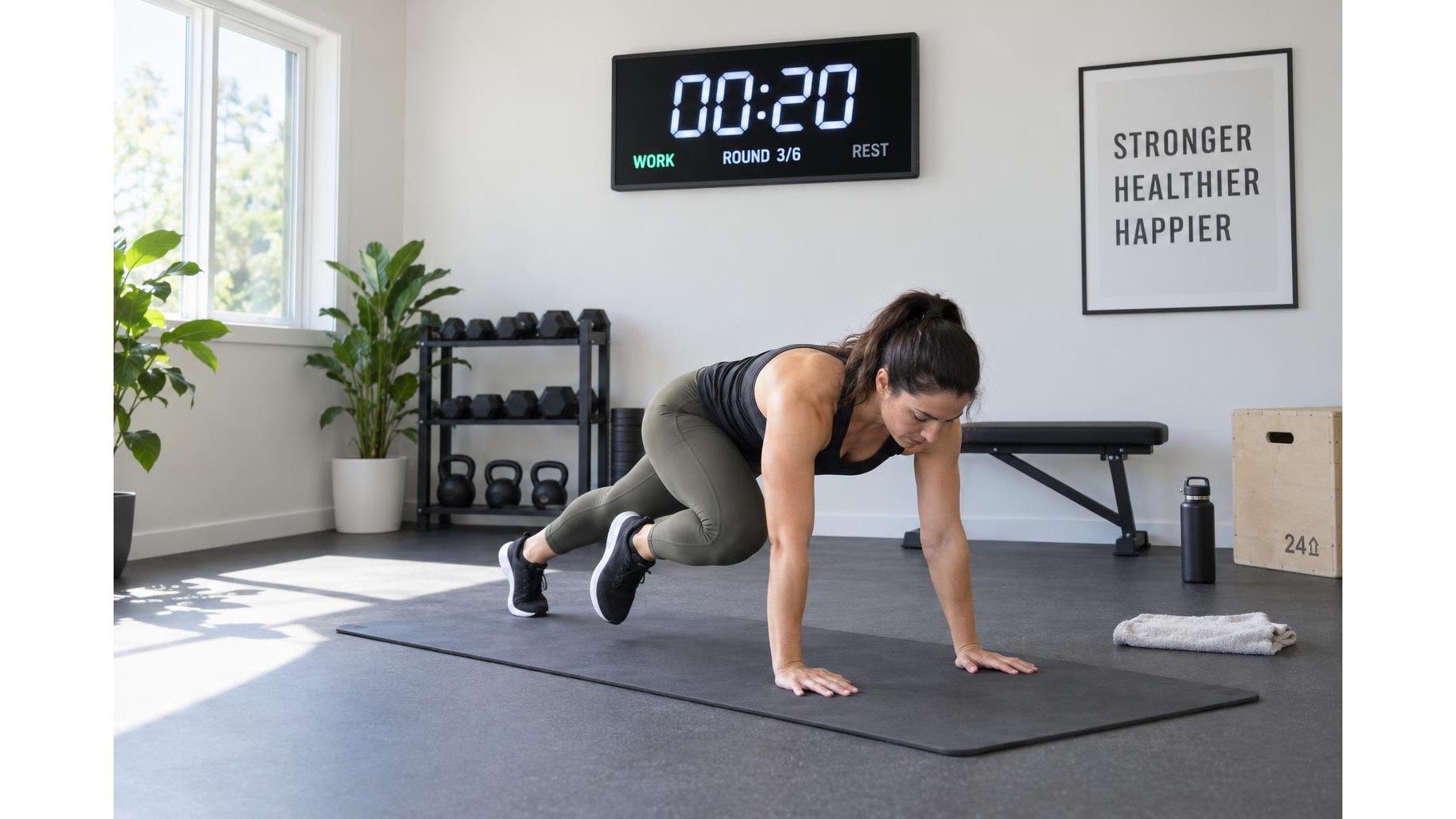
A workout can lose its rhythm when every interval means picking up a phone, unlocking it and navigating past notifications. A digital wall clock offers a simpler visual reference: glance up to check the time, then keep moving. It is not a replacement for a programmable interval timer when exact countdowns matter, but it can help structure straightforward work periods, recovery breaks and transitions with less screen time. The key is to choose a display you can read easily and decide how you will use it before the session begins.
Choose a display you can read at a glance
Look for large, high-contrast digits that are legible from your usual training distance. A bright LED or backlit display can be useful in a dim room, while adjustable brightness helps prevent glare during floor exercises or evening sessions. Consider whether the clock shows seconds: they can make short intervals easier to judge, although a seconds display may feel visually busy. A clear hour-and-minute display is often sufficient for longer sets and rest periods. Check the power arrangement, too. A plug-in clock needs a nearby outlet and tidy cable placement; a battery-powered model offers more flexibility, but may need occasional battery changes.
Place it where your eyes naturally go
Mount the clock securely on a wall that is visible from the mat, weights and main exercise area. Position it high enough to see over equipment, but not so high that looking up strains your neck. Test visibility from the positions you actually use, including the floor for stretches and core work. Avoid placing it directly opposite a bright window, where reflections can obscure the digits. Keep it away from moving equipment and make sure cables, if present, cannot become a trip hazard. A clock that is easy to see without turning around is more useful than one with extra features hidden across the room.
Use simple formats for strength and circuits
For strength training, use the clock to keep rest periods consistent. For example, complete a set, note the time, then begin the next set after roughly one or two minutes. For circuit training, choose a repeatable format such as 40 seconds of work and 20 seconds of rest. Start each work period on a minute mark and use the seconds display to track the changeover. If your clock shows only hours and minutes, use longer blocks, such as three minutes of activity followed by one minute of recovery. Write the sequence on a card nearby so you are not relying on memory between exercises.
Adapt timing to cardio and mobility sessions
For steady cardio, a wall clock can mark simple blocks: warm up for five minutes, work at a comfortable pace for ten, then cool down for five. During mobility or stretching, use longer holds, such as 30 to 60 seconds, and alternate sides at a planned minute mark. For intervals that require precise countdowns—especially very short sprints—a clock without a timer function may not be accurate enough. In that case, choose longer work-and-rest windows or use a dedicated interval timer before the workout starts. The aim is to make timing practical, not to interrupt movement with repeated checking.
Build transitions into the session
Plan a few minutes for moving between exercises, changing weights and getting water. Treat these as part of the workout rather than as unexpected delays. A written session outline might say: warm up, complete three rounds, rest between rounds, then cool down. Use the clock to notice when a block ends and move on promptly. If you train with music, keep the clock in your line of sight so you do not need to touch your phone to check the time or skip tracks. Silence nonessential notifications and leave the phone out of reach before you begin.
Keep the routine simple and consistent
A visible digital clock works best as a low-friction pacing aid. Choose readable digits, mount the display where it can be seen from your workout space, and use timing formats that match the clock’s capabilities. Longer blocks suit clocks that show only minutes; seconds are handy for moderate intervals, while precise countdown workouts call for a dedicated timer. With a session plan prepared in advance, you can manage work, rest and transitions with quick glances instead of repeated phone checks. That small change can help home training feel more focused and consistent.