If you ride a budget home spin bike, you probably rely on feel or a basic speed readout to guide your workouts. Adding a simple clip-on cadence sensor instantly makes your setup smarter: you can see your true RPM, structure intervals accurately, and connect to training apps without buying an expensive smart bike. In this guide we look at how clip-on and spoke-mounted sensors work, what features to look for, and how they can transform everyday cardio into structured, data-driven training.
Why cadence matters on a home spin bike
On most affordable bikes, the resistance knob is not calibrated and there is no built-in power meter. That makes cadence one of the few objective numbers you can track. Knowing your RPM helps you stay in the right intensity zone for endurance, tempo or HIIT sessions. Many online spin classes and training plans call out specific cadence targets (for example 60–70 RPM for climbs, 90–100 RPM for fast flats). With a clip-on cadence sensor attached to the crank or pedal, you can finally follow these cues precisely instead of guessing, and you can repeat the same workout weeks later to measure progress.
[h3_placeholder type=”cta” id=”telegram”/]
How clip-on and spoke-mounted sensors work
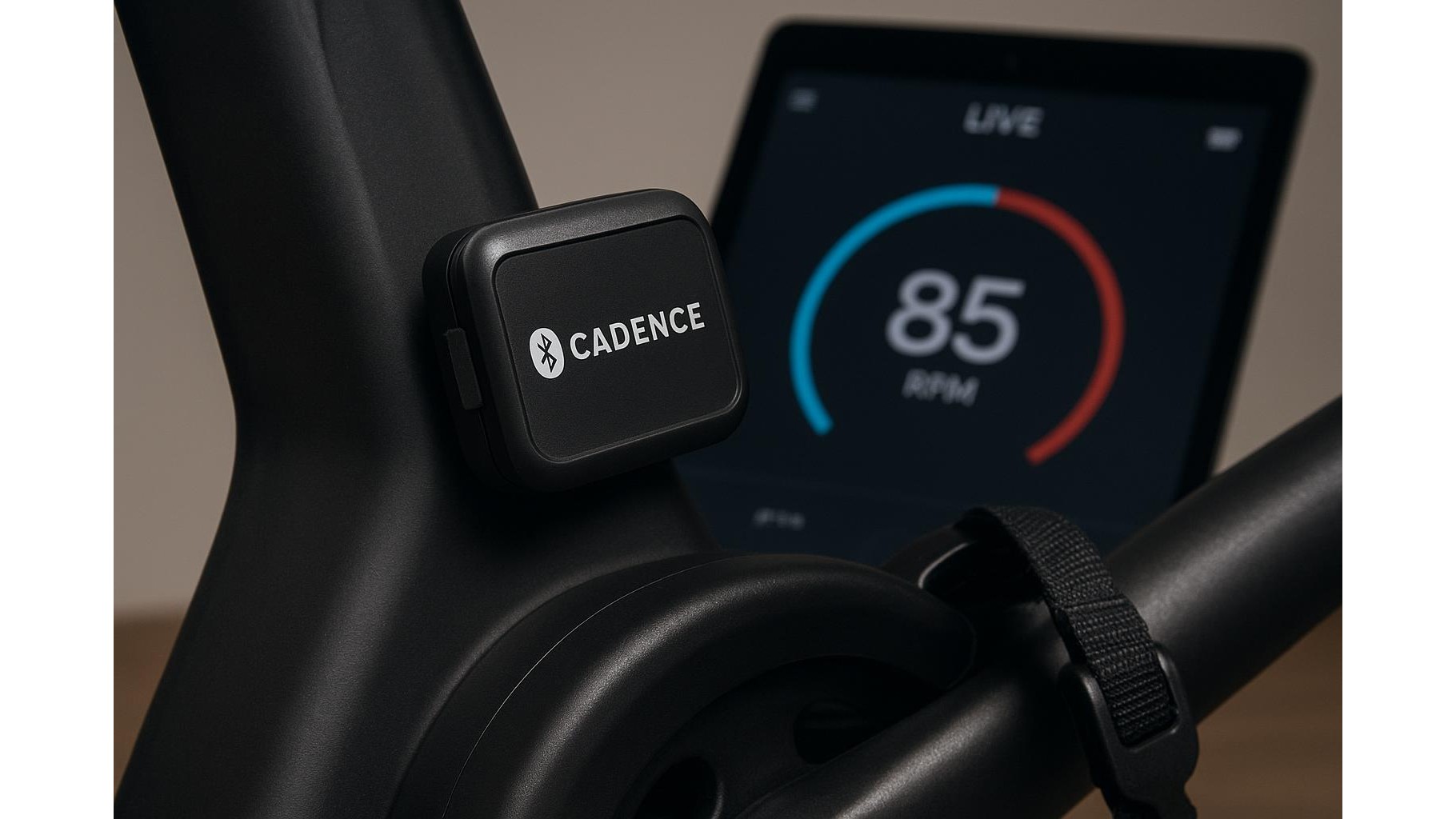
Most Bluetooth / ANT+ cadence sensors use an internal accelerometer to detect crank rotations, then broadcast your RPM wirelessly to a phone, tablet, bike computer or smart TV app. They typically strap to the crank arm with a silicone band, or clip inside the pedal cage, so you do not have to modify your bike. Some models also support a speed mode when mounted on the wheel hub or spoke of a regular bike, making them versatile for both indoor and outdoor use. For home spin bikes, cadence-only mode is usually enough: you pair the sensor as a cadence source in your training app and the bike itself remains a simple resistance platform.
Key features to look for in a cadence sensor
When choosing a sensor for your home gym, focus on a few practical features. Look for dual-protocol connectivity (Bluetooth and ANT+) if you want maximum compatibility with phones, tablets and bike computers. A compact, low-profile shape reduces the risk of knocking it with your shoe. Tool-free mounting with rubber bands or clips makes it easy to move the sensor between different bikes. Battery life is also important: many units run for months on a single coin cell, and an auto-sleep function preserves power between sessions. Finally, check that your preferred apps (like Zwift, Peloton Digital, or generic cycling computer apps) list the sensor type as supported.
Pairing cadence sensors with popular training apps
Once your sensor is mounted to the crank and the battery tab removed, open your chosen training app and go to the sensors or devices menu. With Bluetooth enabled on your smartphone or tablet, the app should discover a new cadence device; simply tap to pair it. From there, your spin bike behaves like a basic smart trainer: you will see live RPM on screen and can follow structured interval workouts that target specific cadence ranges. Even without power data, combining perceived effort, heart rate (if you have a strap), and cadence gives a surprisingly complete picture of your indoor performance. You can log your sessions, compare workouts, and keep motivation high by tracking trends over time.
Structuring better workouts with real-time RPM
With a clip-on cadence sensor in place, it is easy to turn unstructured pedalling into purposeful training. For example, you can create a 30‑minute session with 5‑minute blocks at 85–95 RPM, separated by easier 70 RPM recoveries. For high-intensity intervals, aim for short sprints at 100–110 RPM while keeping resistance challenging but controlled. Many cycling and spin apps include ready-made, cadence-based workouts; just follow the RPM targets on screen and adjust the resistance knob to match the effort. Over time, you will learn how different cadence zones feel, making every ride more efficient whether you are chasing fat loss, endurance, or general fitness.
Adding a small, affordable cadence sensor to your home spin bike is one of the simplest upgrades you can make. It turns a basic bike into a more connected training tool, lets you follow online classes accurately, and provides numbers you can use to stay consistent and improve. Combined with a heart-rate strap and your favourite training app, this tiny accessory can unlock a smarter, more motivating cardio routine in your home gym.