Tracking your home workouts and daily habits is one of the simplest ways to make your training more effective. A good workout logging app helps you record sets, reps, and weights, while a solid habit tracker keeps you consistent with sleep, steps, and recovery. In this guide we’ll look at simple but powerful apps to log your progress, and share tips on how to pick the best tool to stay on track with your home gym routine.
Table of contents
Why logging your home workouts matters
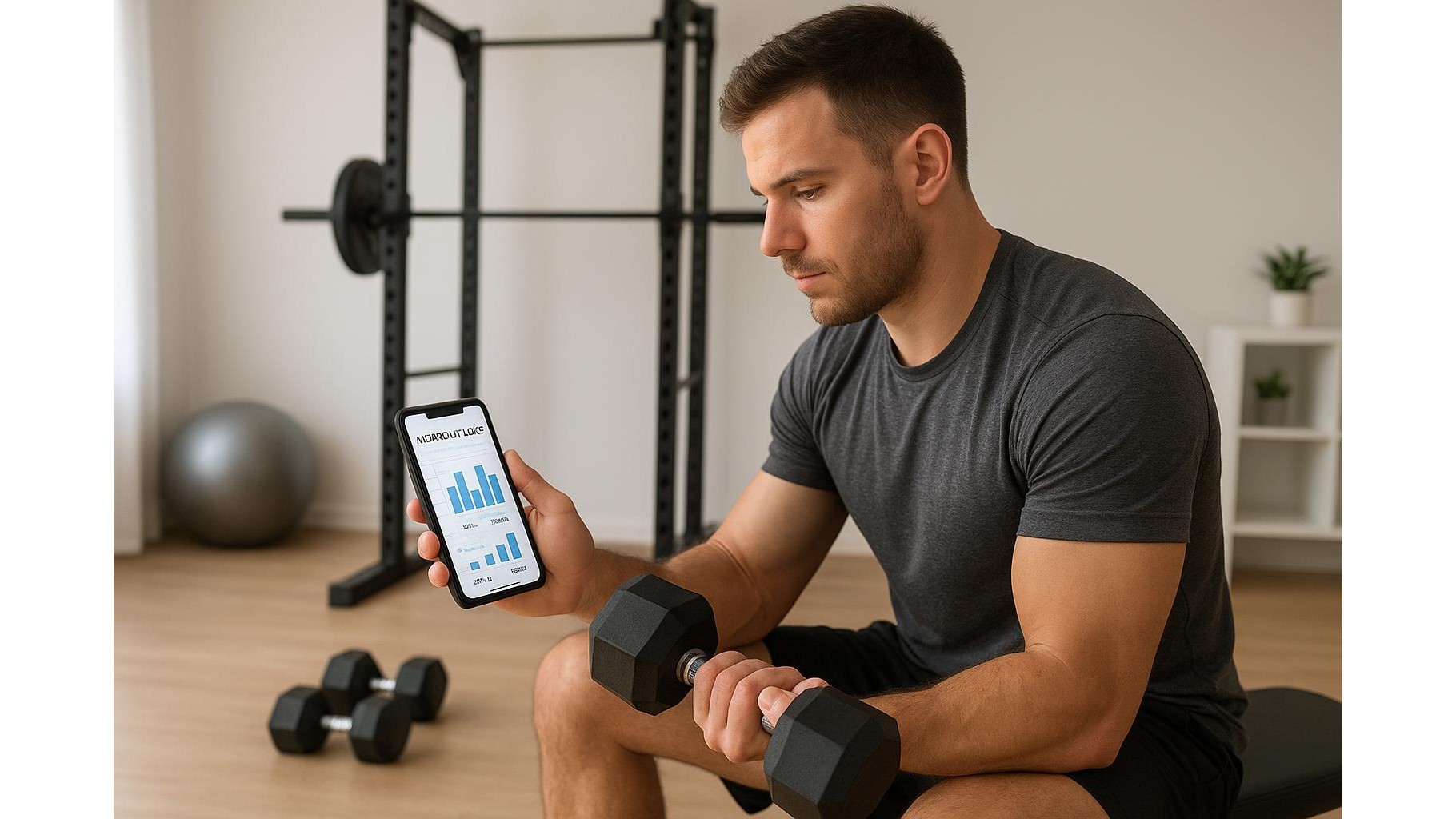
Without data, it’s hard to know if your home training is actually working. Logging your sessions lets you track progressive overload, spot plateaus, and avoid doing the same easy workout every week. A dedicated fitness tracking app also reduces mental load: you don’t have to remember what you did last time, because it’s all saved for you. Over time you can review trends in strength, volume, and frequency, which is essential if you train at home without a coach. Even a very simple app, used consistently, can transform your results.
Key features to look for in workout logging apps
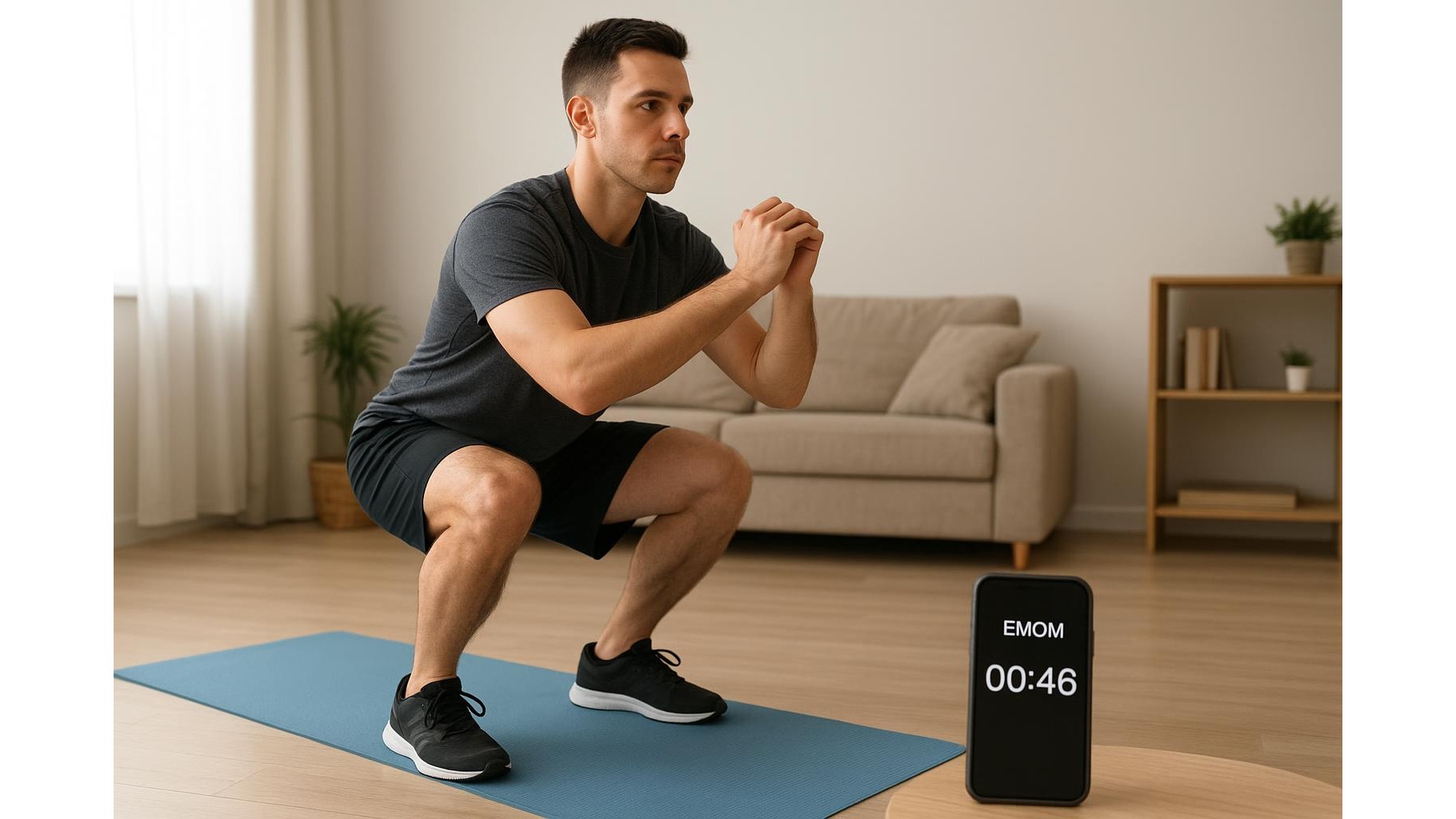
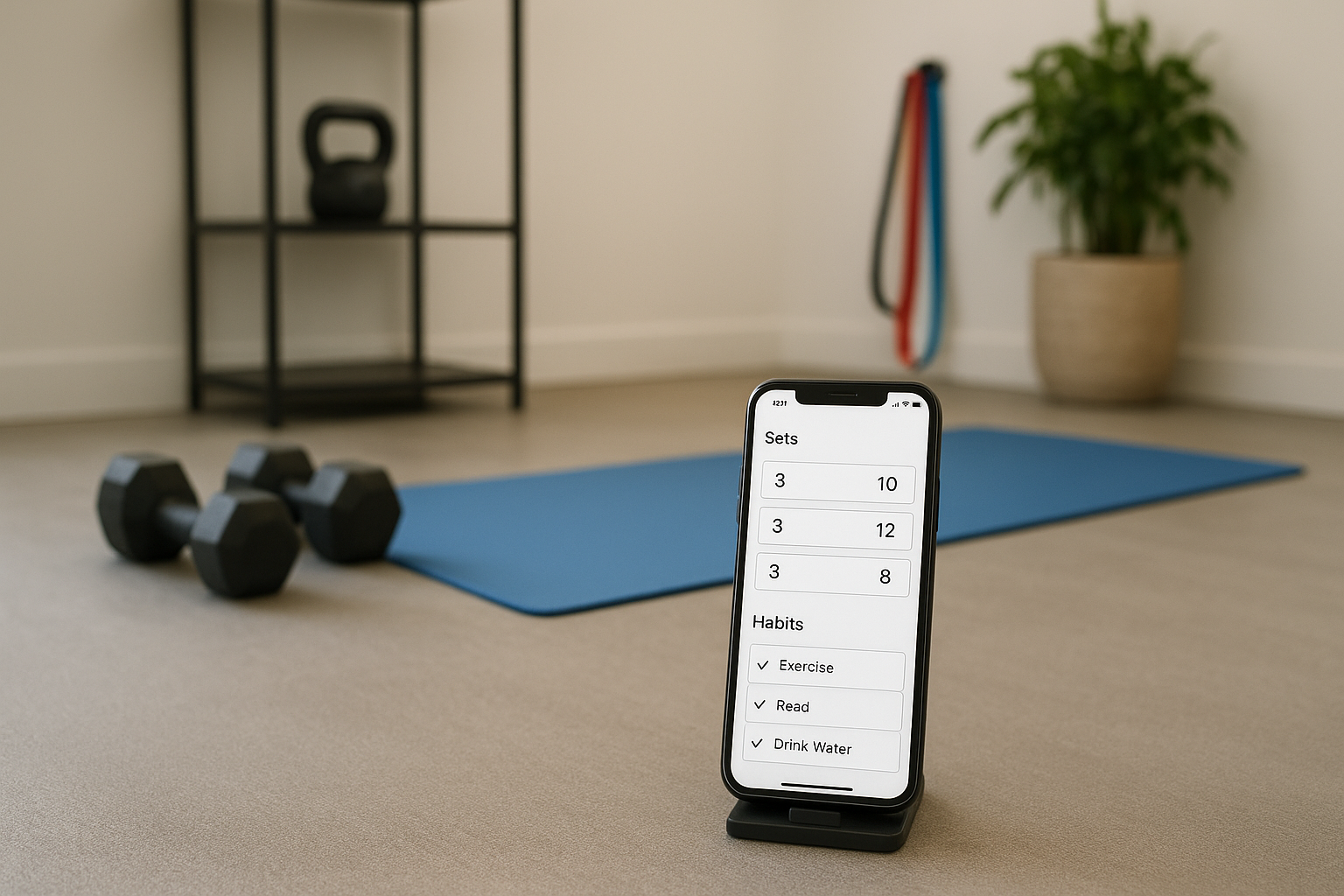
When choosing an app to track your home sessions, focus on a few core features. You want fast entry of sets, reps, and weight, so you’re not stuck typing between sets. Custom exercise creation is important if you use resistance bands, adjustable dumbbells, or kettlebells that don’t appear in default lists. Look for clear progress graphs, personal records, and an easy way to repeat or clone previous workouts. Offline access is useful if you train in a garage or basement with weak signal. Finally, check whether the app supports supersets, circuits, and AMRAPs, which are common formats for compact home workouts.
Simple habit trackers to support your fitness goals
Your results don’t just depend on training – they also rely on daily habits like sleep, hydration, steps, and mobility. A lightweight habit tracking app lets you tick off recurring actions such as “Home workout”, “10k steps”, or “Stretch 5 minutes”. The best tools keep the interface clean: colour-coded calendars, streaks, and reminders that nudge you without overwhelming you. When paired with a workout log, a habit tracker helps you see connections – for example, noticing that you perform better on days when you log enough sleep and water. This kind of awareness is especially powerful when you train alone at home.
How to choose the right tracking tool for your home gym
The ideal app is the one you’ll actually use. If you like minimalism, choose a simple workout log with quick input and no social feed. If you’re motivated by community, look for apps with leaderboards or the option to share workouts. Home trainees with limited time should prioritise templates that let you save your favourite routines and start them in one tap. Also consider where your data lives: can you export your training history if you change phones or apps? Many tools offer free versions that are perfectly adequate for home gym training, with optional premium upgrades for advanced stats and coaching features.
Tips to stay consistent with digital workout logging
Even the best app won’t help if you don’t log consistently. Make recording your workouts and habits part of the routine itself – for example, log your warm-up as you start and your last set as you finish. Keep your phone or tablet in a safe, dedicated spot in your home gym, so you’re not tempted to scroll social media between sets. Use reminders wisely: schedule a gentle notification at your usual training time and a second one later as a backup. Review your weekly and monthly stats every Sunday to celebrate progress and adjust next week’s plan. Small rituals like these turn tracking into an automatic part of your lifestyle.
In summary, using a dedicated habit and workout logging app turns your home training from guesswork into a measurable process. By tracking sets, reps, and supportive habits like sleep and steps, you gain clarity on what truly drives your results. Focus on tools that are fast, simple, and aligned with how you like to train, then commit to using them every session. With consistent digital tracking, your home workouts become easier to plan, easier to adjust, and far more rewarding over the long term.