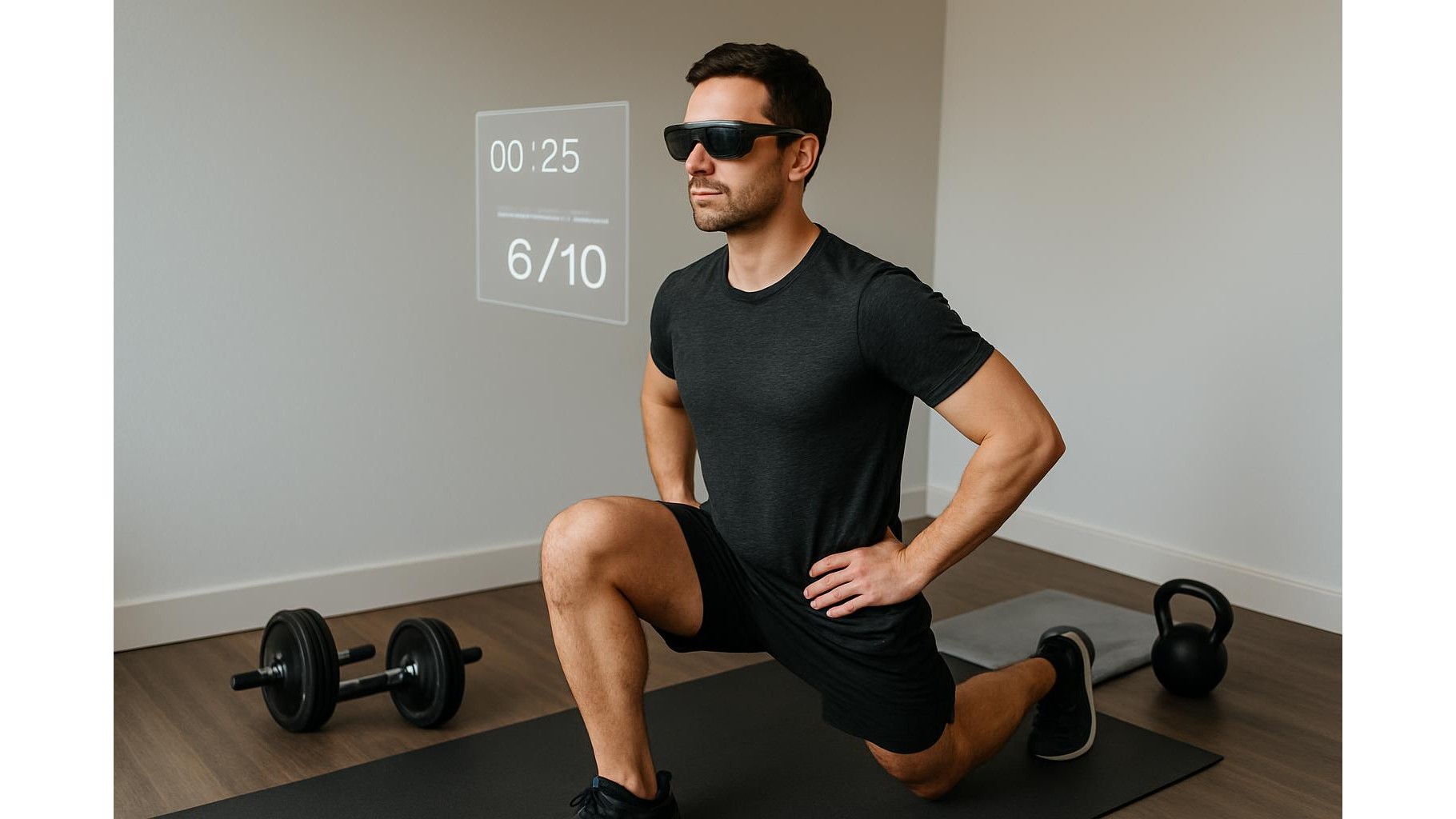
Home workouts are no longer limited to following a routine on a TV or laptop. A new wave of AR glasses for fitness can project workout cues, timers and even form tips directly into your field of view. Instead of staring at a distant screen or propping your phone against a water bottle, you see your training data and guidance overlaid on the real world, keeping your focus where it should be: on your movement and safety.
What AR glasses bring to your home workouts
Unlike traditional screens, augmented reality glasses place digital overlays on top of your living room, garage or home gym. For fitness, that means you can see rep counters, workout timers, heart‑rate zones or exercise names floating in front of you without breaking eye contact with your weights or mat. Some systems pair with fitness apps on your phone, mirroring interval timers or guided sessions into the glasses. Others can show prompts like “keep your back straight” or “soft knees” during squats or lunges, reducing the need to pause and rewatch technique videos on a TV.
Hands‑free guidance without a TV or phone screen
One of the biggest benefits of AR glasses for home training is the truly hands‑free experience. You don’t have to stop mid‑set to tap your phone, skip a song or check the next exercise. Visual cues and subtle notifications pop into view while you move, making them ideal for HIIT sessions, yoga flows, or strength circuits where interruptions kill your rhythm. In smaller spaces, training without a bulky TV also frees up wall space and lets you reconfigure your gym layout. As long as the glasses are paired with your smartphone or tablet, they effectively become a floating, personal display that follows your gaze around the room.
Key features to check before you buy AR glasses
Before you rely on AR glasses as your main workout display, it’s essential to assess a few critical features. First, check comfort and fit: nose pads, weight distribution and strap options will determine whether you can wear them for a 45‑minute session without pressure points. Second, look at brightness and transparency, so overlays remain visible in a bright home gym but don’t block your view of weights, steps or pets. Third, examine app compatibility: some glasses are little more than a mirrored second screen, while others integrate with dedicated fitness and coaching apps that support interval training, workout logging and performance metrics. Finally, battery life and charging time matter if you plan multiple sessions per day.
Safety, ergonomics and form feedback
AR can support better exercise form, but only if the system is designed with ergonomics and safety in mind. Overlays should never obscure the floor or your equipment, especially when you handle free weights or step platforms. Choose glasses that let you adjust the size and position of widgets like timers or rep counters, keeping them at the edge of your vision rather than centred. When possible, use apps that include form cue libraries or short, looping technique clips you can glance at between sets. Pair the glasses with an external heart‑rate sensor or smartwatch for more precise intensity feedback, and remember that AR guidance complements, but does not replace, learning basic movement patterns from a qualified source.
Integrating AR glasses into your home gym ecosystem
To get the most from AR glasses, think of them as one element in a broader home gym setup. They work best when synced with your fitness tracker, wireless earbuds and a well‑structured training plan. For example, you can run a tabata timer in your glasses, stream music to your headphones and log completed sets on your phone automatically. If you have limited floor space, AR guidance can help you switch quickly from kettlebell swings to bodyweight moves without walking back to a TV. Over time, you can build routines that rely on minimal equipment but still feel guided and dynamic, with the glasses providing just‑in‑time prompts rather than constant distraction.
AR glasses are still an emerging category, but they already offer compelling benefits for home training: freeing you from static screens, keeping key training data in view and supporting better focus on movement. Before you invest, evaluate comfort, visibility, app support and safety features to ensure they match your goals and space. Used thoughtfully, augmented reality can become a subtle, powerful layer on top of your workouts, turning even a small corner of your home into a smart, responsive training zone.