Choosing where to place your treadmill, exercise bike or compact walker matters more than most people think. The right spot can dramatically cut noise and vibration, improve airflow so you don’t overheat, and make your home workouts safer for you, your kids and your pets. With a bit of planning around surfaces, spacing and sight lines, you can turn almost any corner of your house into an efficient and comfortable cardio zone.
Choose the right room and surface
The best place for a cardio machine starts with a solid, level surface. Upstairs bedrooms and flimsy loft spaces tend to amplify vibration and footfall noise, especially with treadmills. Wherever possible, position your machine on a ground-floor room over a solid subfloor. Avoid placing heavy machines on weak platforms or old wooden decks. If you must go upstairs, place the treadmill or bike perpendicular to the floor joists to spread the load. A dedicated corner of a living room, spare room or hallway end can work well if the floor is stable and you can keep clear walkways around the equipment.
Control noise with mats and distance
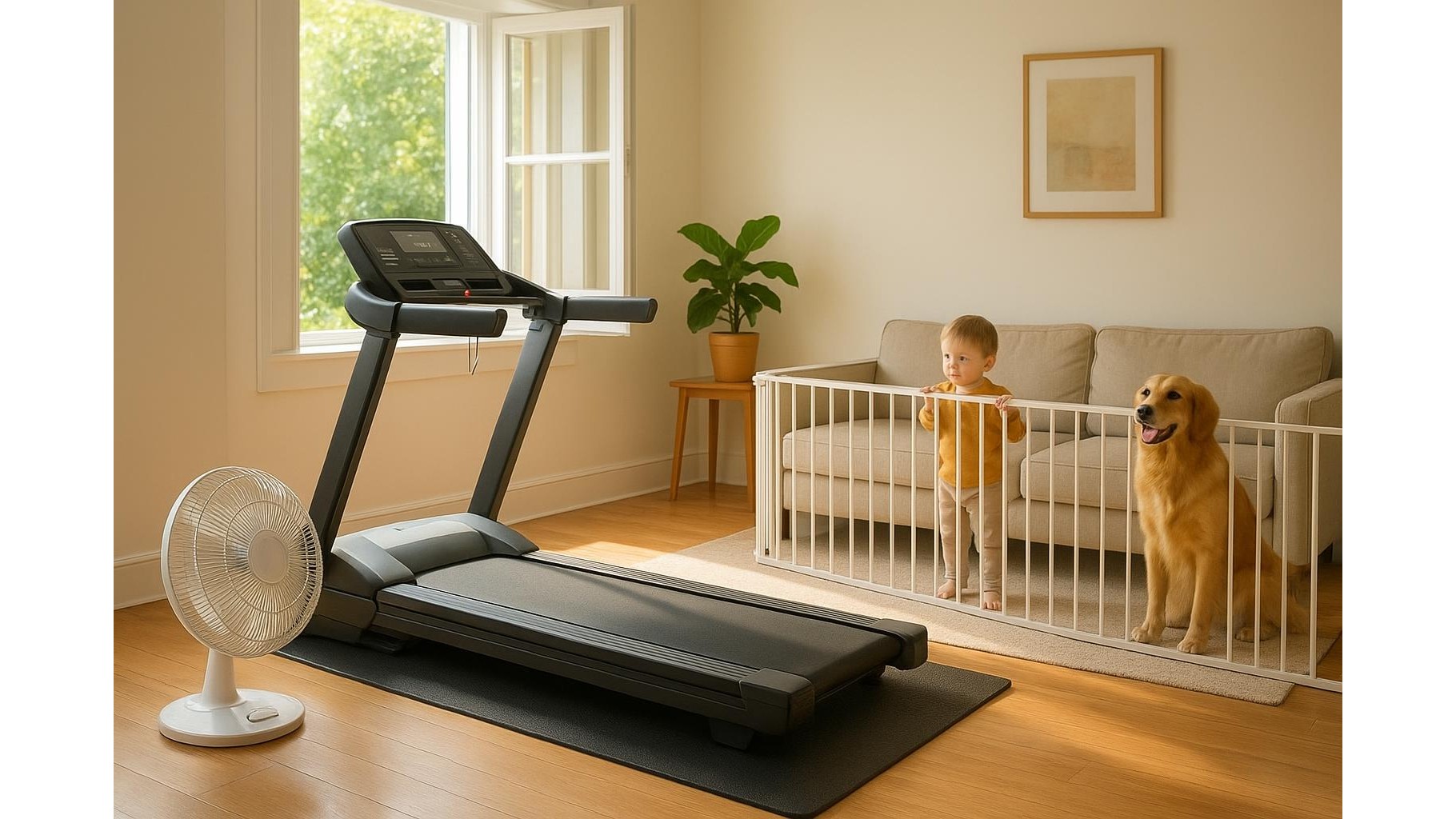
Even “quiet” machines transmit some sound through the frame and into the floor. To reduce noise and vibration, always use a thick equipment mat under your treadmill, bike or compact walker. High-density rubber or foam mats absorb impact, protect your flooring and muffle low-frequency rumble that neighbours may hear. Leave a small gap between the machine and any wall to avoid rattling, and keep it away from shared walls with bedrooms whenever possible. Position speakers or TVs in front of the machine rather than beside it, so you can keep the volume moderate while still hearing clearly over the motor or pedalling.
Maximise airflow and cooling
Poor ventilation can make indoor cardio feel much harder than it needs to be. Place your cardio machine near a window you can open, or in line with the room’s natural airflow so fresh air moves across your body as you train. If windows are limited, aim to position the treadmill or bike where you can place a fan directly in front of you without blocking walkways. Avoid tight alcoves where hot air builds up around the console and motor. Leave at least 50–60 cm behind and to the sides of a treadmill so the motor can vent heat properly, and so you don’t feel trapped during intervals or longer runs.
Improve visibility and safety at home
Good visibility is essential for safer workouts in a busy home. Wherever you set up, make sure you have a clear line of sight to the room entrance so you can see children or pets before they reach the moving belt or pedals. Avoid placing your machine right behind a door that might swing open onto you. If you train while supervising kids, face the machine toward their usual play area or the TV they’re watching. Use the machine’s safety key and emergency stop features every time, and route the power cable along walls so nobody can trip over it. Adequate lighting is just as important: position your cardio equipment where overhead or lamp light fully covers the deck or pedals.
Keep kids, pets and belongings out of harm’s way
Cardio equipment has moving parts that can catch fingers, tails or toys if you are not careful. Try to place your treadmill, bike or compact walker in a zone you can easily close off, such as a corner behind a room divider or in a spare room with a door or safety gate. Leave enough open space behind the treadmill so, in the rare case of a fall, you won’t hit furniture or a wall immediately. Store shoes, resistance bands and accessories in a box or basket to prevent clutter around the machine. Unplug the treadmill or use a child-lock function when not in use, and never allow kids to sit or play on the belt, deck or pedals.
By carefully choosing your room, floor surface, airflow and sight lines, you can make any treadmill, exercise bike or compact walker far quieter, cooler and safer to use at home. A stable base, a quality equipment mat, smart cable management and clear rules for kids and pets all help your cardio routine blend smoothly into everyday family life while protecting both your equipment and the people you live with.