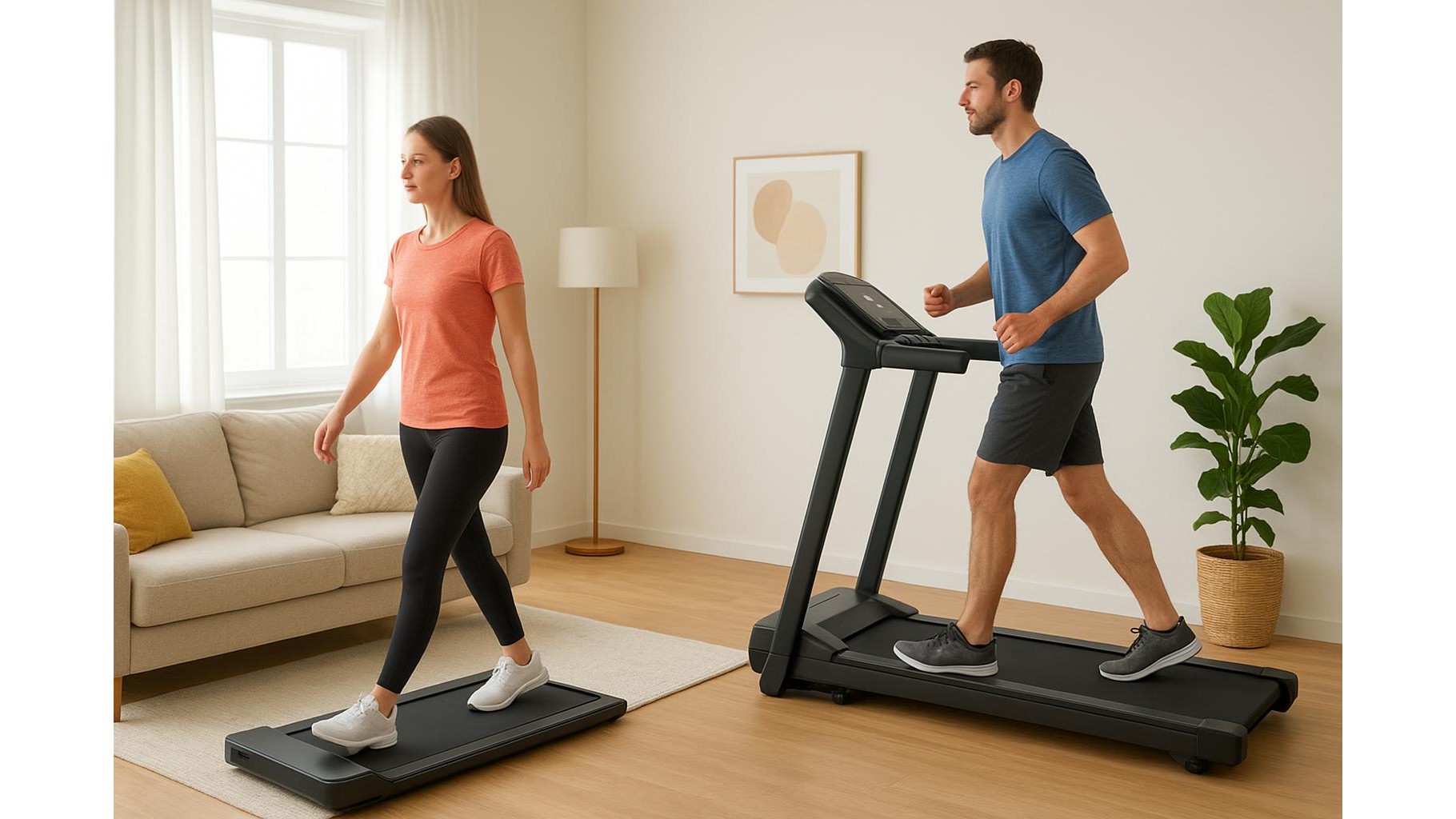
Walking workouts at home have become a go-to solution for busy people who want daily cardio without leaving the house. Two popular options are compact indoor walking tracks (low-profile, under-desk or slim walking pads) and classic treadmills with full running decks and consoles. Both can help you hit your step goals, protect your joints and improve cardiovascular health, but they feel very different in day-to-day use. This guide compares key features, comfort and suitability for different fitness levels and joint concerns, to help you choose the best style for your home gym.
Table of contents
Space, portability and home setup
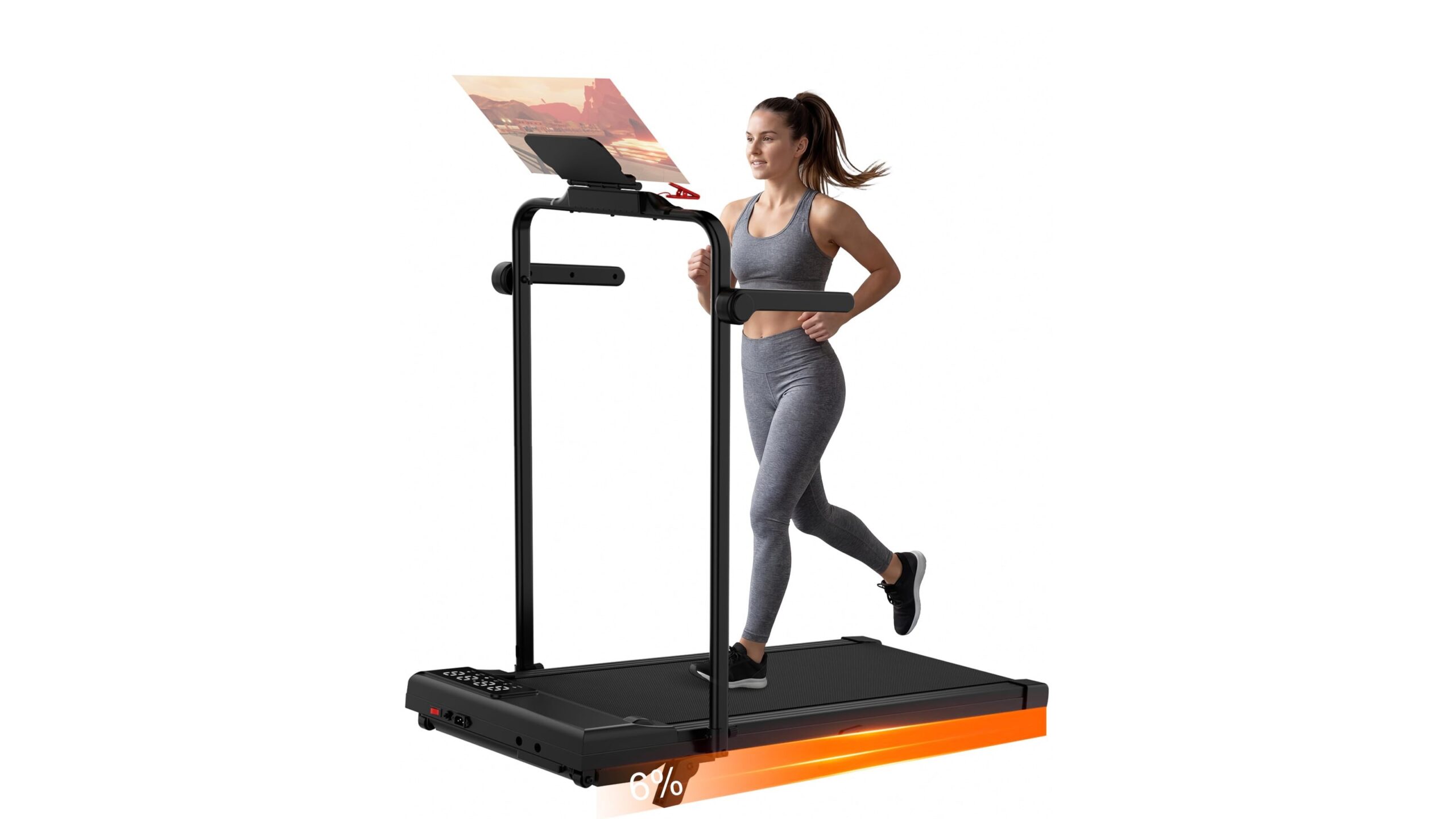
For small flats or shared spaces, compact indoor walking tracks usually win on space-saving design. Most walking pads are low, lightweight and can slide under a bed or sofa, or store upright against a wall. They suit users who want a discreet cardio solution in a living room or home office. Traditional treadmills are bulkier, higher off the floor and often require a dedicated corner of a room. Foldable models can reduce their footprint but still take up more visual and physical space. If you live in a studio, regularly rearrange furniture or need to move your gear between rooms, a compact track or walking pad is generally more convenient than a full-size treadmill.
Impact on joints, comfort and noise
Many home users choose walking cardio specifically to be kind to their joints. Both modern indoor walking tracks and treadmills often include some form of cushioned deck to reduce impact versus outdoor pavement. Walking pads tend to operate at lower speeds with a stable, flat deck, which naturally encourages a smooth stride that is gentle on knees, hips and lower back. Classic treadmills usually offer a thicker running belt and more advanced shock absorption systems, but their higher max speeds may tempt you into jogging before your joints are ready. Noise also matters in apartments: compact walking pads typically use smaller motors and generate less sound at walking pace, while some treadmills can transmit vibrations through floors. For users with sensitive joints or noise-sensitive neighbours, a quiet walking track at modest speed is often the better fit.
Training variety, speed range and progression
When you think about long-term fitness progression, traditional treadmills provide more headroom. They typically offer higher maximum speeds, incline options and built-in programs for intervals or hill simulations. This makes them ideal if you plan to transition from walking to power walking and later to light jogging or running. Indoor walking tracks, by contrast, focus on steady-state, low-to-moderate intensity cardio; they are perfect for clocking up 5,000–10,000 steps per day, but many have limited speed ranges and no incline. For beginners, older adults or those in rehabilitation, that limitation can be an advantage: it keeps the workout safe and consistent. More experienced users, however, might quickly outgrow a basic walking track if they crave structured workouts, sprints or incline walking to boost calorie burn.
Best choice for beginners and joint-sensitive users
If you are new to exercise, returning after a break, or managing knee, hip or back issues, starting with a walking-focused setup is usually safest. Indoor walking tracks encourage a natural walking pace and remove the pressure to run. Pairing a walking pad with a stable standing desk or a nearby handhold can support balance if you feel unsure at first. Classic treadmills can also work for joint-sensitive users, but you should prioritise models with strong shock absorption, a wide belt for secure footing and clear, simple controls to avoid speed jumps. Always wear supportive shoes and begin with short, frequent sessions (10–15 minutes) at low speed, gradually increasing duration before speed. If pain persists or worsens, consult a physiotherapist before progressing your program.
Who benefits most from full-size treadmills
Home users who already have a baseline of cardio fitness, enjoy structured training or want a single machine to cover both walking and running will usually prefer a full-size treadmill. Features like programmable workouts, heart-rate readouts, automatic incline and higher top speeds allow more varied sessions—from brisk incline walks to tempo runs. This versatility can keep motivation higher over months and years. Treadmills with robust frames and longer decks also feel more stable at faster paces, which is crucial if you plan to mix jogging and walking intervals. However, they demand more floor space, a higher budget and regular maintenance of the belt and motor area. If you have the room and plan to commit to progressive training, the extra investment can pay off in long-term performance gains.
Choosing between indoor walking tracks and treadmills comes down to your available space, current fitness level, joint health and long-term goals. Compact walking pads excel for low-impact, everyday movement in tight homes and are ideal for beginners, older adults and anyone wanting quiet, consistent cardio. Traditional treadmills provide greater training variety and progression for users who see themselves advancing toward faster walks or running. Whichever option you pick, focus on comfort, safety and realistic usage: the best cardio style for home is the one you will enjoy and use regularly.