A vertical climber can turn a small corner of your home into a demanding full-body workout, combining a climbing motion with work for the legs, arms and trunk. The key is not to climb as fast or as high as possible: a controlled stride, a comfortable rhythm and sensible effort make sessions safer and easier to repeat. Before buying, also check that the machine suits your available space and your body.
Find a natural climbing rhythm
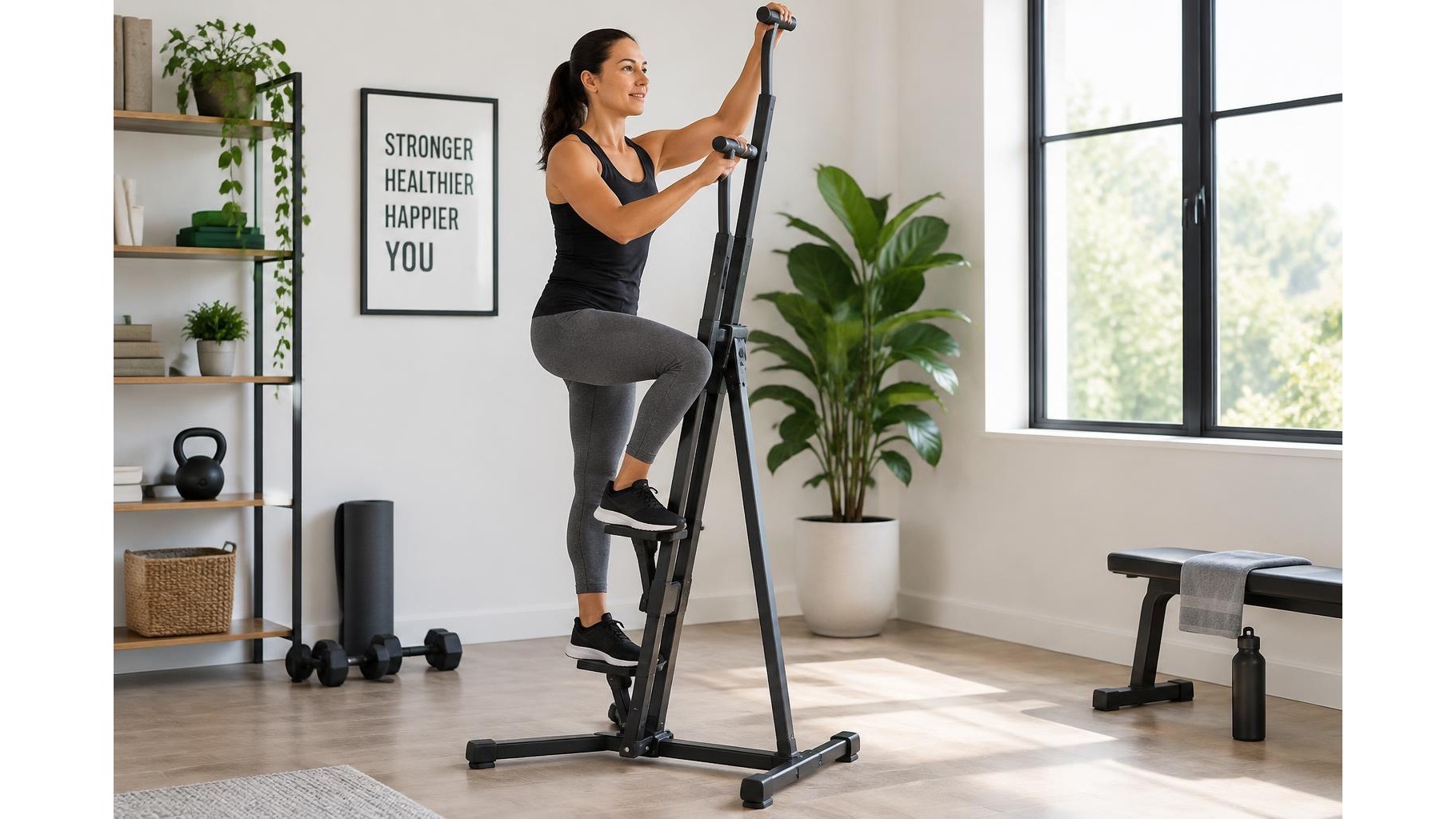
Start with a short warm-up at an easy pace. Stand tall, keep your shoulders relaxed and hold the handles without gripping tightly. Move opposite arm and leg together, using a smooth, alternating action. Choose a stride length that feels comfortable rather than stretching to the machine’s maximum range. Your feet should stay supported on the pedals, and your movement should remain quiet and controlled. If you are bouncing, leaning heavily on the handles or losing coordination, slow down and shorten the stride. Build duration before chasing speed.
Adjust stride to your body
Different machines allow different ranges of motion, and not every climber has adjustable stride settings. If yours does, begin with a modest range and increase it only while you can maintain steady posture. Taller users may prefer more travel, while shorter users may find a compact motion easier to control. Avoid locking your knees at the bottom or reaching so far that your hips rock from side to side. A well-fitted stride should feel fluid throughout the movement, with no pinching or forced joint positions. Check the manufacturer’s height and weight guidance before purchase.
Manage resistance and effort
Some vertical climbers use adjustable resistance; others rely mainly on body weight and pace. If resistance is adjustable, start low and make small changes after you have settled into your rhythm. Aim for a level that lets you keep moving smoothly without pulling yourself up with your arms. Use perceived effort to guide the session: at a moderate intensity, you should be able to speak in short sentences. For intervals, alternate brief harder efforts with easy recovery periods. Stop if you feel sharp pain, dizziness or unusual breathlessness.
Make the movement full-body
Let your legs provide most of the drive while your arms contribute in a coordinated, controlled way. Keep your torso braced gently, ribs stacked over hips, and gaze forward. Avoid shrugging, twisting or hanging your weight from the handles. To vary a workout, change one factor at a time: slightly extend the session, add a short interval, or increase resistance if available. Finish with a few easy minutes rather than stepping off abruptly. Beginners should keep early sessions brief and allow recovery between workouts.
Check footprint, stability and user fit
Measure the machine in both its working and stored positions, allowing extra room around it for safe movement. Folding designs can help in compact homes, but check that the folding mechanism is secure and practical to use. A broad, stable base and non-slip feet matter, especially during faster efforts. Look for a clear maximum user weight, a suitable height range, comfortable handles and pedals that support your feet. If possible, test the motion before buying: a climber that wobbles, feels cramped or forces an awkward reach is unlikely to suit regular training.
For an effective home session, prioritise smooth technique over speed: choose a natural stride, keep effort manageable and progress gradually. Compare the climber’s dimensions, stability and user-fit specifications with your space and needs, then begin with short, controlled workouts you can build on consistently.