Designing a home cardio corner usually comes down to a key decision: should you choose an upright exercise bike or a recumbent exercise bike? Both let you train in the comfort of your living room, but they put your body in very different positions. In this guide we compare posture, back comfort, calorie burn and which style best suits beginners, seniors and serious cyclists so you can match the bike to your goals rather than guessing.
Table of contents
Posture and back comfort: sitting tall vs leaning back
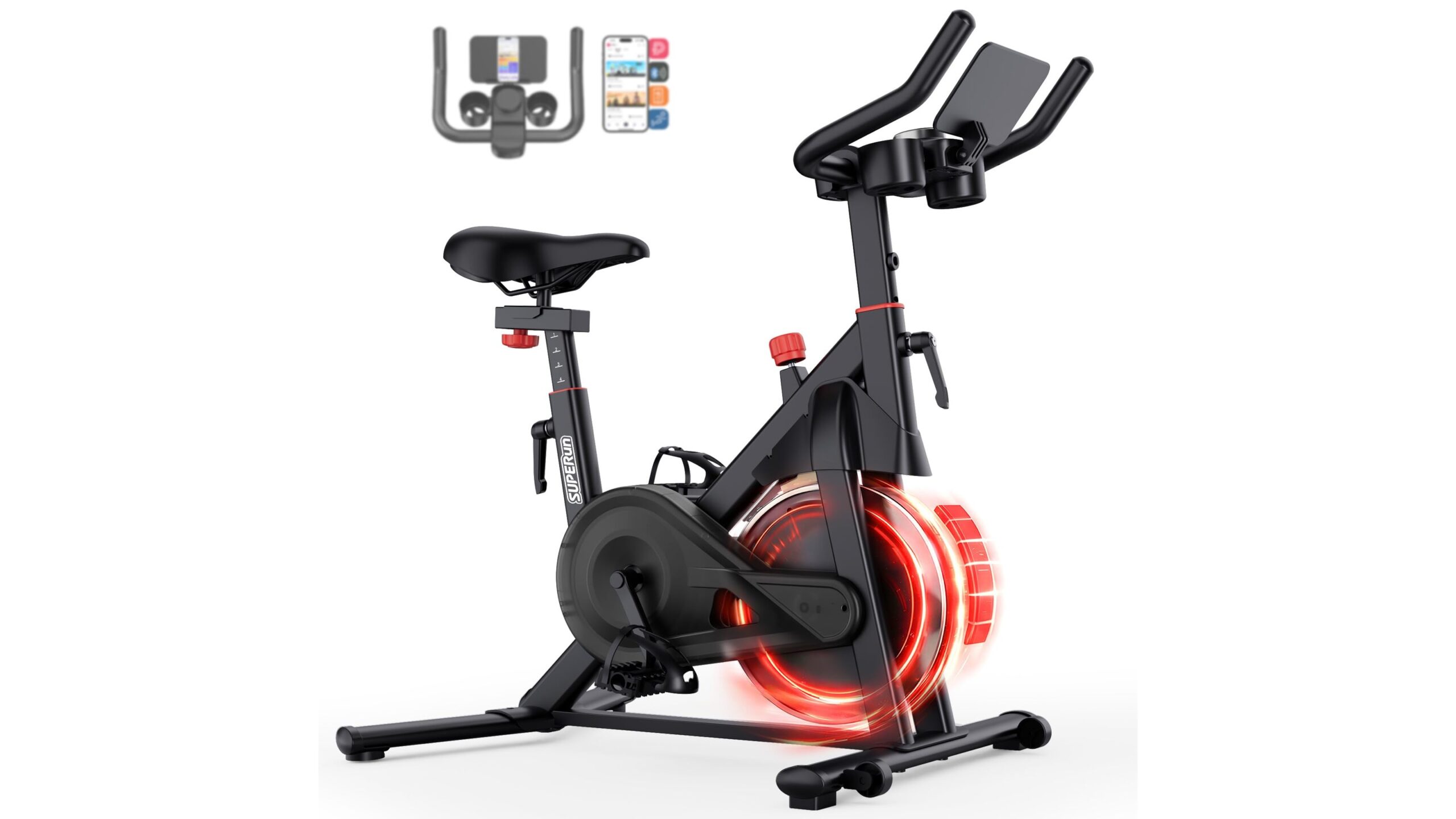
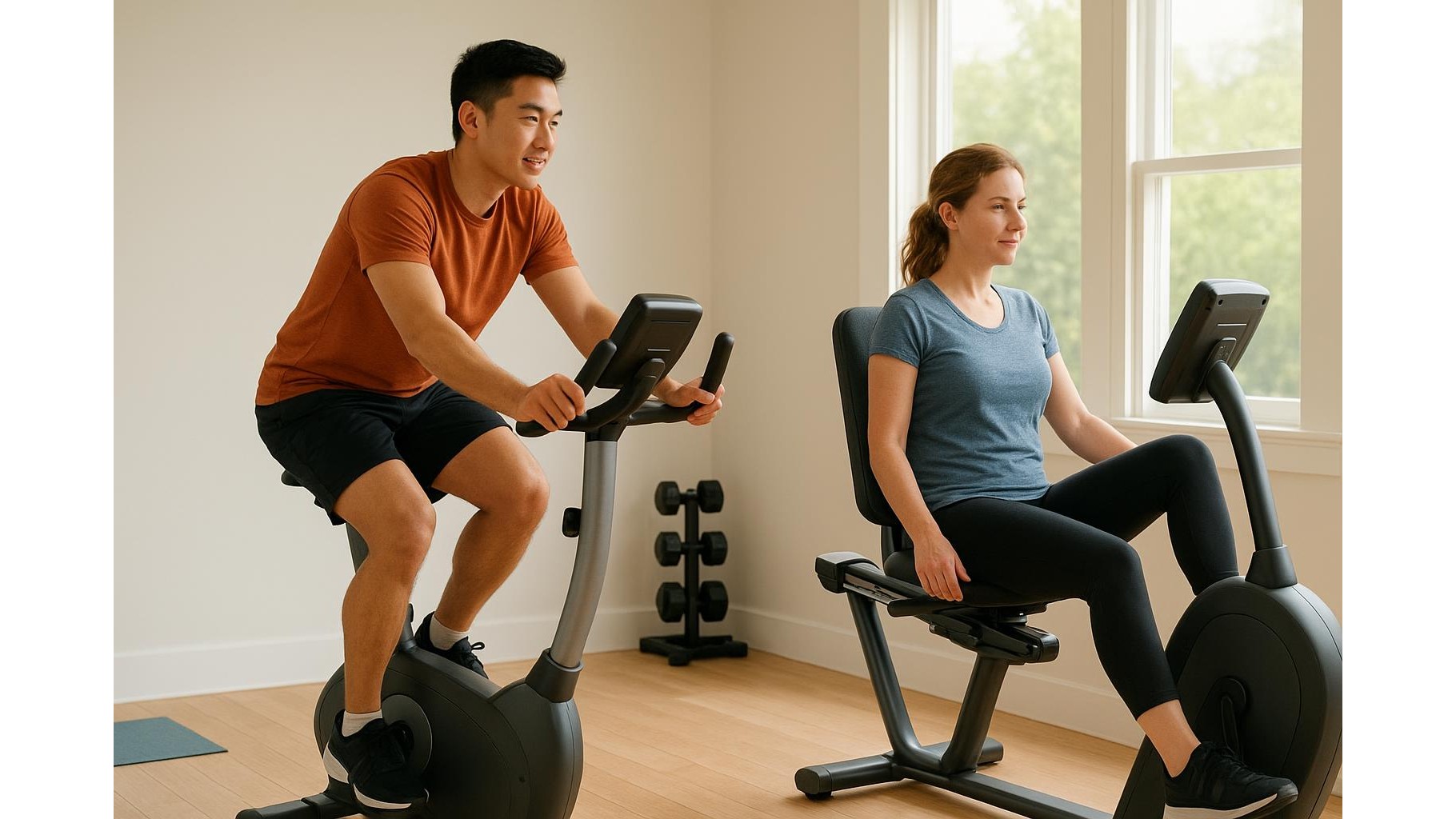
On an upright bike you sit in a taller, more vertical position, similar to a traditional road bike. Your hips are stacked over the pedals, your spine is slightly inclined and your hands sit on a front handlebar. This can feel natural for active riders, but it does place a little more load through the lower back and core, especially if you lean forward. A recumbent bike puts you in a reclined, chair‑like position with a large backrest: your legs extend forwards instead of downwards. This typically reduces pressure on the lumbar spine, hips and wrists, and is often more comfortable for people with chronic back pain, arthritis or balance issues. If your top priority is spinal comfort and joint friendliness, the recumbent position usually wins.
Muscles worked and calorie burn at home
Both bike types are excellent for low‑impact cardio, but they recruit your muscles slightly differently. An upright bike demands more from your core and upper body to stabilise you, and allows you to ride out of the saddle on some models, which can increase calorie burn and leg engagement. A recumbent bike focuses heavily on the quadriceps and glutes with minimal upper‑body involvement. Because you are supported by the backrest, perceived effort can feel lower for the same wattage, which is great for longer, steady sessions. In practice, calorie burn is driven more by how hard and how long you ride than by the frame style, but upright bikes usually offer a slight edge for high‑intensity intervals and performance‑oriented workouts.
Which bike is best for beginners and seniors?
If you are new to exercise, returning after a break or setting up a home gym for seniors, a recumbent bike is often the easiest and safest entry point. The step‑through frame seen on many recumbent models makes getting on and off simple, even with limited mobility. The stable chair‑like seat and back support reduce fear of falling and encourage longer, low‑stress sessions—ideal for building aerobic base fitness, managing weight and protecting the joints. Upright bikes can also work very well for beginners, but they may require more core stability and tolerance for saddle pressure. For older adults, those with balance issues or anyone managing knee, hip or back pain, the recumbent design usually makes adherence—and therefore results—much more likely.
Who should choose an upright bike?
An upright exercise bike tends to suit users who like a more athletic ride and want to mimic the feel of outdoor cycling. If you are a serious cyclist, enjoy spinning classes, or plan to incorporate interval training and hill simulations, an upright position allows more natural body movement and better power transfer through the pedals. It is also the better choice if you want a compact footprint in a small apartment, as upright frames usually take up less floor space than recumbent designs. Riders targeting performance goals such as FTP improvements, leg strength and conditioning for road or mountain biking will typically feel more at home on an upright model—as long as they do not have significant lower‑back issues that are aggravated by the forward lean.
Choosing the right cardio position for your goals
To decide between upright vs recumbent bikes for home, start by listing your non‑negotiables: back comfort, joint health, intensity preferences, space and budget. If pain‑free movement, easy access and long, gentle sessions are top of the list, a recumbent bike is usually the smarter buy. If you prioritise performance training, compact size and a road‑bike feel, lean towards an upright bike. Also consider who else will use the bike: a household with mixed ages and fitness levels may benefit more from the forgiving, inclusive design of a recumbent. Whichever you choose, look for good adjustability, clear console feedback and resistance levels that can grow with your fitness so your home bike remains effective for years.
In summary, both upright and recumbent exercise bikes can be excellent additions to a home gym, but they serve slightly different needs. Upright bikes favour athletic performance, stronger core involvement and higher‑intensity work in a smaller footprint. Recumbent bikes shine for comfort, back support, ease of use and accessibility for beginners, seniors and anyone in rehabilitation. Match the bike style to your body, back history and training goals, and you will turn your home cardio corner into a sustainable habit rather than an expensive clothes rack.