When lower-body injuries or mobility limits make traditional cardio hard, it does not mean you have to give up on conditioning. Focusing on upper-body cardio at home lets you train your heart and lungs using your arms, shoulders and back, keeping impact off your hips, knees and ankles. In this guide we explain how to choose arm-focused cardio machines that fit a home space, what features to prioritise for comfort and safety, and how to match each tool to your goals and limitations.
What to look for in upper-body focused cardio machines
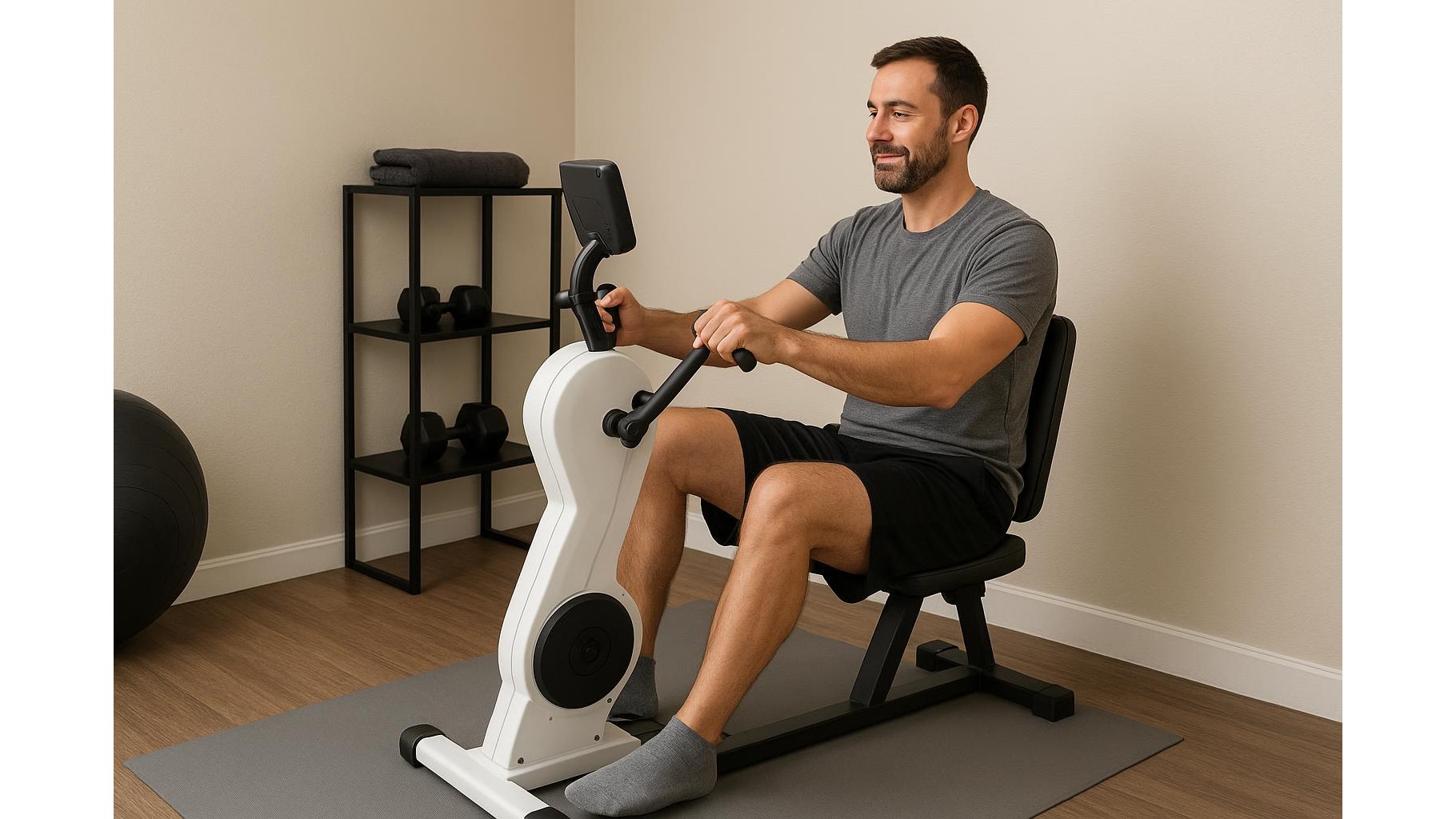
Before you shop, define what you need from an upper-body cardio machine. If you cannot load your legs at all, look for equipment that can be used seated, with stable support and minimal need to stand up or step on moving parts. Prioritise an adjustable seat or clear compatibility with a standard chair or wheelchair, plus multiple resistance levels so you can start gently and progress over time. A smooth resistance system is essential to avoid jerky movements that can irritate shoulders or elbows. Check the dimensions for your space, including ceiling height for any overhead motion, and look for machines with a simple console that tracks time, distance or calories so you can monitor your conditioning.
Seated arm cycles and compact upper-body ergs
For many people with lower-body limitations, a seated arm bike or compact upper-body ergometer is the most accessible option. These devices mimic cycling with your arms and can be placed on a table while you sit in a chair, or on the floor while you remain in a supported position. When evaluating models on Amazon, look for solid stability (rubber feet, wide base) so the unit does not slide, as well as crank length suitable for your arm span and shoulder comfort. A lightweight frame makes it easier to move and store between sessions. Many home users benefit from simple large dials for resistance rather than complex touchscreens. If grip is an issue, choose designs with ergonomic handles or strap-like grips that do not demand strong hand strength.
Air bikes for mixed arm and light leg work
If you can tolerate some leg movement but must avoid heavy impact, an air bike (fan bike) can be an effective upper-body dominant cardio option at home. These bikes use large fan wheels that increase resistance the harder you push and pull with the handles. When comparing options, pay attention to seat adjustability so you can keep knee flexion in a safe range, and check the minimum and maximum user height recommendations. Heavier frames usually feel more stable for hard upper-body intervals, which is useful if you want short bursts of high-intensity work while keeping leg contribution modest. Also consider the placement of foot pegs: if you ever need to offload the legs completely, being able to rest your feet while driving mainly with the arms is a big advantage.
Rowers and alternatives when leg drive is limited
Traditional rowing machines rely heavily on the legs, but some people with partial lower-body capacity can still use them if they reduce leg drive and emphasise arm and back pulling. If you go this route, favour rowers with smooth, adjustable resistance and a comfortable seat and handle to reduce stress on the spine and wrists. Make sure the frame height and slide length allow you to maintain a safe range of motion without deeply bending your knees. Users who cannot row safely may instead opt for cable-driven machines or resistance bands combined with timed intervals, mimicking the continuous pulling of a rower without needing a full leg push. Whichever you choose, start at low resistance and focus on posture to protect shoulders and mid-back.
Simple tools for upper-body conditioning in small spaces
Not every home needs—or can accommodate—a full machine. Compact tools like battle ropes, resistance bands and suspension trainers can deliver intense upper-body cardio in short sessions. Battle ropes allow you to sit or half-kneel while creating waves, slams and circles with the arms, driving heart rate up without loading the legs. Resistance bands can be anchored at door height for fast-paced rows, presses and pulldowns performed in intervals. When choosing these simpler tools online, check the length and resistance rating to ensure they match your space and strength, and look for clear instructions or video support. These options are especially useful if you want portable, low-cost conditioning while you rehab a lower-body injury.
Building an effective upper-body cardio routine at home is absolutely possible, even when your legs cannot do much work. By prioritising seated support, smooth adjustable resistance and tools that match your mobility, you can keep your heart and lungs strong while protecting injured joints. Whether you invest in a dedicated arm erg, a versatile air bike or simpler implements like ropes and bands, choose equipment that feels comfortable, stable and easy to use every day. Consistency matters more than complexity: start with short, manageable sessions, monitor your response and progress gradually so that upper-body focused cardio becomes a sustainable part of your recovery and long-term fitness.