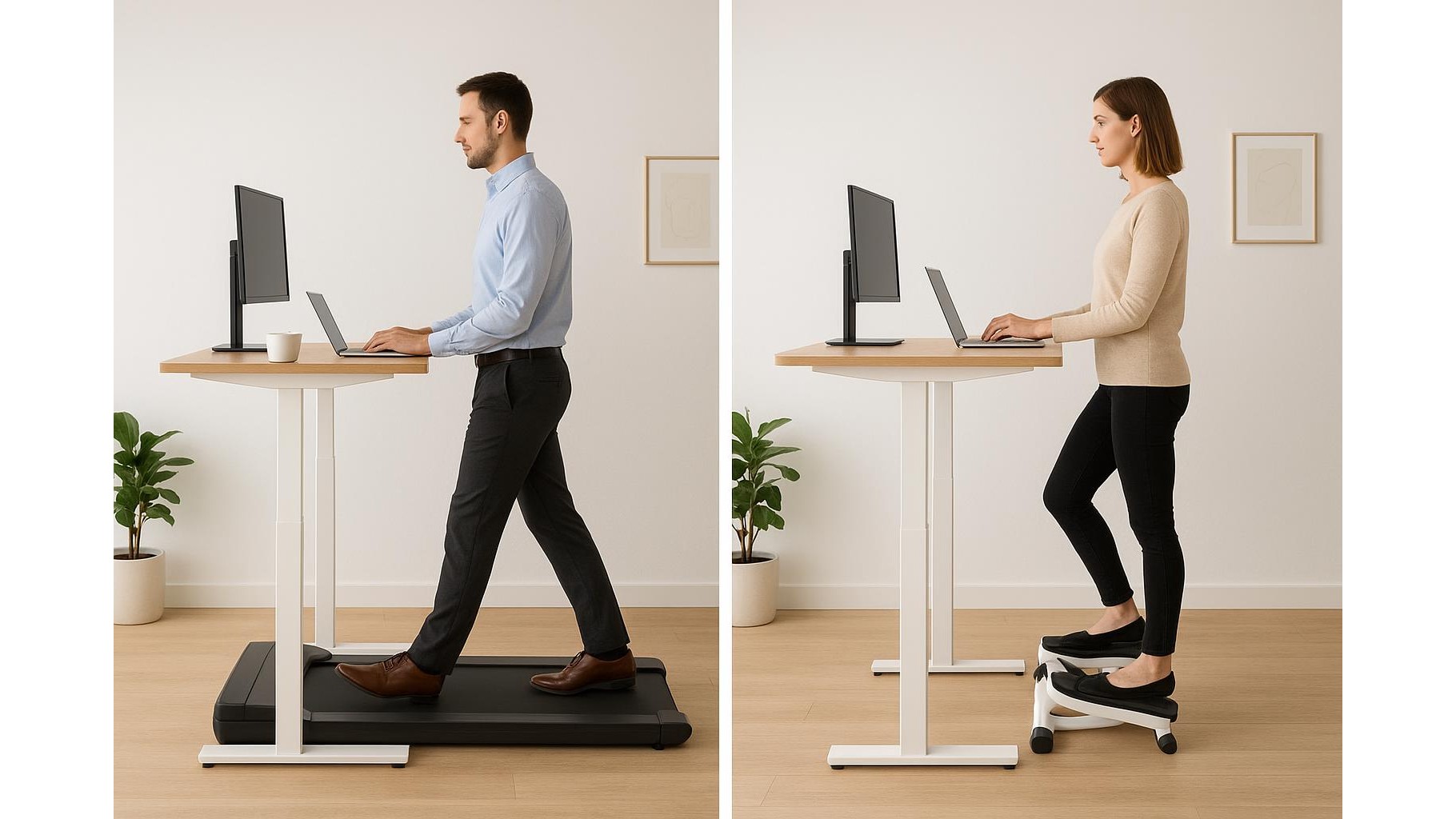
Working from home has turned our standing desks into permanent fixtures – but standing still for hours is hardly better than sitting. Two popular ways to add low‑impact movement are the under-desk treadmill and the compact stepper. Both promise quiet cardio while you answer emails, but they feel very different under your feet and fit differently into a home office. Here’s how they compare so you can choose the right tool to actually keep you moving during the workday.
Table of contents
Footprint and portability in a real home office
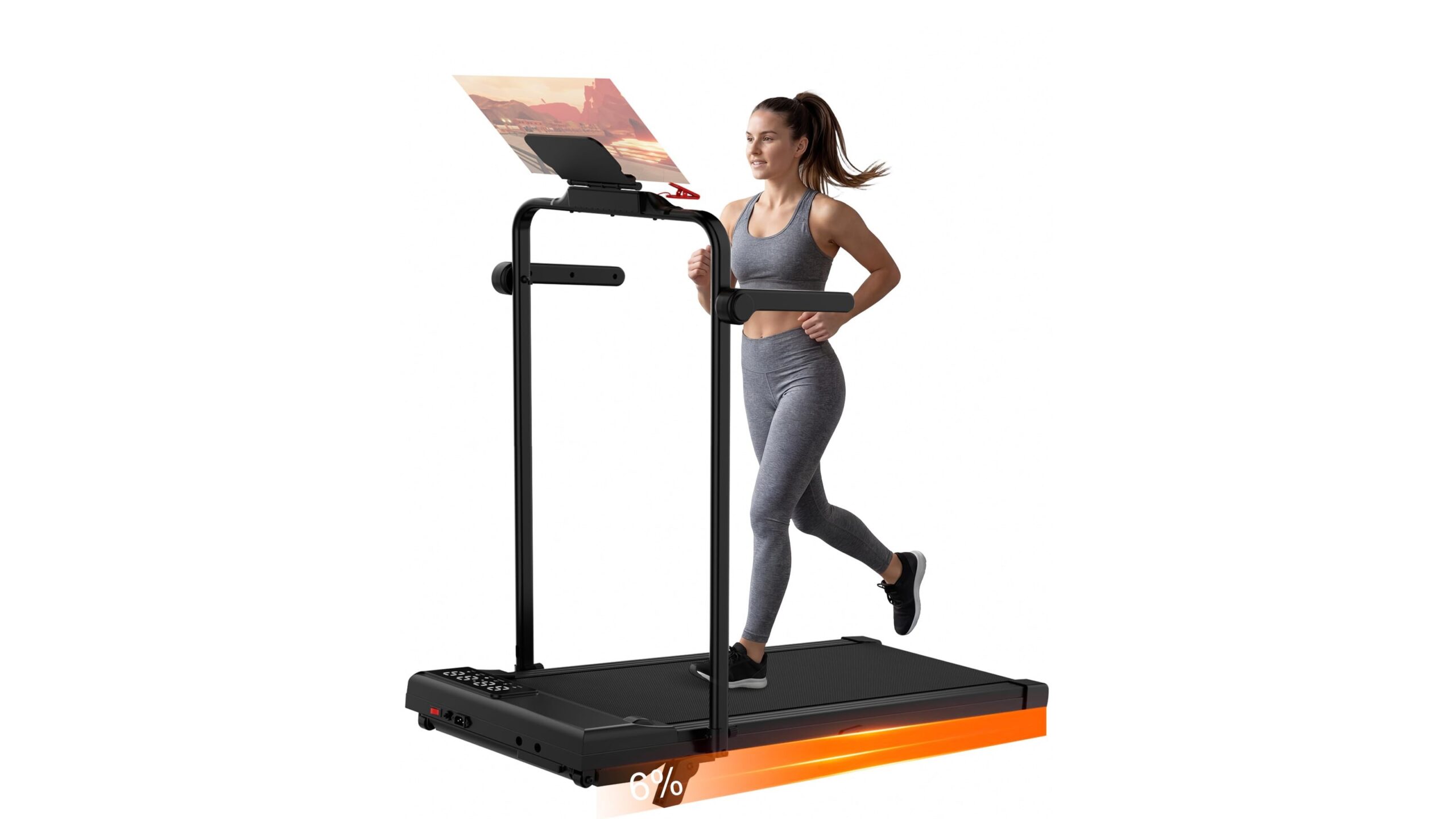
An under-desk treadmill (often called a walking pad) gives you a flat, continuous belt to stroll on while you work. Most models are around 120–145 cm long and 50–60 cm wide, so you’ll need a decent strip of floor in front of your desk and ideally a place to slide it when not in use. Many are slim enough to store under a sofa or bed and come with transport wheels, but they’re still fairly long. A compact stepper, by contrast, has a much smaller footprint – typically similar to a large shoebox – and can live under or beside your desk when not in use. If you’re in a tight box room or share space with a partner, the stepper’s tiny size and easy portability are a clear win.
Noise levels and neighbour‑friendly cardio
For apartment dwellers, noise is often the deciding factor. Quality under-desk treadmills use brushless or well‑insulated motors and low‑friction belts, so at slow walking speeds (1–4 km/h) you mostly hear a soft hum and your footfall. On older floors, that repetitive impact can still transmit a subtle thud downstairs. A compact stepper uses a hydraulic or magnetic resistance system; when well built and lubricated, it produces more of a quiet hiss or swoosh with each step and less motor noise. However, cheaper models can squeak as the pistons heat up. In practice, both options can be Zoom‑call safe, but a premium treadmill on a thick mat usually edges ahead for consistent low noise, while the stepper depends heavily on build quality and regular maintenance.
Calorie burn, intensity and how it feels to work
At typical walking pad speeds, you’re effectively turning your day into long bouts of NEAT (non‑exercise activity thermogenesis). Walking slowly for hours can quietly add a few hundred calories to your daily burn without feeling like a workout, and many people find they can type, take notes and navigate spreadsheets while cruising at 1.5–2.5 km/h. A compact stepper tends to feel more like traditional exercise: the up‑down motion and adjustable resistance load your calves, quads and glutes more, raising your heart rate in shorter bursts. That can mean higher calorie burn in 15–20 minutes, but it’s harder to sustain while writing or doing detailed tasks. If you want all‑day background movement, the treadmill wins; if you prefer time‑boxed, more intense bouts between meetings, the stepper shines.
Posture, ergonomics and joint impact
Both tools are low impact, but they influence your posture differently. Walking on an under-desk treadmill encourages a natural gait, gently mobilising hips, ankles and lower back. The key is matching belt speed with desk height so you’re not leaning or over‑reaching for your keyboard. Done right, it can reduce stiffness and encourage subtle core engagement. A compact stepper keeps you mostly in place, with your weight shifting vertically rather than forward. This can target your lower body muscles but may increase calf tightness or knee discomfort if the step height and resistance are too high. The stepping motion also makes it trickier to keep your upper body relaxed and wrists neutral while typing. For anyone with knee or hip issues who still wants to work hands‑free, a slow and stable walking pad is usually kinder on the joints and easier to pair with prolonged computer work.
Choosing the best quiet cardio tool for your setup
When picking between an under-desk treadmill and a compact stepper, think beyond the marketing claims and look at your actual workday. If you spend hours in deep focus at a standing desk and have enough horizontal floor space, a slim walking pad lets you accumulate thousands of extra steps almost passively. Look for a low profile, good weight capacity, clear remote or app controls and a motor rated for quiet operation at low speeds. If your space is tiny, you stand only for calls, or you prefer quick “movement snacks” between meetings, a compact stepper with smooth hydraulics, adjustable resistance and non‑slip pedals will fit more realistically into your routine. Either way, pair your device with a stable standing desk, a cushioned mat if you’re on hard floors and regular breaks to stretch.
Ultimately, the best quiet cardio tool is the one you’ll use consistently. A walking pad makes it easy to turn low‑intensity movement into your default while you work, racking up steps without thinking. A compact stepper delivers punchier sessions in a tiny footprint, ideal for quick energising breaks. Consider your space, noise sensitivity, joint history and how you like to work; then commit to integrating whichever option you choose into your daily schedule. With the right setup, your home office can double as a subtle but effective fitness zone, keeping you healthier with every email you send.