Under-desk rowing machines promise office-friendly movement, low-impact training and a way to fight back against hours of sitting. For home workers in a small flat, they look like the perfect compromise between a full-sized rowing machine and doing nothing at all. But can these compact devices really replace traditional cardio like classic rowers or walking pads when it comes to calorie burn, posture, joint health and everyday usability?
What exactly is an under-desk rowing machine?
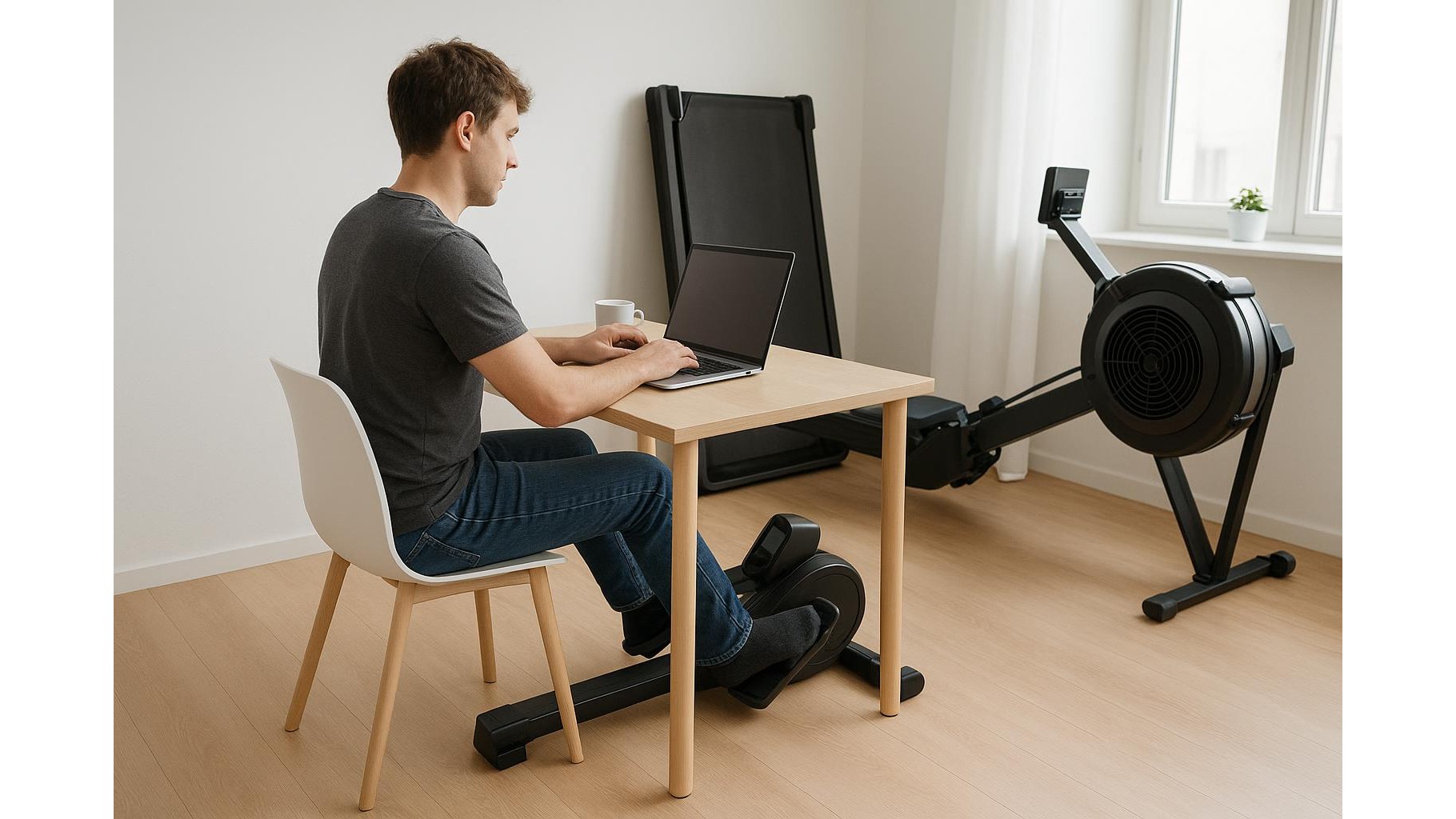
Under-desk rowers are usually compact, pedal-style devices you park under your desk or coffee table. Instead of a sliding seat and long rail like a full rowing machine, you get a small frame with two footplates and a resistance system (often magnetic or friction-based). You sit on your regular chair or office chair and “row” with your legs, pushing and pulling through a short range of motion. This makes them closer to an under-desk bike than to a true erg, but the back-and-forth motion can still stimulate circulation, lightly engage the core and break up long sedentary periods while you work or watch TV.
Calorie burn vs classic rowers and walking pads
In terms of calorie burn, an under-desk rower sits between light fidgeting and moderate cardio. Because you are seated upright and only the lower body moves, heart rate typically stays lower than on a traditional rowing machine, where you generate power with legs, back and arms. A full rower session can reach vigorous intensity and burn 400–700 kcal per hour depending on body weight and effort. A compact under-desk device is more realistic at 100–250 kcal per hour at a sustainable pace. Compared with a walking pad, the picture is similar: walking at 3–4 km/h while standing often burns more calories than gentle under-desk pedalling. So these devices are great for adding “background movement”, but they are not a complete replacement for higher-intensity cardio if your primary goal is maximum calorie expenditure.
Posture, ergonomics and joint impact in a small apartment
One of the strengths of under-desk rowers is their low joint impact. Because you sit and move through a controlled, short range, stress on knees, hips and ankles is minimal, which is ideal for beginners, older users or anyone returning from injury. However, posture can be a double-edged sword: if your chair and desk are not set up correctly, you may end up slouching or leaning forward to keep working, which can strain the lower back and neck over long sessions. Full-sized rowing machines, when used properly, actually promote strong hip hinge mechanics and back extension. Walking pads encourage an upright stance, but require enough floor space. In a small apartment, a compact rower wins on footprint, but you should still adjust seat height, screen position and foot strap tightness to stay comfortable and protect your joints.
Noise levels and neighbour-friendly training
For flat dwellers, one of the biggest concerns is noise. Most under-desk rowers use magnetic or belt-driven resistance, which is very quiet: you mainly hear a soft whirring and your feet moving. On hard flooring, adding a simple training mat can further reduce vibrations and protect neighbours downstairs. Traditional air rowers are noticeably louder due to the flywheel, and even some budget walking pads produce a hum plus footstep noise that can be intrusive late at night. This makes compact rowers particularly suited to shared apartments or home offices where someone else is on calls nearby. The trade-off is that the smoother and quieter the resistance, the less intense it can feel compared with the heavy flywheel of a gym-grade rowing machine.
Real-world usability for home workers
The main advantage of an under-desk rowing machine is how it fits into your daily routine. You can keep moving during emails, video calls (with the resistance turned down) or TV time. Unlike a full rower, there is no need to change clothes or “start a workout”; you simply start pedalling. In a compact living room or studio, storage is also easier, as many models slide under a sofa or bed. However, there are limits: at higher resistance you will inevitably bounce, which makes typing less precise, and many people find that sustained concentration is harder when working at vigorous intensity. For focused tasks, low resistance “active sitting” works best. For true cardio training, you will probably still want separate, dedicated sessions where you can focus on breathing, pace and technique.
So, can they really replace traditional cardio?
Under-desk rowers are a clever answer to the problem of long, sedentary office days in tight spaces, but they are not a one-to-one replacement for traditional cardio equipment. They excel at adding light, frequent movement, supporting joint-friendly activity and staying quiet in a small apartment. Compared with full-sized rowing machines and walking pads, they generally lose on peak calorie burn, whole-body muscle engagement and the ability to build serious conditioning. The ideal approach is to treat an under-desk rower as a foundation for daily activity—keeping your legs and circulation working for hours each week—while still scheduling regular, higher-intensity sessions on a classic rower, walking pad or outdoors to fully cover your fitness, fat loss and cardiovascular health goals.