
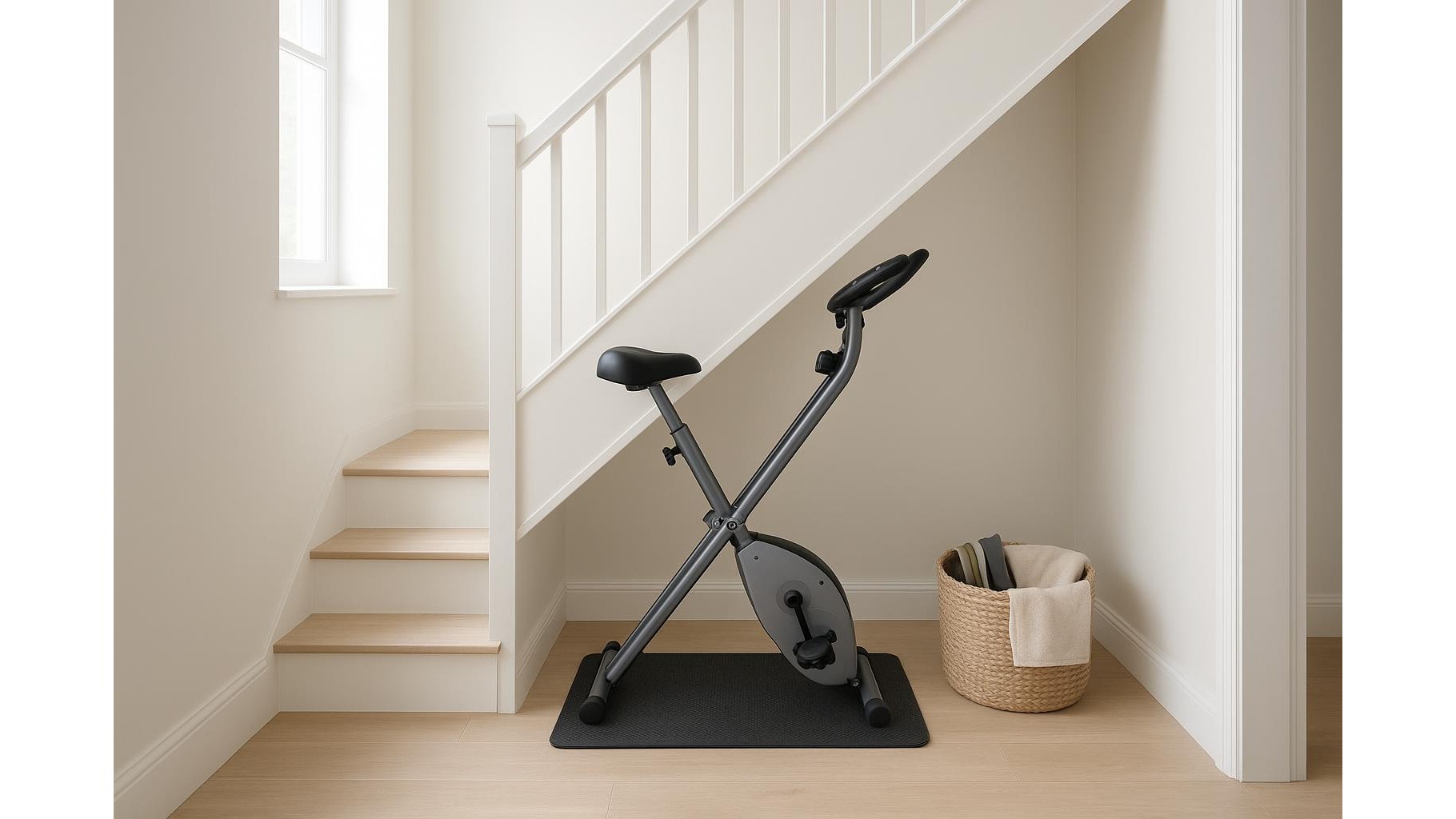
Turning the dead zone under your staircase into a compact cardio corner is one of the smartest ways to add movement to a small home. The challenge is not just finding a machine that “fits”, but choosing equipment that respects height limits, depth, noise levels and access, while still giving you a workout you will actually use. In this guide we’ll break down how to read your space, what to measure, and which bike, stepper or mini cross trainer formats generally work best in this tricky area.
Measure your under‑stairs space like a pro
Before you even browse for machines, grab a tape measure. Under‑stairs zones usually slope, so you need three key numbers: maximum height at the tallest point, usable height where your head will be when exercising, and depth from the back wall to the edge of the stair opening. For bikes and steppers, check your standing or seated height on similar kit at the gym, then add 10–15 cm safety clearance for headroom. Also measure the width of the narrowest point, including skirting boards, and the doorway or corridor you’ll carry the machine through. Finally, sketch the floor plan and note any sockets, radiators or doors: this will help you decide whether a folding exercise bike, mini stepper or under‑desk cross trainer makes the most sense.
Choosing the right cardio format for low ceilings
Under‑stairs areas are almost always height‑restricted, so low‑profile formats shine. A recumbent or semi‑recumbent bike lets you sit lower than on an upright, reducing head clearance issues. Folding upright bikes can also work if you place the saddle under the highest part of the slope and avoid standing climbs. Mini steppers create more vertical movement, so they are best when the highest stair section is generous. For very tight spaces, an under‑desk elliptical or mini cross trainer is ideal: you remain seated on a normal chair or small bench, while your feet glide on the pedals with minimal rise. When reading product specs, look not only at total machine height but also at pedal height at top of stroke, then add your seated height to ensure your head won’t meet the stairs.
Depth, footprint and storage under the stairs
Depth is the silent space killer under many staircases. Some modern cardio machines are surprisingly long, even if they look compact online. Check the listed footprint dimensions and compare them to your drawing. Folding exercise bikes are winners here: they offer a stable base while in use, then fold to a slim profile you can wheel flat against the wall when you are done. Mini steppers and under‑desk ellipticals are naturally compact; many slide under a console or into a storage box. When assessing a product, look at weight and whether it has transport wheels. Under‑stairs areas can be awkward to reach; being able to tilt and roll the unit is far more practical than dragging a heavy base over flooring. Aim for machines that weigh enough to feel stable but are still manageable for you to move solo.
Noise, vibration and neighbour‑friendly cardio
Under‑stairs zones often sit near living rooms or even neighbouring walls in terraced homes, so noise control is essential. Prioritise machines that use magnetic resistance and a belt drive, which are much quieter than fan‑based or chain‑driven options. Mini steppers can transmit vibration through hard floors, so consider placing them on a thick rubber mat or interlocking foam tiles to absorb impact and protect laminate or tiles. Under‑desk ellipticals and magnetic bikes are generally the quietest choices, ideal if you plan to watch TV or train early in the morning. Check user reviews for mentions of squeaks, rattles or wobble; under‑stairs structures can amplify sound, so a slightly noisy machine in an open room can feel much louder in a confined cavity.
Comfort, usability and real‑world training
A machine that technically fits but feels cramped will quickly turn into an expensive clothes hanger. Look for adjustable saddles, handlebars and resistance levels so you can dial in a comfortable position even in a tight footprint. For bikes and under‑desk trainers, check that you can maintain a neutral posture without banging knees on the underside of the stairs or on a desk above. For steppers, ensure you have enough lateral clearance for natural hip movement. Built‑in LCD consoles that track time, distance and calories can help keep you engaged in a low‑visual space, and simple resistance dials are preferable to large, protruding control panels. Under the stairs, you want kit that is simple to start, easy to store and intuitive enough that you will actually use it for short daily cardio sessions.
With a handful of careful measurements and a focus on low‑profile, quiet formats, it is entirely possible to turn the awkward void under your staircase into a genuinely useful cardio corner. Prioritise recumbent or folding bikes, mini steppers and under‑desk cross trainers that match your height, depth and noise needs, and don’t forget basic comfort features that make regular movement enjoyable. Done well, this small slice of floor can deliver big fitness benefits, helping you build a consistent cardio habit without sacrificing precious living space.









