Under-desk pedal exercisers are often dismissed as casual calorie-burners, but with a bit of structure they can become a surprisingly effective cardio training tool. By planning smart interval workouts, managing resistance, and paying attention to posture and cadence, you can turn quiet pedaling in your living room or home office into meaningful conditioning that supports heart health, weight management and general fitness—without turning your space into a full-blown spin studio.
Why under-desk pedaling can count as real cardio
To turn an under-desk pedal exerciser into real cardiovascular training, you need to hit a level of effort that elevates your heart rate and keeps it there long enough to matter. That usually means working in a moderate to vigorous intensity zone where you can still talk, but not sing full sentences comfortably. Compact mini exercise bikes make this possible by allowing you to pedal at higher cadence (revolutions per minute) while increasing resistance enough to feel like work, not fidgeting. Paired with consistent sessions of 20–30 minutes, a few times per week, this kind of setup can improve endurance and daily energy levels, especially for people who spend long hours sitting at a desk.
Simple interval templates to follow at home
Intervals are the easiest way to structure under-desk pedal workouts without overthinking them. A good starter template is 5 minutes of easy warm-up, followed by 8–10 rounds of 30 seconds at a brisk, challenging pace and 60–90 seconds of easy pedaling for recovery. Keep resistance at a medium level where your legs feel a clear burn by the end of each hard rep, but you do not have to change your seated posture or grip the desk. Another option is a pyramid: 1 minute hard, 1 minute easy; 2 minutes hard, 2 minutes easy; 3 minutes hard, 3 minutes easy, then back down. These structures keep boredom away and help you accumulate time at higher intensity, even if you only have a compact pedal exerciser under your coffee table.
Dialing in resistance and cadence for maximum benefit
Many users either pedal too softly with very low resistance or grind at too high a resistance with slow, choppy strokes. For effective home cardio, aim for a smooth cadence of roughly 60–80 RPM during your work intervals and a comfortable 40–60 RPM during recovery. Use the resistance dial to find three clear zones: an easy zone where you could pedal for 30–40 minutes, a moderate zone for 10–20 minutes of steady work, and a hard zone that you can only sustain for short intervals. If your device has a basic display for speed or estimated watts, use it to track and gently push these numbers over time. Without numbers, use a 1–10 effort scale and keep hard intervals around 7–8 out of 10.
Posture, setup and comfort so you can actually stick with it
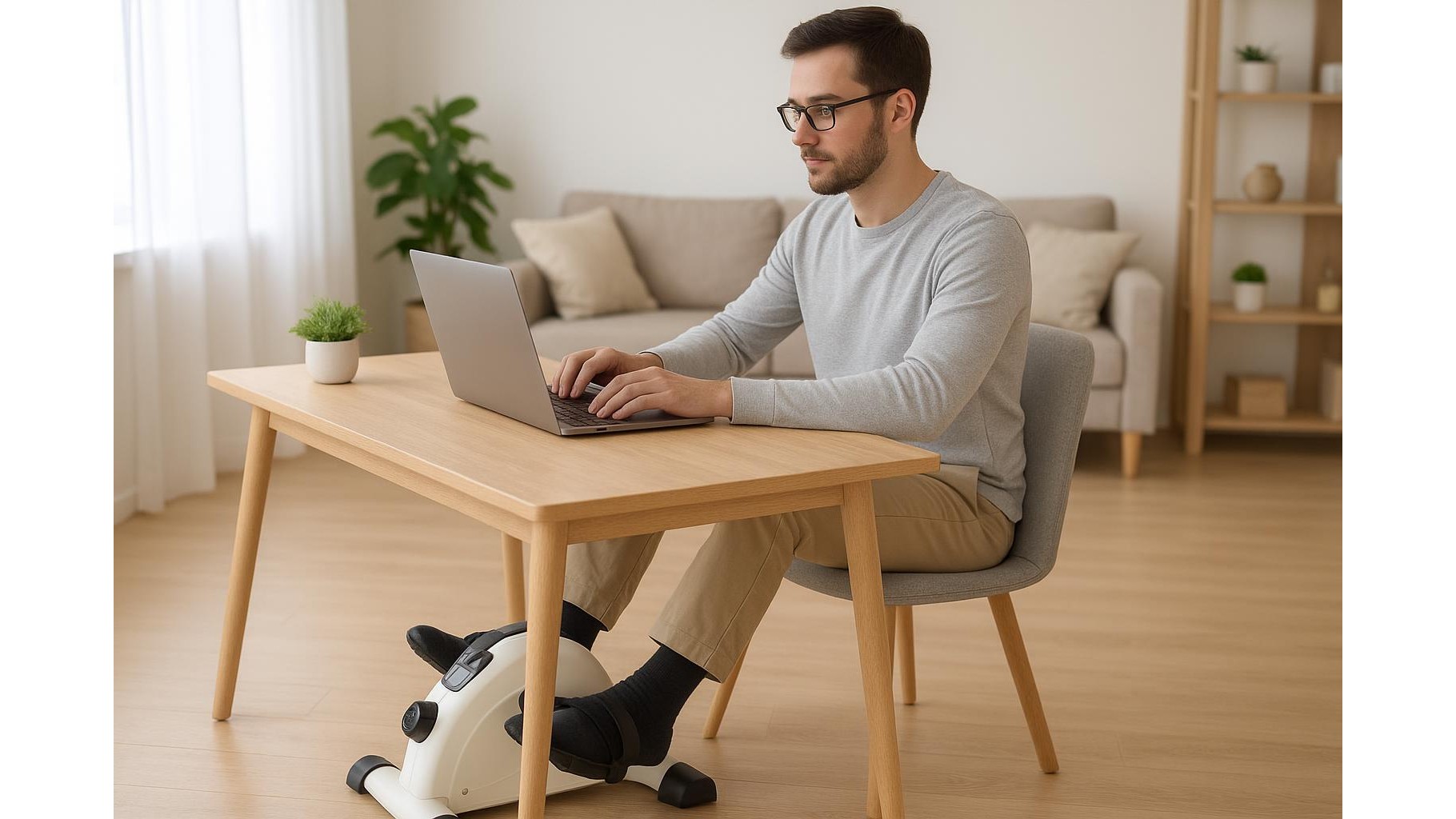
Good bike-like posture makes under-desk intervals far more effective and comfortable. Sit toward the front of your chair with feet centered on the pedals so that at the bottom of the stroke your knees stay slightly bent, not locked. Keep your back tall and your core lightly braced instead of collapsing into the backrest; this engages more muscles and stabilizes your hips. If your knees hit the underside of the desk, slide the pedal unit a little farther forward or slightly lower your seat height. Use a chair that does not roll easily during hard efforts, and consider a small floor mat to prevent slipping and to dampen noise. The better your setup feels, the easier it is to complete structured interval sessions during work calls or TV time.
Progressing your workouts without turning home into a spin studio
Once you are comfortable with basic intervals, you can progress gradually without adding bulky equipment. First, increase total time in the saddle by a few minutes per week until you reach 30–40 minutes per session. Next, bump the resistance slightly while keeping cadence smooth, or add an extra round or two to your intervals. You can also introduce one tempo session per week: 10–20 minutes at a steady, moderately hard pace where conversation is possible but labored. Rotate between lighter active-recovery days and tougher interval days so your legs do not feel constantly fatigued. This low-profile approach lets you build a consistent cardio habit with a compact pedal exerciser, while keeping your living room quiet and clutter-free.
In summary, an under-desk pedal exerciser becomes real cardio equipment when you treat it like one: structure interval workouts, manage resistance and cadence, and pay attention to posture and comfort. By starting with simple intervals, tracking effort, and progressing volume or difficulty slowly over time, you can turn casual pedaling into meaningful conditioning that fits seamlessly into a busy home or office routine, no spin studio required.