If you want to burn fat, boost your conditioning and protect your joints, sprint-style intervals on a home exercise bike are one of the most efficient options. You can train hard without impacting your knees like running does, and you can adjust resistance and cadence precisely. This beginner-friendly guide walks you through warm-up, work and rest intervals, weekly progressions and essential technique tips so you can get leaner and fitter with a safe, structured plan.
Setting up your home exercise bike for safe sprints
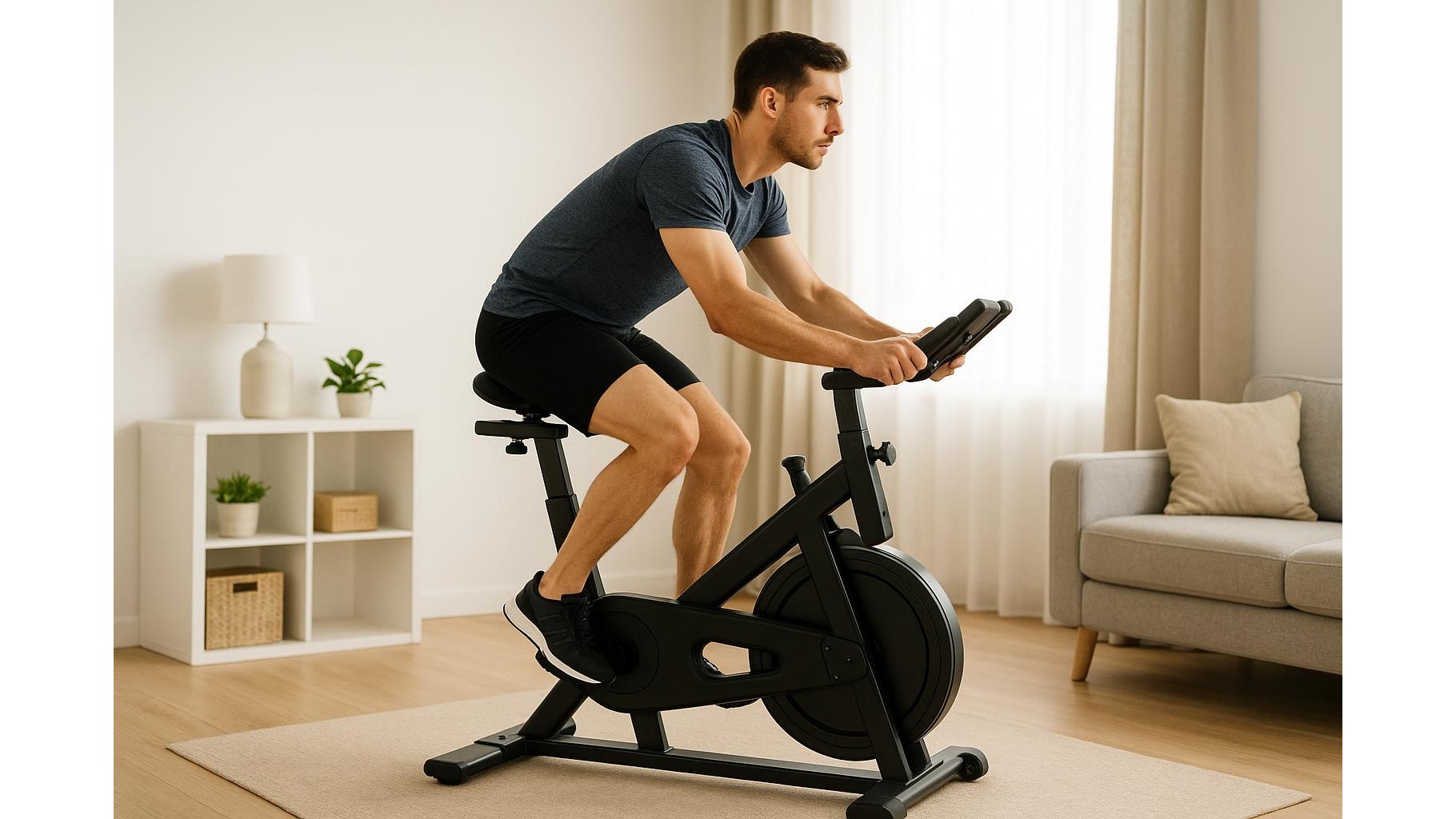
Before you start any bike sprint workout, make sure your setup supports good joint alignment. Adjust the saddle so that, with your heel on the pedal at the lowest point, your leg is almost straight; when you clip in or place the ball of your foot on the pedal, you should keep a soft bend in the knee. Set the handlebar height so you can keep a neutral spine without rounding your lower back. For sprint-style intervals, use a stable bike with magnetic resistance and a solid frame, so there’s no side-to-side wobble when you accelerate. A built‑in display with cadence and heart-rate compatibility helps you stay in the right zones and track progress over time.
Warm-up routine to protect knees and lower back
A thorough warm-up is non‑negotiable if you care about your knees and lower back. Start with 3–5 minutes of easy pedalling at very low resistance to increase blood flow. Then move into 4–5 minutes of gradually rising intensity: every minute, nudge the resistance up slightly and increase your cadence until you are breathing deeper but can still talk. Finish with 2–3 short “priming” efforts: pedal hard for 10–15 seconds at a moderate resistance, followed by 45–50 seconds very easy. This wakes up your nervous system without causing fatigue, so that when you begin your first real sprint, your muscles, tendons and joints are ready to handle higher forces safely.
Beginner sprint-style interval structure
For beginners, structure is more important than intensity. A simple session could be 8 rounds of 20-second sprints followed by 100 seconds of easy pedalling. During the work interval, increase resistance to a challenging but sustainable level and accelerate to a fast, controlled cadence; you should feel like you are working at 8–9 out of 10 effort, but still holding good form. In the recovery segments, reduce resistance and pedal very lightly so your breathing comes down. Total time on the bike, including warm-up and cool down, will be around 25–30 minutes, making this HIIT on a home exercise bike highly time‑efficient for fat loss.
Weekly progression for fat loss and conditioning
Run the same interval structure 2–3 times per week on non‑consecutive days, and only progress when it feels manageable. In week one, stick to 6–8 rounds of 20 seconds on / 100 seconds off. In week two, move to 8–10 rounds. By week three or four, you can extend the work to 25–30-second sprints while slightly shortening the rest to 90 seconds. As your conditioning improves, you may add an extra weekly session or use a pyramid format, such as 20–30–40–30–20 second efforts with equal or slightly longer rest. Combine this with a modest calorie deficit and daily walking to create a strong environment for fat loss while steadily upgrading your aerobic and anaerobic fitness.
Technique tips to stay powerful and pain-free
Good cycling technique keeps power high and joint stress low. During sprints, keep your core engaged and your torso relatively still; avoid rocking your hips or yanking on the handlebars. Drive through the mid‑foot, not the toes, and think about pushing down and then smoothly pulling back through the bottom of the pedal stroke. Maintain a slight bend at the knee at the bottom position to spare your joints. If your lower back feels tight, raise the bars a little and focus on a neutral spine. Stop the sprint immediately if you feel sharp knee pain, and lower resistance until you can pedal powerfully without discomfort.
With a properly adjusted home exercise bike and a structured beginner sprint plan, you can get impressive fat-loss and conditioning benefits in just a few short, focused sessions per week. Start conservatively, respect the warm-up and cool down, and progress your intervals gradually. Combine solid technique with consistent effort and you’ll build stronger legs, a healthier heart and better overall fitness, all without leaving your living room.