If you are building a home gym and want a serious cardio machine, two underrated contenders are the ski erg and the stair climber. Both can torch calories and improve conditioning, but they feel very different in use and suit different bodies, spaces and training styles. This guide compares them specifically for home use, looking at space and noise, muscles worked, training goals and who each machine really fits.
How a ski erg works vs a stair climber
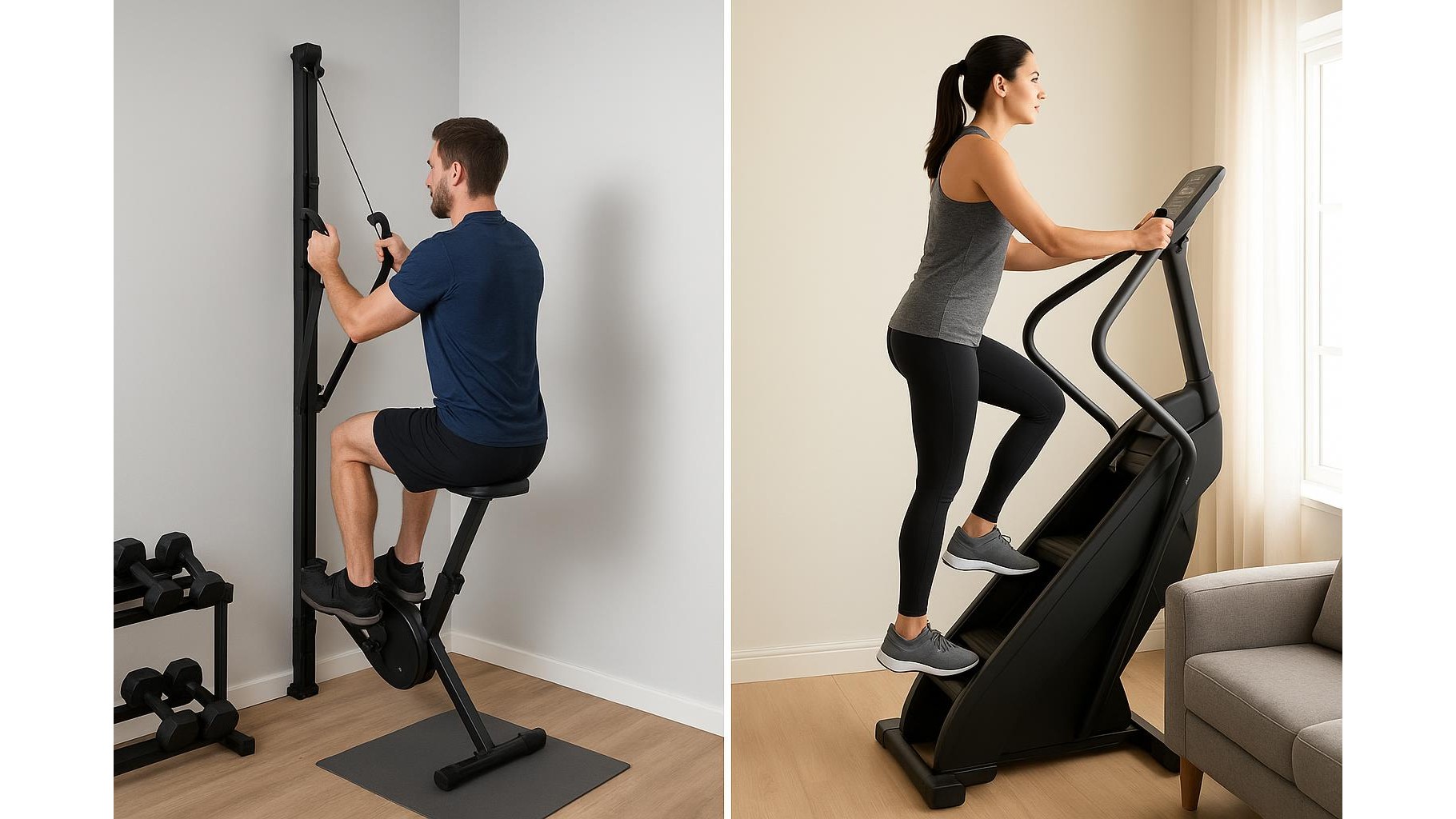
A ski ergometer simulates double‑poling in cross‑country skiing: you stand upright and drive two handles down using your lats, core and hips. Resistance is usually generated by a flywheel and adjustable damper. Well‑known models like the Concept‑style ski ergs mount to a wall or a floor stand, with a tall, narrow footprint. A stair climber, by contrast, mimics continuous stair climbing. You hold side rails lightly while stepping on moving pedals that rise and fall. Home stair climbers tend to be more compact than commercial gym stepmills, but still occupy a small rectangular floor area and require enough ceiling height so your head doesn’t hit the roof at full extension. Mechanically, ski ergs are upper‑body dominant pull machines, while stair climbers are lower‑body dominant step machines.
Space, setup and noise in a home environment
For tight home gyms, a ski erg has a major advantage: it is tall and slim, needing very little floor space in front of a wall. Many users mount it in a corner or beside a rack, then just roll out a mat to protect the floor. You need enough ceiling clearance to fully extend your arms overhead, but otherwise the footprint is minimal. A stair climber takes more floor space and absolutely requires adequate ceiling height because you are elevated on the pedals. If you have low ceilings or use a basement, this can be a deal‑breaker. In terms of noise, both machines generate a steady hum, but ski ergs with flywheels are often louder at high intensities, while stair climbers produce a repetitive mechanical sound. Either way, using a thick mat under the machine and training away from shared walls helps if you live in a flat.
Muscle groups worked and posture demands
The ski erg is unusual among home cardio tools because it heavily targets the upper back, lats, triceps and core while still driving your heart rate high. Each stroke demands a strong hip hinge and abdominal brace as you pull the handles downward, making it great for reinforcing full‑body power and posture if you already have basic movement competency. The stair climber hits the glutes, quads, hamstrings and calves in a very direct way, closely resembling walking stairs with added resistance. This makes it ideal for leg endurance and “everyday” strength, especially for people who get breathless on steps. Posturally, the stair climber lets most users maintain a fairly neutral spine and upright torso, though many beginners tend to lean on the handles; good form means light contact with the rails and controlled stepping.
Calorie burn, conditioning and joint impact
Both machines can deliver high calorie burn in a small time window, but the feel is different. A ski erg often spikes heart rate quickly because you are using a large amount of upper‑body muscle mass in powerful, rhythmic strokes; this is excellent for interval training and short, intense sessions. Impact on the joints is low, making it an option for people who cannot run but tolerate repetitive pulling motions. The stair climber offers a more familiar, steady‑state style of cardio. It can be incredibly challenging for the legs, but the motion is smooth and low‑impact compared to jogging. For those with knee issues, careful step depth and resistance selection are key; many find slow, controlled stepping far more tolerable than downhill walking or running. In general, long, moderate sessions come more naturally on a stair climber, while sprint‑style intervals feel especially suited to a ski erg.
Who should choose a ski erg vs a stair climber?
A ski erg suits trainees who want full‑body, upper‑body‑biased cardio, enjoy intense intervals and have limited floor space but adequate ceiling height. Strength athletes, CrossFit‑style trainees and those wanting to balance out lower‑body‑heavy programs often love it, as it drives conditioning without adding more leg fatigue. It is also a good pick if running bothers your joints but repetitive pulling is fine. A stair climber is ideal for those whose primary goal is leg endurance, general fitness and fat loss with a more intuitive movement pattern. If climbing real stairs is part of your daily life—or your sport demands strong legs and work capacity—a stair climber translates very directly. It is also beginner‑friendly: most people understand how to climb steps, making it less technically demanding than powerful ski strokes.
Fitting the right machine to your goals
When choosing between a ski erg vs stair climber for your home gym, start with your goals and constraints. If you need a compact machine that delivers brutal but low‑impact intervals while sparing your legs for lifting, the ski erg is likely the better tool. If you want to improve everyday stamina on stairs, prioritise leg development and prefer long, steady cardio sessions, a stair climber will probably feel more natural and sustainable. Consider also ceiling height, noise tolerance and who in the household will use the machine. Either way, pairing one of these with a sensible strength program gives you a powerful at‑home setup that can support fat loss, cardiovascular health and real‑world fitness for years.