Finding a comfortable rowing machine for wide feet can be surprisingly tricky. Many home rowers are built around average‑width training shoes, which means anyone with wide or large feet often ends up cramped, with pressure on the toes, loose straps and hot spots that turn into blisters. Focusing on adjustable footplates, strap design and shoe compatibility is the smartest way to make sure your home cardio feels stable, powerful and pain‑free, even on longer indoor sessions.
Why footplate fit matters for wide and large feet
The footplate is where every stroke begins, so if your feet are squeezed or sliding, your whole technique suffers. Wide or long feet need extra lateral space so the shoe is not pinched at the midfoot, plus enough length adjustment to avoid crushed toes or heels hanging off the edge. Poor fit forces you to row with the toes instead of the whole foot, which can overload the shins and knees and shorten your stroke. Over time, tight or badly positioned foot straps can create friction on the sides of the shoe, causing blisters and numbness. Prioritising foot comfort is not a luxury; it is essential to getting consistent, efficient home workouts.
Key features of adjustable footplates for wide feet
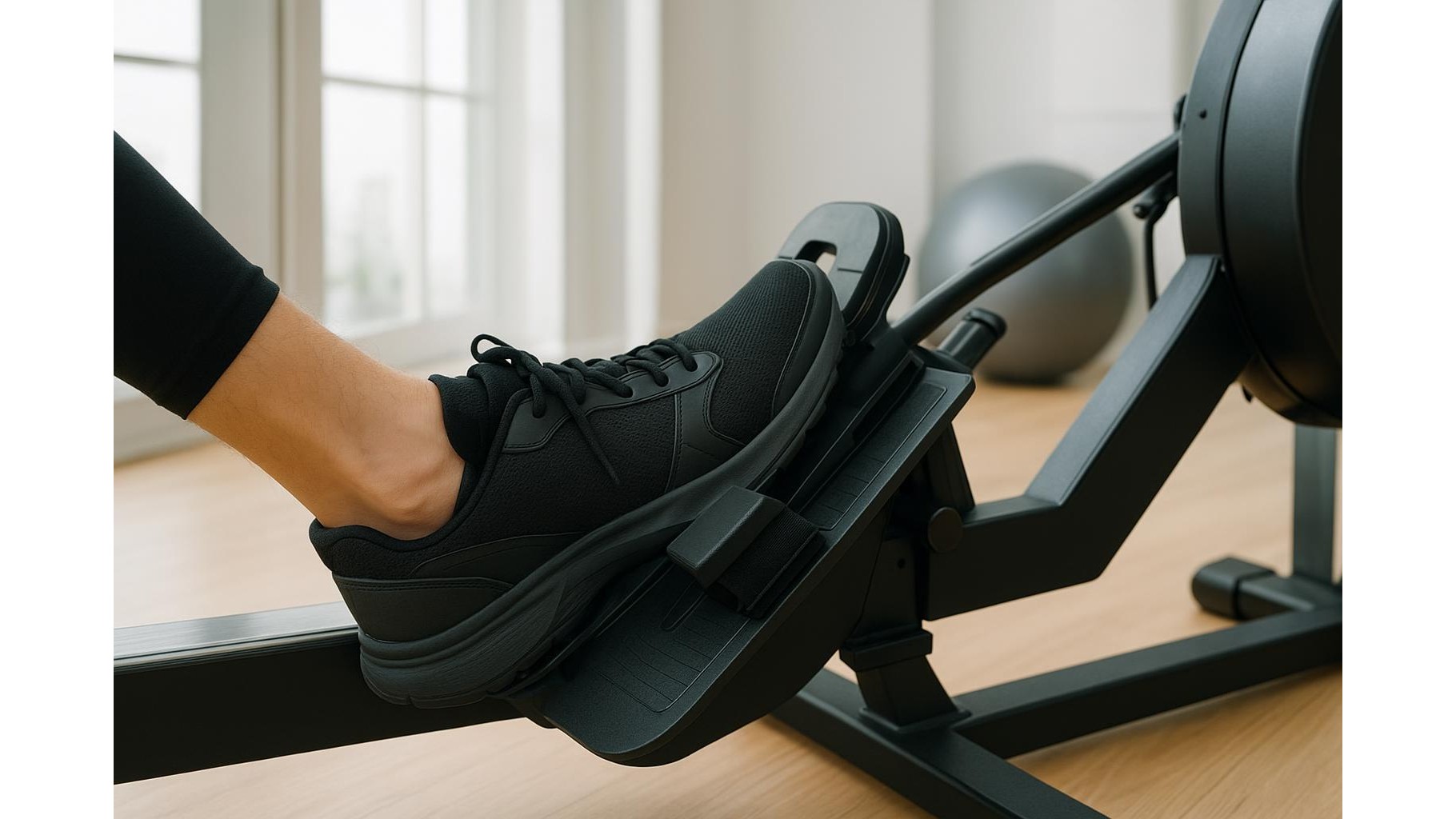
When comparing rowing machines for home use, look closely at how the footplates are built. Wide‑foot‑friendly designs offer generous plate width, multiple heel height positions and a clear sizing scale so you can quickly set the right length for different shoes. Deep, contoured heel cups help keep the foot anchored without needing to over‑tighten the strap, while textured, non‑slip surfaces reduce the chance of the shoe riding up during powerful strokes. Check that the adjustment mechanism is simple enough to use every session; if the rails are fiddly or stiff, you will be tempted to leave them in a sub‑optimal position, which is bad news for comfort and joint alignment.
Strap design, security and blister prevention
For wide feet, the wrong strap design can be just as problematic as a narrow plate. Look for broad, padded straps that spread pressure evenly over the instep instead of digging into one small area. Dual‑strap systems give better customisation, allowing you to secure the forefoot without crushing the top of the shoe. The best setups let you fasten and release the straps quickly so you are not fighting with them between intervals. Make sure the straps run smoothly through their buckles and stay flat; twisted or frayed straps create pressure points that lead to irritation on the sides of the foot, especially during longer cardio sessions when sweat increases friction.
Shoe compatibility and sizing for home users
If you have wide training shoes or use orthotics, check that the rower’s footplates can accommodate both the extra width and any additional sole height. A good rule is that your shoe should sit fully inside the plate edges, with a little room to spare on each side and enough length so your toes are not brushing the front. Users with very large sizes may need to mount the heel slightly lower on the plate to avoid the toes overhanging; adjustable heel tracks make this simple. Because home rowers are often used by more than one person, having clear markings and repeatable positions helps everyone in the household find their ideal setup quickly without guesswork.
Comfort tweaks for longer indoor rowing sessions
Even on a well‑designed rowing machine with adjustable footplates, small tweaks can transform comfort for wide feet. Take time to dial in strap tightness so the foot feels locked in but not squeezed; if you see the shoe bulging around the strap, it is too tight. Experiment with footplate height to find the position that lets you reach full compression at the catch without your heels lifting excessively. Wearing moisture‑wicking socks and rotating between two pairs of shoes can help prevent hot spots and blisters during high‑frequency training blocks. Finally, pause occasionally on longer rows to check circulation—if your toes are tingling or going numb, revisit your strap tension and plate position before your next session.
Choosing a rowing machine for wide or large feet is really about prioritising adjustability, stability and comfort at the footplate. By focusing on generous plate width, simple yet secure length adjustments, supportive straps and compatible footwear, you can build a home rowing setup that feels natural from the first stroke to the last. A properly fitted footplate not only keeps your feet blister‑free but also helps you maintain better technique, generate more power and enjoy longer, more consistent indoor cardio sessions.