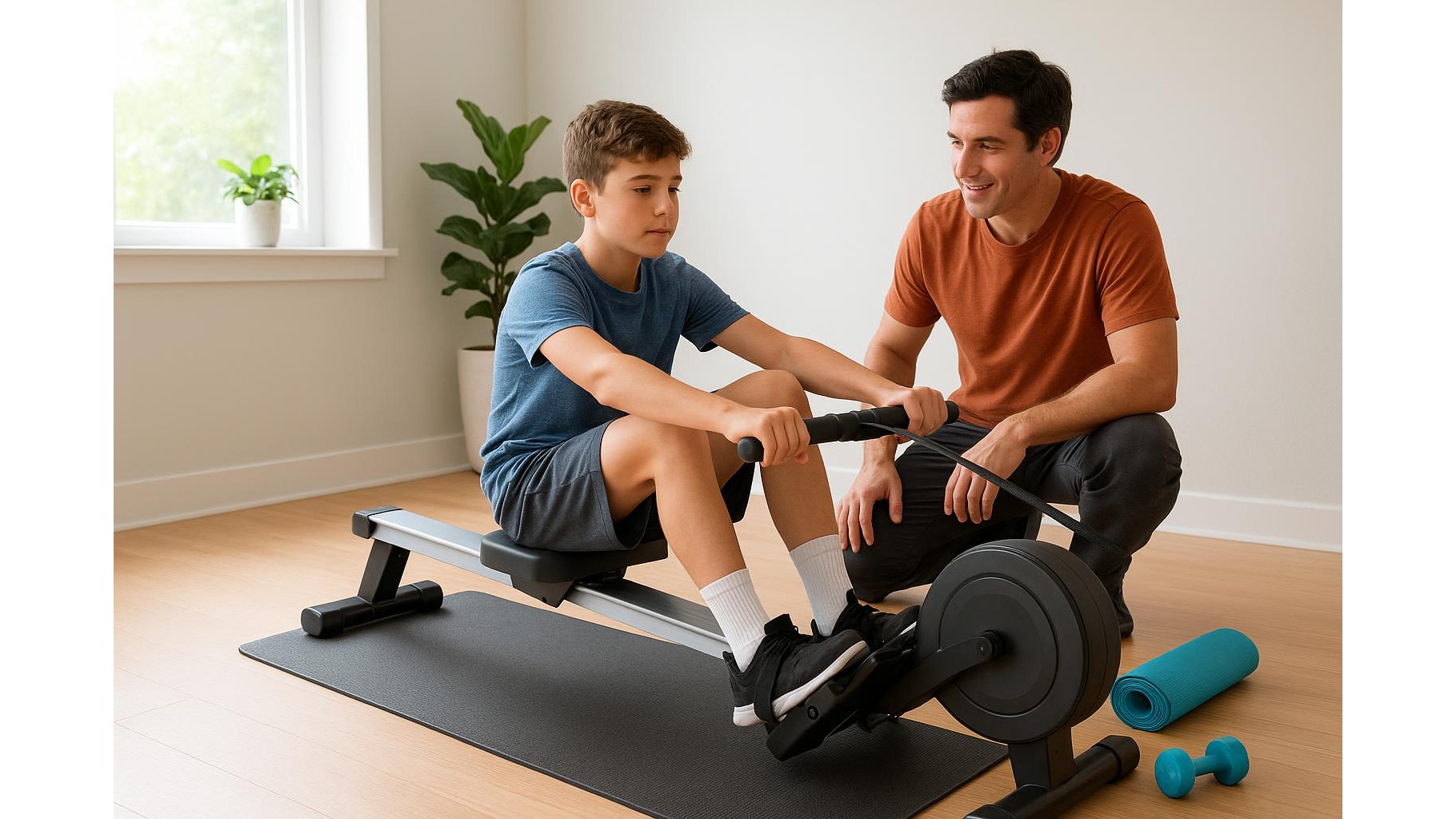
Setting up a rowing machine for kids and teens in a shared home gym is a smart way to introduce low‑impact cardio at an early age. Compared with running or jumping workouts, indoor rowing is gentle on growing joints while training the whole body and teaching rhythm, coordination and focus. To keep younger users safe and motivated, however, it’s essential to choose a size‑appropriate rower, tune resistance correctly and create clear rules for how and when the machine can be used.
Choosing a kid‑friendly rowing machine frame
The first step is selecting a rower frame that suits shorter legs and lighter bodyweights. Many full‑size machines have long rails and high user‑weight ratings, which is great for adults but can feel oversized for children under 12. Look for models with a lower seat height so kids can climb on and off easily, and a smooth rail that allows a full stroke without having to over‑reach. Check the manufacturer’s minimum user height and make sure your child can sit with knees slightly bent at the catch position and achieve a comfortable handle reach without rounding the lower back. If space is tight in a shared room, a rower that can be folded or stored upright helps keep the area safe when not in use.
[h2]Ideal resistance ranges for younger rowers[/h2]
Getting resistance levels right is crucial for young muscles and growing joints. For kids and early teens, the goal is technique and endurance, not brute strength. Whether your rower uses magnetic, air or water resistance, start at the lowest setting and focus on a smooth stroke at a steady pace. As coordination improves, gradually increase resistance so that rowing feels challenging but never straining. Avoid asking kids to sprint at maximum drag or perform heavy power intervals. Instead, build short, fun sessions of 5–15 minutes with regular breaks, and always stop if they report knee, hip or lower‑back discomfort. A correctly tuned rower should feel like fluid, controlled movement, not a weightlifting session.
Seat rail length, footrests and handle size
Comfort and control depend heavily on seat rail length, footrests and handle design. The rail should allow your child to achieve a full extension at the back of the stroke without the seat slamming into the end stop. Adjustable footplates are essential: kids’ feet should be firmly strapped in with the ball of the foot over the pivot point, not sliding around in oversized cups. Many home rowers have multi‑position footrests that can be tightened down for smaller shoes. The handle should offer a relatively narrow, comfortable grip; if the handle is too wide, younger users may shrug their shoulders or flare their elbows, which can stress the neck. Encourage a light, relaxed grip to avoid blisters, and consider lightweight fitness gloves if your child is sensitive to handle texture.
Safety rules in a shared home gym
Because rowing machines have moving parts, sliding seats and spinning flywheels, they must be treated with respect in a family space. Start by setting clear age‑appropriate rules: no using the rower without an adult present for younger kids, and no standing on the rail, seat or footrests. Keep fingers away from chain guards, belt drives and the gap under the seat. Make a habit of parking the handle in its cradle and lowering the resistance after each session so the next user starts safely. In a shared home gym, position the rower so there is clear space around the stroke path and no one can walk into the handle or seat during use. Regularly check screws, straps and rail cleanliness to maintain a stable, predictable motion for every family member.
Making rowing fun and motivating for kids and teens
To keep younger users coming back, turn rowing into a game‑like workout instead of a chore. Use the built‑in performance monitor or a simple timer to set short challenges: row for 3 minutes at an easy pace, count strokes for 60 seconds, or see how far they can go while maintaining smooth form. Teens may enjoy tracking distance, pace and calories over time to see progress. Mix rowing with bodyweight exercises—such as squats, planks or light mobility drills—to create mini circuits that last 15–20 minutes. Music can help set a comfortable rhythm, but remind kids that maintaining good technique matters more than chasing high numbers. Celebrate consistency and effort, not speed records, to build a positive relationship with cardio training.
Integrating youth rowing into family fitness
A youth‑friendly rowing station can easily become the hub of your family’s home cardio routine. Schedule short, supervised sessions where kids and teens row alongside adults, adjusting resistance, time and technique cues for each age. Rotate who uses the rower first to keep things fair and avoid overuse. Encourage basic warm‑ups and cool‑downs, such as dynamic leg swings and gentle stretches, to teach healthy training habits early. Over time, rowing can support better posture, stronger cores and improved endurance for school sports and everyday play. By choosing a safe, size‑appropriate rowing machine and setting clear boundaries, you create a home environment where younger users can enjoy low‑impact cardio, build confidence and share in the family’s fitness journey.
In summary, a well‑chosen rowing machine for kids and teens offers joint‑friendly, full‑body cardio that fits neatly into a shared home gym. Prioritise the right frame size, gentle resistance, comfortable rail and handle setup, and strict but simple safety rules. Add playful, age‑appropriate workouts and shared family sessions, and your rowing station becomes more than a machine—it becomes a reliable, fun tool for long‑term healthy habits.