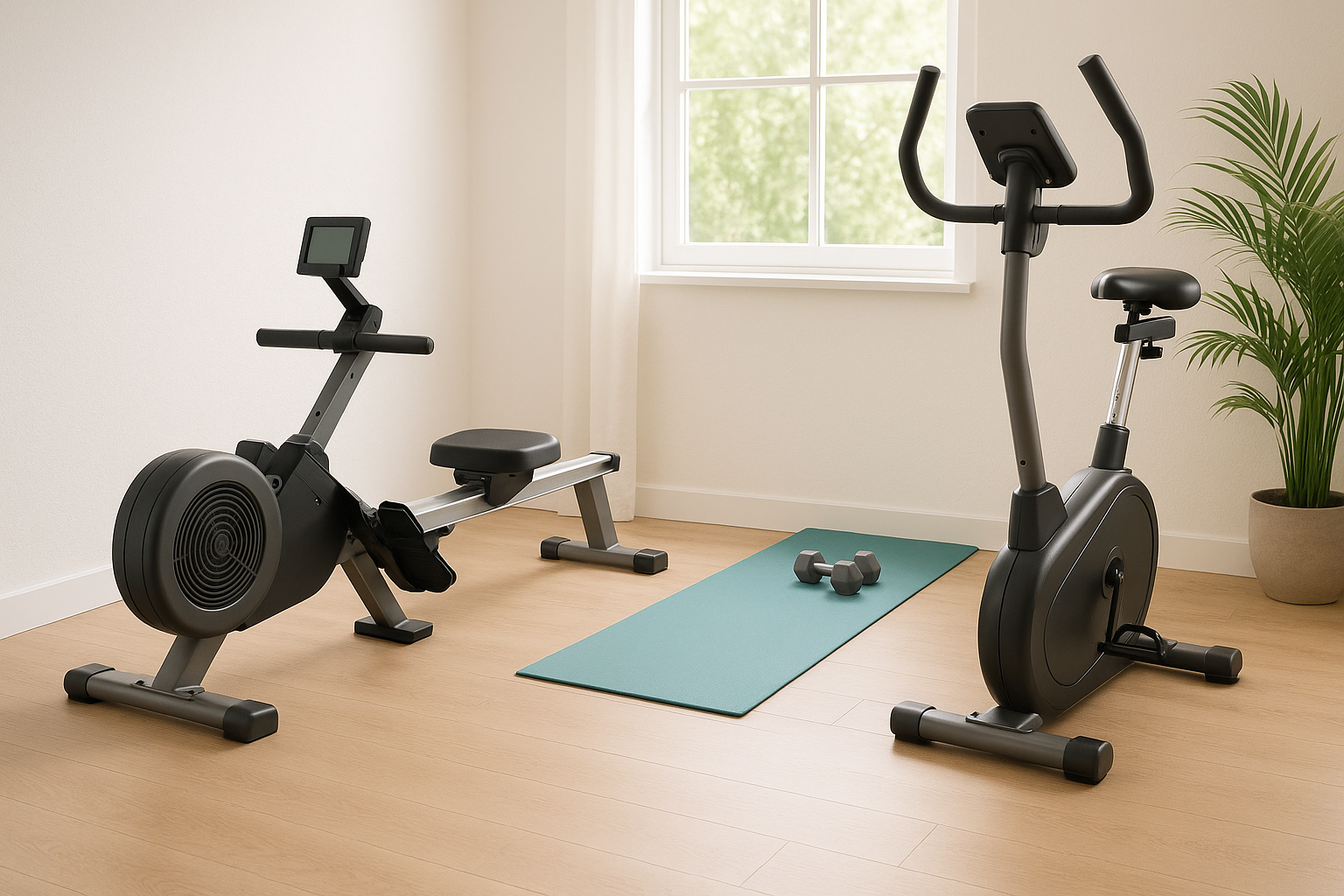
When you are building a home gym, choosing between a rowing machine and an exercise bike is one of the most important low-impact cardio decisions you will make. Both options are gentle on the joints, space-friendly and suitable for all fitness levels, yet they deliver a different feel, muscle emphasis and training effect. Understanding how they compare in terms of calorie burn, space, noise and ease of use will help you pick the ideal machine for your goals and budget.
Table of contents
Full-body vs lower-body workout
A rowing machine offers a true full-body workout, engaging legs, core, back and arms in every stroke. This makes it particularly efficient if you want to build strength and endurance at the same time. By contrast, an exercise bike focuses mainly on the lower body – quads, hamstrings, glutes and calves – with light core activation if you ride with good posture. For home users who want a single piece of cardio equipment to cover both conditioning and muscle engagement, rowing usually wins on total-body involvement, while the bike suits those who primarily want to target the legs or complement strength training.
Calorie burn and workout intensity
Both rowing machines and indoor bikes can deliver high calorie burn, especially when you add interval training. Because rowing recruits more muscles at once, many people find they burn slightly more calories per minute compared to a steady ride on the bike at the same perceived effort. However, bikes make it very easy to sustain long low-impact cardio sessions, which is ideal if you prefer longer, moderate-intensity rides. Ultimately, your total energy expenditure will depend more on how hard and how often you train than on the machine itself, but rowing tends to feel more intense at a given heart rate, while cycling can be more comfortable for extended sessions.
Impact on joints and comfort
Both tools are considered low-impact, but the experience is different. On a rowing machine, your knees and hips move through a deep range of motion under controlled resistance; this is usually well tolerated, but can feel demanding if you have existing mobility issues or back pain, especially with poor technique. An exercise bike, particularly an upright or recumbent model, offers a very stable seated position with minimal load on the joints, which is why it is often recommended for rehabilitation and older users. If you struggle with balance or find it hard to hold an upright torso under effort, the bike may feel more comfortable and sustainable, while rowing rewards those willing to learn proper form.
Space, noise and home compatibility
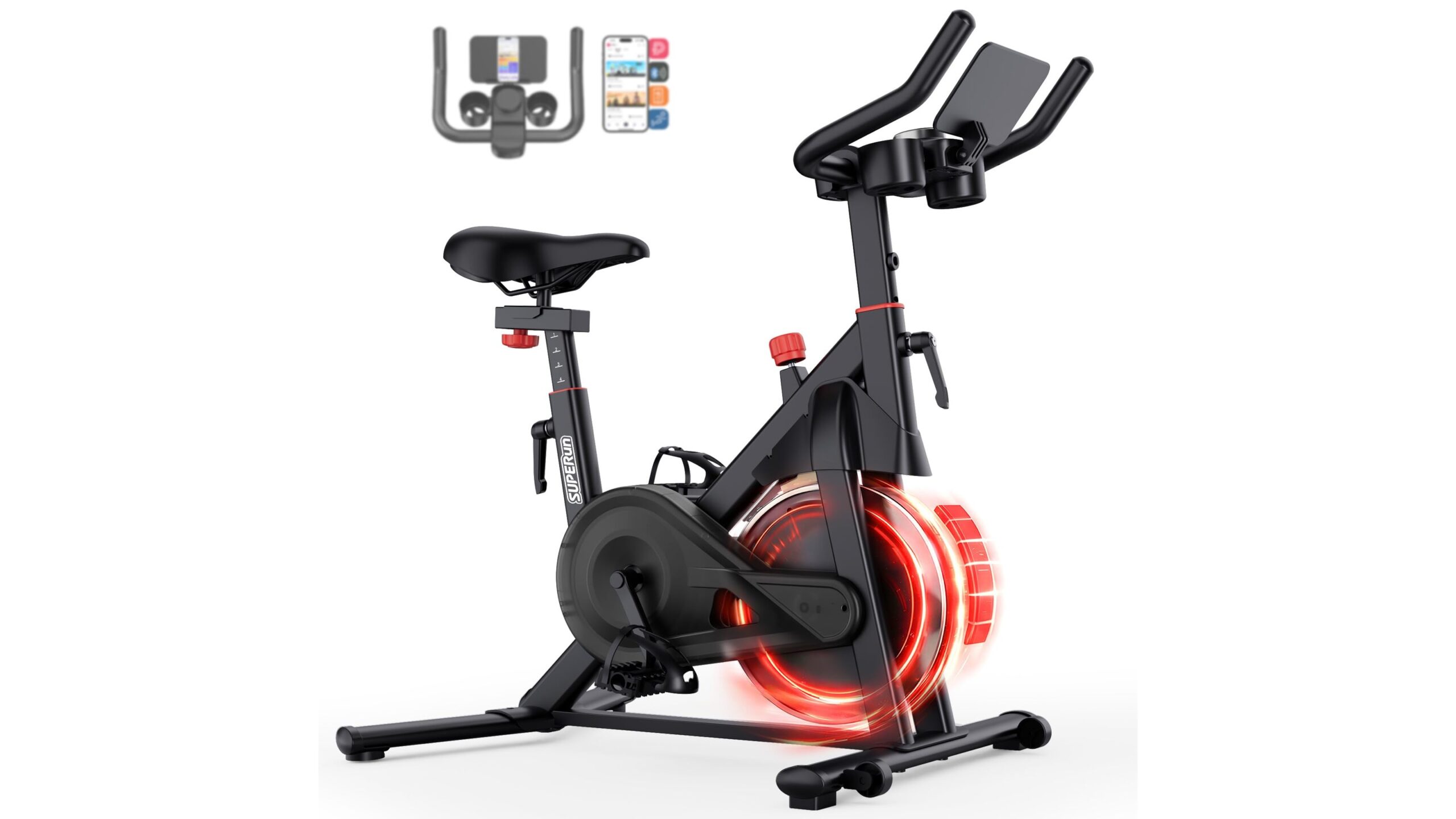
Home gym equipment has to fit both your room and your lifestyle. Many modern rowing machines feature a long rail that requires more floor length, but some frames can be stood upright after use to save space. Rowers with water or air resistance can be audible but are usually acceptable for most households. Exercise bikes typically occupy a smaller footprint overall and stay in one compact area of the room; magnetic-resistance models are especially quiet, making them suitable for flats and late-night workouts. Think carefully about ceiling height, storage options and how close you are to neighbours before deciding which style is easier to live with day to day.
Choosing the right model for your goals and budget
When deciding between a rowing machine and an indoor bike, start from your fitness goals, not from the spec sheet. If you want efficient, full-body conditioning and enjoy technical movements, a rower is a great investment. If you prefer simple, sit-and-go sessions while watching TV, an exercise bike may see more actual use. Consider key features like resistance type (air, magnetic, or water for rowers; friction or magnetic for bikes), console feedback, preset programs and adjustability. Budget-friendly machines can still provide excellent workouts, but pay attention to build quality, smoothness of motion and weight limits to ensure long-term reliability in your home gym.
In summary, both rowing machines and exercise bikes are excellent choices for low-impact home cardio, each with distinct strengths. Rowers deliver powerful full-body training and strong calorie burn in a relatively compact package, while bikes excel in comfort, accessibility and quiet operation. The best option is the one that matches your body, your space and your preferred workout style, so choose the machine you are most likely to use consistently and build a sustainable, enjoyable home fitness routine around it.