Training on a rowing machine at home is one of the most efficient ways to build cardio fitness and full-body strength in a small space. Yet many home users row with poor technique, stressing the lower back, overloading the arms and creating unnecessary noise. This guide walks you through a safe, smooth indoor rowing stroke, with practical cues you can apply on any erg to protect your joints and get more results from every minute you spend on the rower.
Table of contents
Set up your rower and body position
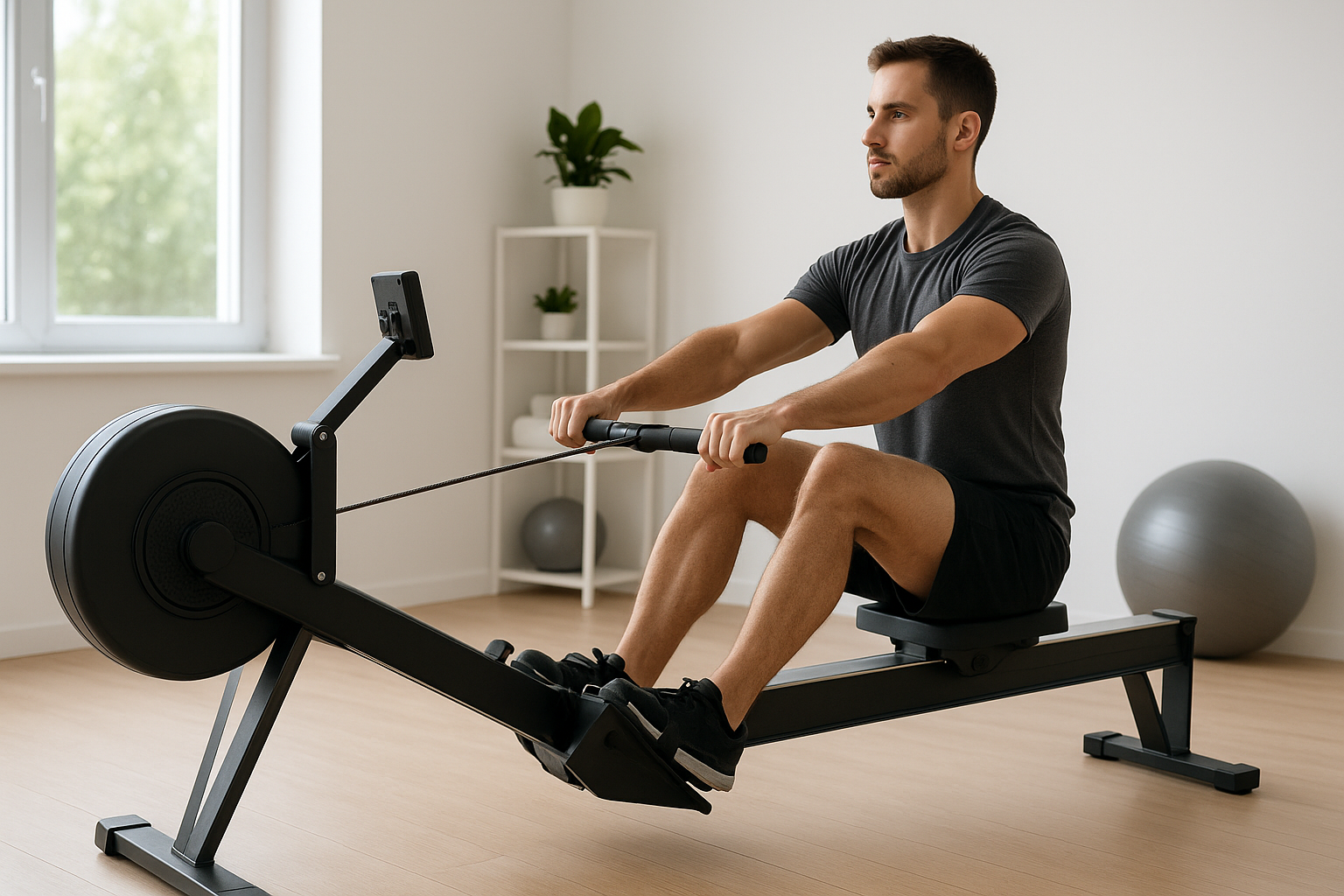
Before you start pulling, take a minute to dial in your rowing machine setup. Adjust the foot straps so the strap sits across the widest part of your foot; you should be able to flex your ankles without your heels lifting excessively. Set the damper or resistance to a moderate level rather than maximum to reduce joint stress and noise. Sit tall at the front of the seat with your weight on your sit bones, chest lifted and shoulders relaxed. Keep a neutral spine: avoid slumping or over-arching your lower back. A comfortable home option like a quiet magnetic rower such as the NordicTrack indoor rowing machine (see similar models on Amazon UK: https://www.amazon.co.uk/s?k=nordictrack+rowing+machine) can make it easier to maintain good posture thanks to a smooth glide and adjustable footrests.
Master the catch: protect your lower back
The starting position of each stroke, the catch, is where many home rowers compromise their lower back. From the front of the slide, your shins should be roughly vertical, heels close to the footplate and arms straight. Hinge slightly from the hips with a forward body angle, but do not round your spine to reach further. Think of your torso as a solid plank from hips to shoulders. Grip the handle lightly with straight wrists and relaxed fingers; over-gripping increases forearm fatigue and can transfer tension to the shoulders and neck. Imagine your chest leading towards the monitor, not your head diving towards your knees. This disciplined setup keeps the force of the stroke in the powerful muscles of the legs rather than dumping it into the lumbar spine.
Drive with the legs, then swing and pull
The biggest technique mistake at home is pulling too much with the arms. A correct drive follows the sequence: legs, body, arms. Push the footplates away powerfully to straighten your legs while keeping your torso leaning slightly forward and arms long. Once your legs are nearly straight, swing your body from the hips to a slight backward lean, keeping the core braced. Only then do you bend the elbows, pulling the handle to the lower ribs. Think of hanging from the handle rather than curling it; your arms are hooks, not engines. This order of operations makes the stroke more efficient, protects the shoulders and reduces the urge to yank on the chain, which can create extra noise on air and water rowers.
Smooth recovery for less noise and joint stress
After the drive comes the recovery, where you return to the catch. Reverse the sequence: arms, body, legs. First, extend your arms straight, then hinge your torso forward from the hips, and finally let the seat roll towards the front as your knees bend. Move smoothly rather than slamming into the front of the track, which is a common source of home rowing noise and knee discomfort. Aim for a rhythm where the drive is quick and the recovery is controlled, about a 1:2 ratio. Keep your hands moving in a continuous oval path rather than stopping and starting. This flowing motion reduces impact on the joints, lowers vibration through the frame and makes your strokes quieter and more sustainable for longer home workouts.
Breathing, pacing and training at home
Good breathing technique supports posture and rhythm. Exhale firmly during the drive and inhale during the recovery, matching your breath to your stroke rate. Avoid rowing too fast just to chase higher numbers; instead, focus on consistent power per stroke. Use the monitor on your indoor rowing machine to track stroke rate and pace, but let technique dictate intensity. At home, short technique-focused intervals, such as 10 strokes concentrating on leg drive followed by 10 strokes on smooth recovery, can quickly refine your form. Over time, gradually extend your sessions, ensuring you can maintain a tall posture and relaxed grip throughout. If in doubt, film a short set from the side to check that you are using the correct legs–body–arms pattern on every stroke.
By paying attention to setup, catch position, drive sequence and smooth recovery, you can transform your home rowing sessions from back-straining slogs into efficient, quiet and joint-friendly workouts. Focus on pushing with the legs, hinging from the hips and keeping your spine neutral to protect your lower back, while controlled rhythm and breathing keep noise and impact low. Mastering these fundamentals on your rowing machine will help you train more often, progress faster and enjoy rowing as a safe, effective centrepiece of your home gym.