
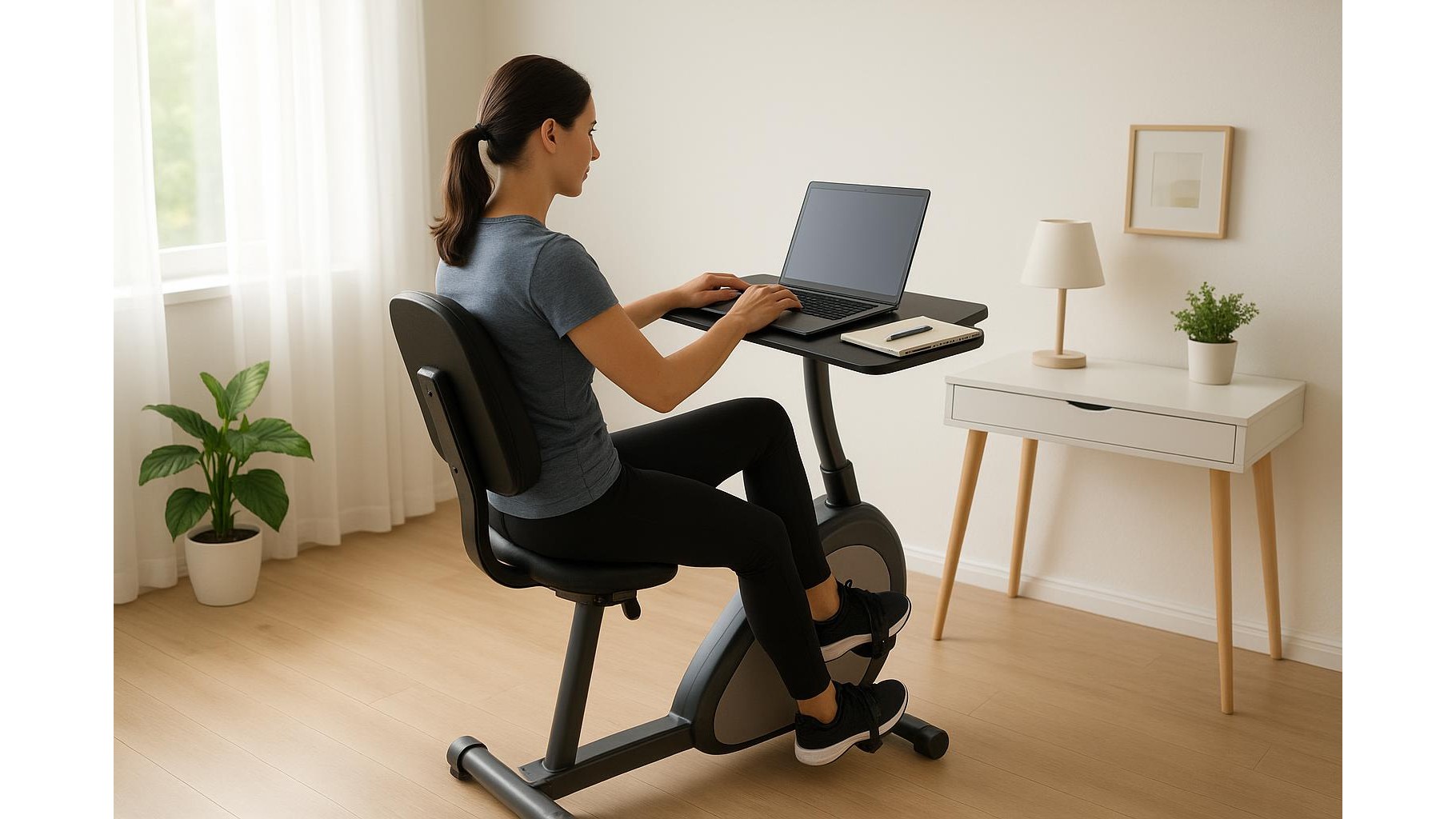
Working from home often means long hours of sitting still, tight hips and low daily movement. Recumbent bikes with desktop trays offer a smart workaround: you can pedal gently in a supported position while answering emails, studying or joining video calls. These compact machines mix steady-state cardio with a usable work surface, helping you boost calorie burn and circulation without sacrificing focus. Below, we explore how they work, who they suit best, and how to program low‑impact sessions you can actually stick to.
Why choose a recumbent bike with a desk at home
A recumbent exercise bike with a desk positions you in a reclined, chair‑like seat, with your back supported and your feet out in front. This makes it much more comfortable than a traditional upright bike for longer, low‑intensity sessions. The added desktop tray turns the bike into a mini workstation so you can type on a laptop, read, or write while you pedal. For home offices and small flats, this setup can replace a spare chair, helping you turn otherwise sedentary time into light cardio. Because the resistance is usually moderate and the posture relaxed, these bikes are ideal for extended 30–90 minute steady rides rather than intense intervals.
Ergonomics: seat, tray height and posture while you work
Ergonomics is critical when you combine work and cycling. On most compact recumbent bikes with trays, you get an adjustable padded seat with a backrest and a sliding rail to match your leg length. The desktop tray typically adjusts for height and sometimes for angle, letting you bring your keyboard or tablet closer to eye level. Aim to keep your knees slightly bent at full extension, your hips supported by the backrest, and your wrists neutral as you type. Keep resistance light enough that your pedalling doesn’t rock your upper body, or you may strain your neck and shoulders. If the tray is fixed and a bit low, consider using a slim laptop stand and external keyboard on top of the tray to fine‑tune your posture.
Ideal users: who benefits most from recumbent desk bikes
Recumbent desk bikes are especially useful for people who struggle to fit extra workouts into a busy day. Remote workers, students, and freelancers can all accumulate significant low‑impact cardio simply by riding during deep work blocks. The reclined position is gentle on the hips, knees and lower back, making these bikes a good option for beginners, older adults or anyone returning from low‑level joint issues (always check with a professional if you have injuries). They are also helpful for those who dislike treadmills or noisy equipment: most recumbent units are relatively quiet, so you can pedal during calls at low resistance without disturbing others. Just remember that these bikes are designed for light to moderate effort, not high‑intensity sprints.
How to program productive steady-state sessions
To get results from steady-state cardio while staying productive, focus on consistency over intensity. A simple structure is:
- Start with 5 minutes of easy pedalling to warm up.
- Ride 20–45 minutes at a pace where you can still hold a conversation and type comfortably – think 3–5 out of 10 in effort.
- Finish with 3–5 minutes of very light pedalling.
Plan 3–5 sessions per week during tasks that require moderate focus, such as inbox clean‑up, reading or watching training videos. For deep, creative work, some users prefer to dial resistance down even further or pause pedalling altogether. Track your weekly minutes rather than obsessing over speed; accumulating 150–300 minutes of this easy low‑impact cycling can significantly improve cardiovascular health over time.
Buying tips for compact home setups
When choosing a recumbent home bike with desktop tray, prioritise footprint, adjustability and noise level. Measure your workspace to ensure the bike fits under your existing desk if the tray is removable, or that you have enough clearance for the built‑in desk. Look for a stable frame with a clear maximum user weight, a comfortable padded seat and backrest, and a smooth, quiet magnetic resistance system. Multiple resistance levels make it easier to fine‑tune effort for different tasks. If you share the bike, a wide adjustment range on both seat and tray is vital. Extra features like tablet slots, cup holders and basic LCD readouts for time and distance are useful, but secondary to comfort and ergonomics. Read user reviews carefully for comments on build quality and tray stability, as a wobbly desk can ruin the experience.
In summary, recumbent bikes with desktop trays provide a practical way to turn sedentary screen time into gentle, sustainable movement. By combining a supportive seated posture with an integrated work surface, they encourage longer, low‑intensity rides that slot seamlessly into your day. Choose a model that fits your space, adjust the seat and tray for joint‑friendly ergonomics, and structure easy steady-state sessions around everyday computer tasks. Over time, this small shift can improve circulation, energy and daily activity levels without demanding extra hours in your schedule.









