Sharing a home rowing machine is a smart way for couples to stay fit together, but it also creates a specific challenge: how do you find a quiet, compact rower that works comfortably for two people with very different heights and leg lengths? In a small flat or shared living room, you also need low noise and easy storage. This guide explains what to look for in terms of rail length, adjustability, noise level and durability, with practical tips that help both of you row smoothly without annoying neighbours or sacrificing space.
Measure your heights and inseams before you buy
The most important step for couples is to think beyond overall height and focus on inseam length – the distance from the crotch to the floor. This tells you whether you will fully extend your legs on the rowing rail or hit the end stop too soon. Many compact machines are fine up to about 6 ft, but tall users or those with long legs can feel cramped. Ideally, product pages should list a maximum user inseam or at least a suggested maximum user height. If they do not, check photos and reviews for comments from tall users. As a guideline, if one partner is 5’4″ and the other 6’2″, you should favour a machine marketed for taller users even if it is slightly longer, because a too-short rail cannot be fixed later, while shorter users can always sit a little more forward and still row comfortably.
Prioritise quiet resistance systems for shared spaces
For quiet rowing at home, the resistance system matters more than you might think. Magnetic rowing machines are usually the best choice for couples in flats, because the magnets create a smooth, almost silent drag, with only a low hum from the belt and flywheel. Air rowers deliver a great natural feel but generate fan noise that can disturb partners, kids or neighbours. Water rowers have a pleasant whooshing sound but take up more space and are heavier to move. Look for descriptions that mention “quiet“, “low-noise” or “whisper-quiet magnetic resistance” and pay attention to reviews from people in apartments. A quiet rower not only protects your relationships with neighbours; it also makes it easier for one of you to train early in the morning while the other sleeps.
Check rail design, footrests and handle for adjustability
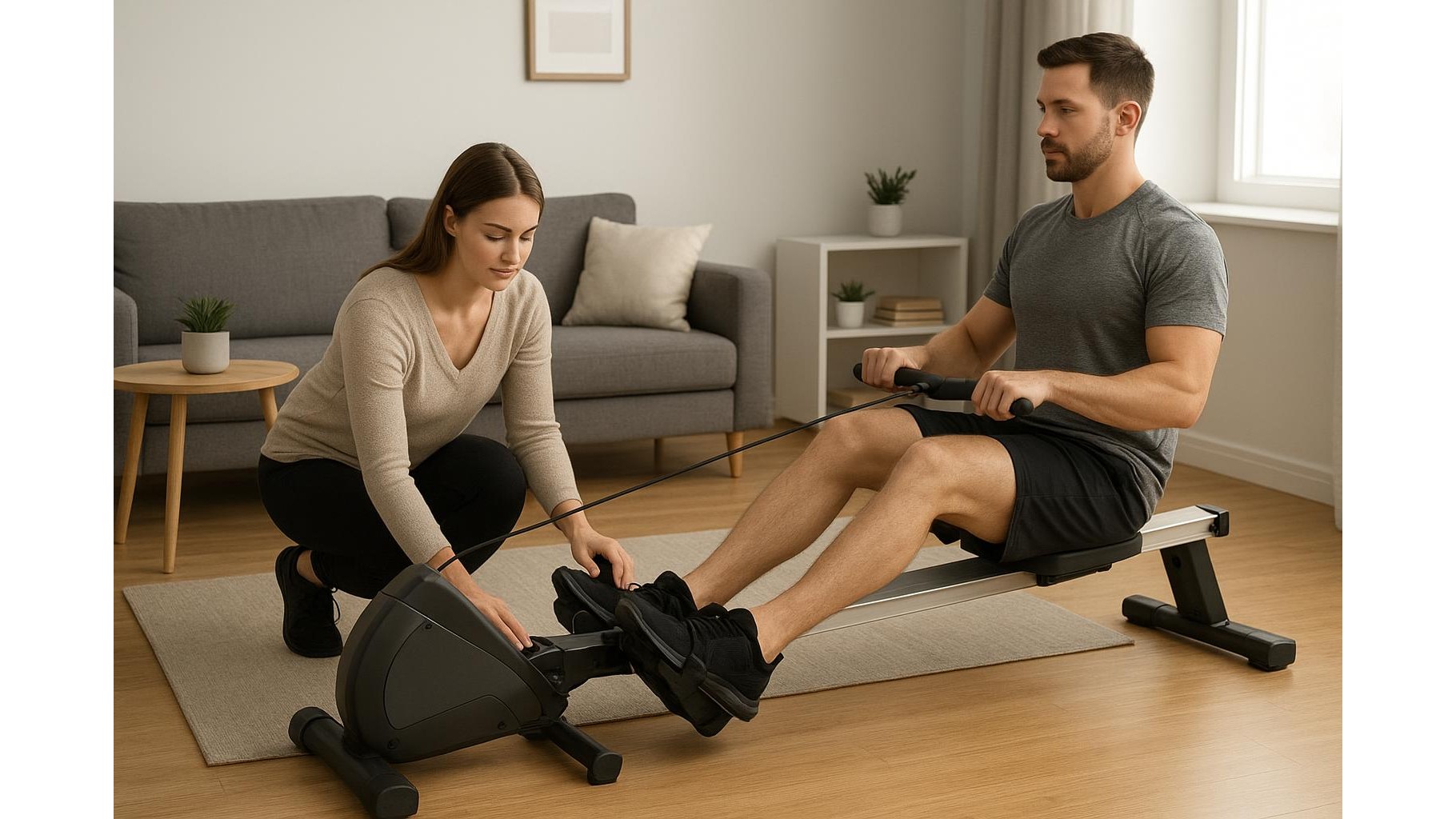
To suit different body types, a compact rower needs more than just enough rail length. Look for a long, stable aluminium or steel rail with a high maximum user weight, which usually indicates stronger construction. Oversized, adjustable footrests are crucial: if the smaller partner’s feet slip around or the taller partner’s toes hang off the edge, neither will have a good stroke. Multiple foot strap positions help lock in both small and large feet. The handle should sit at a comfortable height so that both of you can pull without shrugging your shoulders. Ideally, the display angle should be adjustable too, so a shorter user does not have to crane their neck to see workout data. These comfort details make it far more likely that both partners will actually use the machine consistently.
Compact storage: folding frames and transport wheels
In small homes, even the best home rowing machine is useless if it is always in the way. When comparing models, check the folded dimensions as carefully as the in-use size. A good compact rower folds vertically or horizontally to fit in a corner, under a bed, or beside a wardrobe. Transport wheels on the front stabiliser make it easy for either partner to move the machine alone, even if one is lighter or less strong. Pay attention to the machine’s total weight: heavier frames feel more stable while rowing, but they must still be manageable to lift and roll. A well-designed folding mechanism with a locking pin is safer and faster to use, encouraging you both to set up and put away the rower daily instead of leaving it in the middle of the living room.
Durability, maintenance and sharing a training plan
When two people share one indoor rower, the total training volume doubles, so build quality and warranty become more important. Look for a solid frame warranty (often several years) and positive feedback about long-term reliability of the belt, seat rollers and resistance mechanism. A smooth-gliding seat and sturdy rail support repeated use by partners of different weights without wobble. Consider models with simple consoles that let you quickly adjust resistance levels and track basic metrics like time, stroke rate and calories; this makes it easy for each of you to follow your own training zones. To keep the machine quiet and long-lasting, get into the habit of occasionally wiping the rail, checking seat wheels, and ensuring bolts are tight. A tiny bit of regular care will keep your shared rower feeling like new.
Choosing a quiet, compact rowing machine for couples comes down to a few key checks: sufficient rail length for the taller partner, adjustable footrests and a comfortable handle for both, a magnetic resistance system for low noise, and a folding design that genuinely fits your space. Add strong build quality and an easy-to-read display, and you will have a single, space-saving piece of equipment that supports both your fitness journeys. Take a moment to measure your inseams, read user reviews, and compare specs carefully – that way, the rower you bring home will keep you both rowing in sync for years to come.