Working from home has pushed many of us to look for a quiet, space‑saving way to stay active. Two of the most popular options are foldable walking treadmills with handrails and compact under desk walking pads. Both promise low‑impact daily cardio without sacrificing your small home office, but they feel very different in use. Below, we compare how they perform in terms of noise, safety, ergonomics and who each solution really suits.
Table of contents
Foldable walking treadmills: what they offer in a small home office
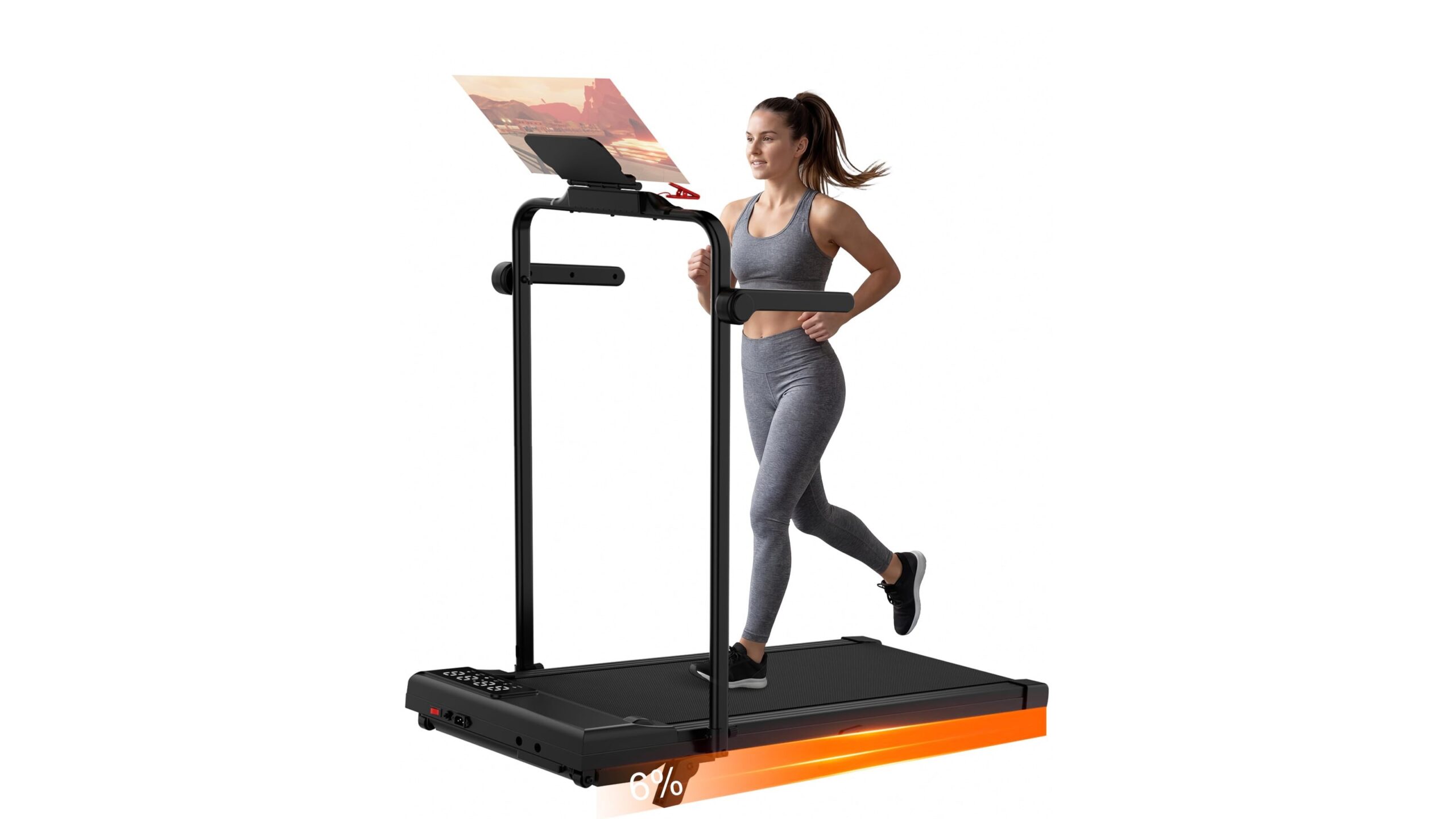
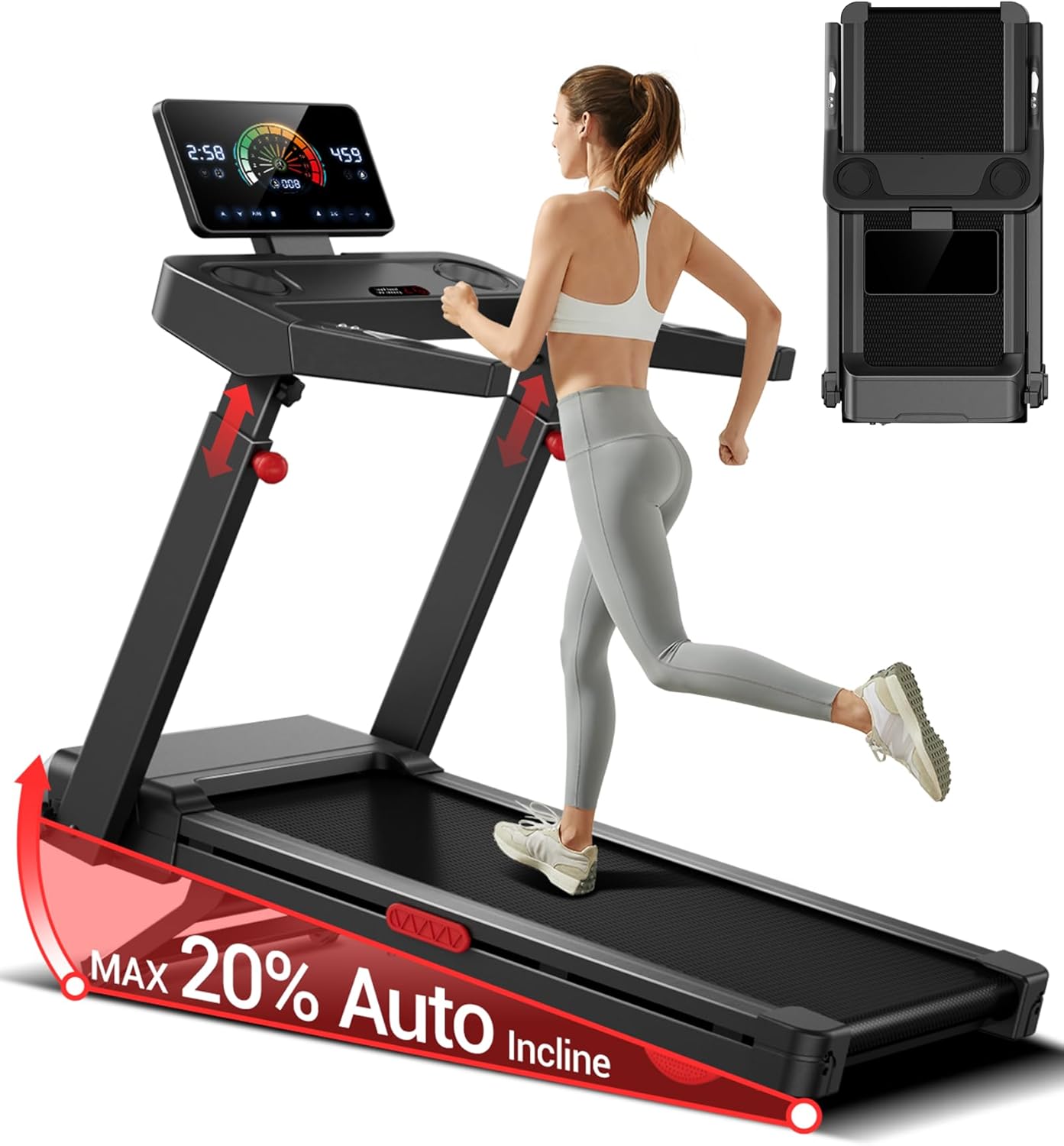
Full walking treadmills with handrails, like the LONTEK Foldable Treadmill for Home with 20% Incline, are essentially shrunk‑down gym treadmills. You get a proper deck, side rails and a clear console, but in a frame that folds almost flat (around 130 x 65 x 11 cm) and can roll away on transport wheels. This type of machine is ideal if you want structured workouts rather than casual steps. The LONTEK model offers up to 14 km/h and a serious 20% auto incline, so you can walk, power‑walk or jog and simulate hill sessions for better calorie burn. Despite the power (3.5 HP motor and 180 kg capacity), reviewers highlight that it runs surprisingly quietly, making it workable even in apartments as long as you use a mat. Its shock‑absorbing deck and widened belt (107 × 40 cm) are also kinder on hips and knees than ultra‑thin pads, especially if you’re coming back from injury or surgery.
Compact under desk walking pads: minimalist movement while you work
If your main goal is light movement during calls or emails, a compact walking pad such as the WALK WAKE Walking Pad Treadmill with Incline is hard to beat. This pad is ultra‑slim (about 109 x 50 x 9.8 cm), slides under a desk, bed or sofa, and weighs roughly 18 kg, so you can set it up in seconds. The 2.5 HP brushless motor keeps speeds between 1–6 km/h, which is perfect for steady walking while typing. Its headline strength is noise: the manufacturer states sub‑45 dB operation and reviewers confirm it’s quiet enough to watch TV or join online meetings with only a slight volume increase. Despite its thin profile, it offers a 3–10% manual incline, basic shock absorption and an LED display for time, distance, speed and calories. You control everything with the remote, so there is no bulky console getting in your way.
Noise, safety and ergonomics: which feels safer and more comfortable?
For noise, both solutions are designed for home use, but walking pads like the WALK WAKE model usually win; the shorter belt and lower top speed keep motor and footfall noise down. However, if you plan to go faster than 6 km/h, a foldable treadmill such as the LONTEK will feel more stable and secure thanks to its full handrails, safety key and heavier frame. When it comes to safety, handrails make a real difference for older users, beginners, or anyone rehabbing after surgery. You can quickly grab the sides, adjust speed and incline from the grips and rely on the emergency stop. Walking pads are safe for controlled, low‑speed walking, but the lack of handrails and narrower deck means you need good balance and a consistent stride. Ergonomically, walking while typing on a pad demands careful desk and monitor height; foldable treadmills are better for dedicated workout sessions where you can focus purely on form.
Space, storage and practicality in a small home office
In very tight spaces, footprint and storage are critical. Under desk pads are the clear winner on minimalism: the WALK WAKE pad tucks under most standard desks and can fully disappear under a bed or sofa after use. It is easy to drag out for short bouts of walking throughout the day. Foldable treadmills require more floor space in use and a dedicated storage spot, although the LONTEK still folds down impressively flat and includes wheels for moving it around. Consider your layout: if your home office doubles as a living room, a pad you can slip under furniture will feel less intrusive; if you have a corner that can stay semi‑permanently set up, a foldable treadmill with handles is more practical. Also factor in assembly and maintenance: both options here arrive almost pre‑assembled, but a full treadmill is heavier to move for cleaning and may require slightly more regular belt checks.
Who should choose a foldable treadmill and who is better with a walking pad?
Choosing between a quiet foldable walking treadmill and a compact under desk walking pad comes down to your goals and your room. Pick a foldable treadmill with handrails, like the LONTEK Foldable Treadmill for Home with 20% Incline, if you want:
- Structured cardio with higher speeds and serious incline.
- Extra safety and confidence from handrails and a wider deck.
- Support for heavier users or post‑injury rehabilitation.
Choose an under desk pad such as the WALK WAKE Walking Pad Treadmill with Incline if you prioritise:
- Ultra‑quiet, low‑intensity walking while you work.
- Minimal footprint and the ability to hide it under furniture.
- Simple plug‑and‑play use with remote control and almost no setup.
Both can transform how active you are at home, but matching the machine to your habits is what makes it sustainable.
In summary, foldable walking treadmills with handrails behave like compact gym machines, delivering versatile workouts, higher speeds and better support for demanding users, at the cost of a larger footprint. Under desk walking pads are slimmer, quieter and easier to live with in a tiny home office, but work best for light, steady walking rather than intense training. Think honestly about your space, noise sensitivity and fitness goals: if you want serious, progressive cardio, a foldable treadmill like the LONTEK is worth the room; if your priority is keeping your step count up during long workdays, an unobtrusive pad like the WALK WAKE is likely the smarter everyday cardio solution.