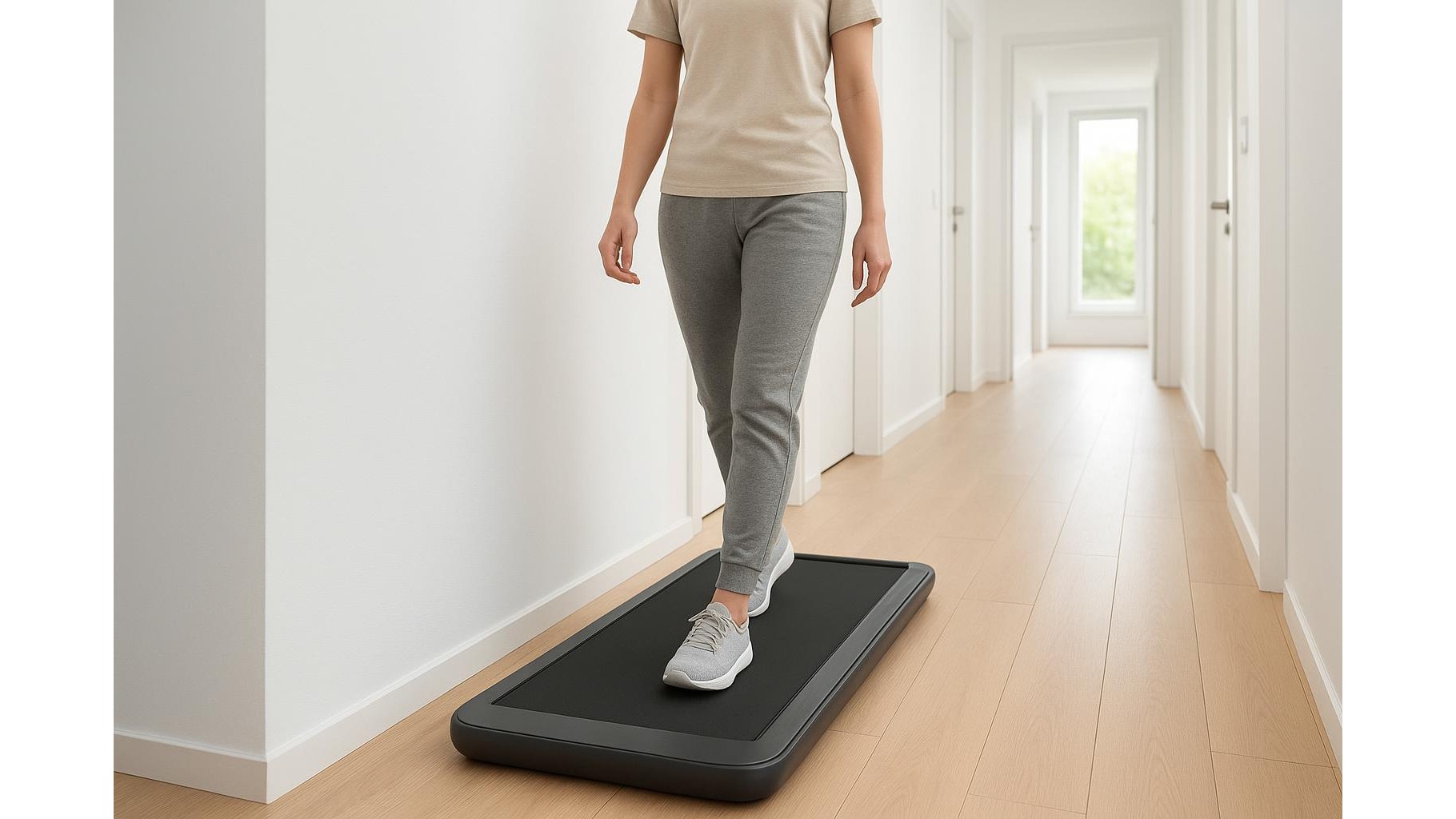
When you live in a small flat or share a busy household, finding a quiet compact cardio machine that fits a narrow hallway can feel impossible. That is where curved mini walkers and slim walking pads come in. Designed to slide into tight spaces and operate at low noise levels, these minimalist tread-style devices let you walk daily steps without dominating your living room or waking the neighbours. Understanding how stride feel, sound profile and safety features work in small corridors is key before you buy.
Why curved mini walkers suit narrow corridors
Curved mini walkers are essentially low-profile walking pads with a subtly arched deck. Instead of relying heavily on a motor, the curved surface encourages your foot to roll naturally from heel to toe, promoting a more biomechanically efficient stride at gentle walking speeds. In a hallway, where you may only have one to one-and-a-half metres of length, this design keeps your gait compact while still engaging your calves and glutes. The lack of bulky uprights or massive consoles also matters: a slim chassis without side arms makes it easier to position the machine against a wall when not in use, reducing trip hazards in busy passageways.
Key noise considerations for hallway-friendly cardio
Noise is crucial when your home cardio routine happens inches from bedroom doors. Look for a low-decibel motor or, in some manual curved models, no motor at all. A quiet mini walker will combine a cushioned running belt, quality bearings and stable feet to minimise vibration transferring into floorboards. In practical terms, that means less humming through the ceiling for neighbours below and fewer rattles in adjoining rooms. If your corridor has hard flooring such as tiles or laminate, consider placing a mat under the machine to absorb impact noise. Also check user reviews for comments on noise at walking pace, not just on paper specifications, because real-world sound can differ from manufacturer claims.
Stride feel and safety in tight spaces
On a slim curved walker, deck length and curvature affect how natural your stride feels in a confined area. A slightly shorter deck can be fine for casual walking, but taller users with long strides should double-check belt length to avoid feeling cramped. The gentle curve helps your foot land softer and encourages you to stay centred on the pad, which is ideal in corridors where stepping off to the side could mean hitting a wall. Safety extras like anti-slip textured belts, raised side rails at deck level and clear on/off controls are worth prioritising, especially if multiple family members will use the machine. For extra security, place the front of the walker against a wall so it cannot roll forward, and keep the surrounding floor free from clutter.
Features that matter for corridor storage and usability
For narrow homes, the most important specifications are overall footprint, height and storage method. Many mini walkers are designed to slide under a bed or sofa, but in a hallway you may prefer a model that stands upright against a wall. Look for integrated transport wheels and a weight you can comfortably tilt and move alone. A slim remote control or simple touch panel lets you adjust speed without a bulky console sticking out into the walkway. While advanced training metrics are nice, prioritise essentials: distance, time, speed and step count are usually enough for daily low-impact cardio. If you are planning to walk during late-night TV sessions, also check for an energy-efficient motor and auto-shutoff functions to avoid unnecessary power draw.
How to choose the right compact cardio machine for your home
Before ordering any mini walker, measure your corridor length and width at the narrowest point, then compare it to the machine’s assembled dimensions. Leave space behind the unit for safe step-off and ensure doors can still open freely. Decide whether you mainly want gentle walking while listening to podcasts or a brisker power-walking pace; that will determine the speed range you need. Check maximum user weight and verify that the machine’s noise level and build quality match your living situation, especially in flats with thin walls. Finally, consider how often you are realistically going to move and store it: if daily, a lightweight but sturdy frame with smooth wheels and a slim profile will make your routine easier to maintain.
In summary, quiet curved mini walkers and slim walking pads offer an elegant solution for staying active when space is limited to narrow corridors and hallways. By focusing on stride comfort, low noise output, safe deck design and easy storage, you can integrate regular walking into your home life without adding clutter or disturbing others. Take a few careful measurements, match features to your habits and you will be able to enjoy consistent indoor cardio on a compact machine that truly fits your space.