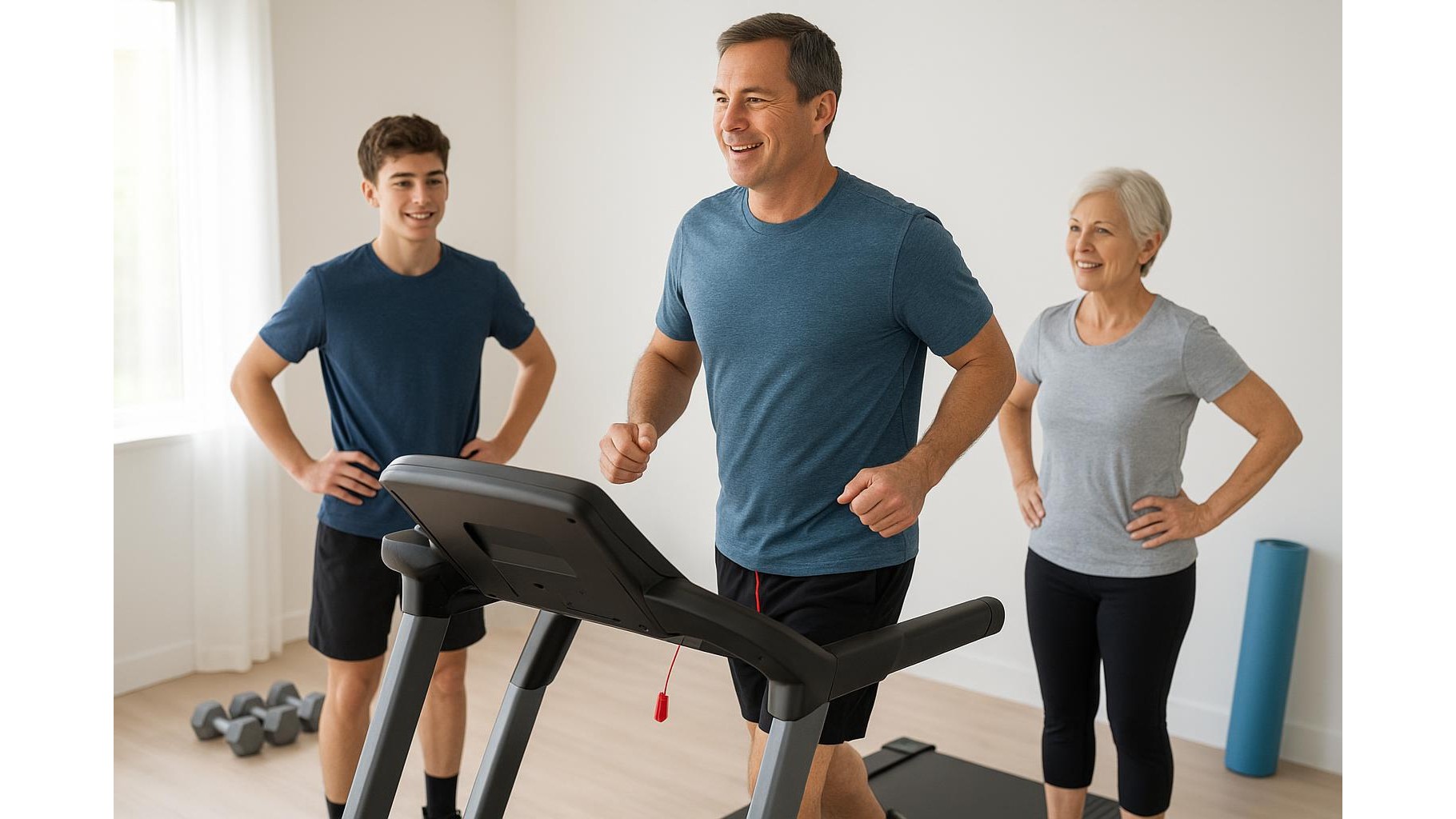
Sharing a single home treadmill or walking pad between adults, teens and seniors is a smart way to save space and money, but it also introduces specific safety and overuse risks. Different body sizes, fitness levels and goals mean that the same settings will not be safe for everyone. By configuring sensible speed limits, adjusting handrail support, setting up user profiles and agreeing on clear family rules, you can turn one compact cardio machine into a safe and versatile training hub for the whole household.
Choose the right treadmill or walking pad for mixed users
Before you start sharing, make sure your machine is suitable for multiple users. Look for a model with a sufficiently high user weight limit (at least 120–130 kg if possible), a stable frame and a long enough running belt so taller adults can stride safely while seniors can still walk comfortably. A simple, flat walking pad can be ideal for seniors or desk use thanks to its lower speed range, while a traditional treadmill with incline works better for runners. Check that the console is easy to read, with large buttons and clearly labelled speed and stop controls, so that teens and older users are not confused. Built‑in safety keys and emergency stop clips are non‑negotiable when a machine will be used by different age groups.
Set individual speed limits and beginner‑friendly programs
One of the biggest risks when sharing a home treadmill is a less experienced user copying the speed of a fitter family member. To avoid this, agree on personal maximum speeds based on age, fitness and confidence. For example, seniors and beginners might limit themselves to walking speeds between 3 and 5 km/h, while fitter adults can use higher speeds for running intervals. If the treadmill allows it, save separate user profiles with preferred speeds and simple walking programs so that each person can start safely with one button. Encourage new users to focus first on time on the belt (e.g. 10–20 minutes of easy walking) instead of distance or pace, reducing the temptation to go too fast too soon.
Adjust handrails, posture and footwear for every user
Because family members have different heights and balance, handrail use needs attention. Teach everyone to stand in the middle of the belt, look forward and avoid leaning on the rails, which can strain the lower back and shoulders. Shorter users, including teens, should be shown how to comfortably reach the rails only for brief support, not for constant weight‑bearing. Seniors or those returning from injury may walk with one hand lightly touching a rail at lower speeds to improve confidence. Enforce a rule that all users wear proper training shoes with good grip and cushioning; no socks or slippers. Remind everyone to step onto the side rails first, start the belt at a low speed, then carefully move onto the moving belt once it is stable.
Agree on clear family safety rules and supervision
Shared equipment only works if the household follows consistent safety rules. Decide in advance who is allowed to use the treadmill independently and who needs supervision. Young teens and seniors who are new to exercise should not use the machine when home alone. Show every user how to attach the safety key clip to their clothing and how to hit the stop button in an emergency. Make it a strict rule that no one uses the treadmill when feeling dizzy, ill or overly fatigued. Keep the area around the machine clear of toys, cables and clutter to avoid trips when stepping on and off. Finally, set a simple schedule or sign‑up system so that users do not feel rushed into unsafe speeds just to finish their session quickly.
Prevent overuse with smart session planning
When a single cardio machine serves as the primary workout tool for several people, the temptation is to use it every day for long sessions. To minimise overuse injuries, encourage family members to mix their treadmill workouts with low‑impact activities such as stretching, strength training or cycling. Limit beginners to three to four walking sessions per week with at least one rest day in between. Fitter adults can still train more frequently, but should vary intensity (easy walks, brisk intervals, incline sessions) instead of repeating the same hard workout daily. Keep a simple household log of usage so you can see if anyone is increasing time or speed too quickly, and remind users to listen to warning signs like persistent joint pain or unusual fatigue and to scale back when needed.
By choosing the right machine, configuring sensible speed limits, teaching good technique and enforcing shared safety rules, a single treadmill or walking pad can become a safe and effective cardio solution for adults, teens and seniors alike. A little planning around user profiles, supervision and recovery will keep everyone progressing at their own pace while reducing the risk of accidents and overuse problems, allowing your home gym to support the whole family for years to come.