Designing a home cardio corner in a room with a low ceiling or in an upstairs flat can feel limiting, especially when you can’t skip, jump or sprint. The good news is that you can still build an effective low-impact cardio setup by choosing the right machines, measuring your ceiling clearance carefully and tweaking posture and noise control. Below you’ll find practical guidance to help you train safely and comfortably without disturbing the neighbours.
Best cardio machines for low ceilings
When headroom is limited, the smartest approach is to avoid vertical impact and choose low-profile cardio machines. Under‑desk treadmills and walking pads, compact folding exercise bikes and low-slung rowing machines are ideal because they keep your body closer to the floor and minimise bouncing. Focus on machines that are designed for walking, pedalling or rowing at a smooth, controlled pace rather than jumping or intense running. Look for keywords like “compact”, “under desk”, “flat deck” or “folding upright bike” in the product description, and always check the stated deck height or maximum user height recommendations to match them with your room.
How to measure ceiling clearance correctly
To avoid painful head bumps, you need to know exactly how much clearance you have. First, measure your ceiling height from floor to ceiling. Next, estimate the maximum height you reach while using the machine. For a treadmill or walking pad, add your body height plus the machine’s deck height plus 3–5 cm for footwear. For a bike, measure from the floor to the top of your head when seated on a similar-height chair, then check the bike’s saddle height range. For rowers, your highest point is usually when you lean slightly back, which is still quite low compared with other machines. Aim for at least 5–10 cm of spare space above your head as a safety buffer, and remember that textured ceilings, beams or ceiling fans further reduce safe space.
Posture tweaks to stay safe and comfortable
Even on low-ceiling cardio machines, posture matters. On treadmills and walking pads, keep your gaze forward and avoid exaggerated arm swings that can throw your balance off. On upright or folding bikes, adjust the saddle so your knee stays slightly bent at the bottom of the pedal stroke; a too‑high saddle can push your head uncomfortably close to the ceiling. With rowing machines, think “long spine” but avoid over‑arching or leaning back excessively at the finish of the stroke. If you feel tempted to tip your head up to watch a TV mounted too high on the wall, consider lowering the screen or using a tablet stand at eye level, so your neck stays neutral and you reduce the risk of missteps or loss of balance.
Noise and vibration control for upstairs apartments
In upstairs flats, managing noise and vibration is just as important as clearance. Choose machines advertised as “quiet” or “magnetic resistance”, as these typically produce less mechanical noise. Place a dense rubber or foam equipment mat under your treadmill, bike or rower to absorb impact and reduce the low-frequency rumble that travels through floors. If possible, avoid positioning your setup directly above bedrooms or living rooms below. Train at moderate speeds rather than sprinting; steady walking, cycling and rowing are much easier on both your joints and your neighbours. You can also schedule intense sessions during daytime hours and use headphones for audio to keep the overall sound profile as discreet as possible.
Designing a practical low-ceiling cardio corner
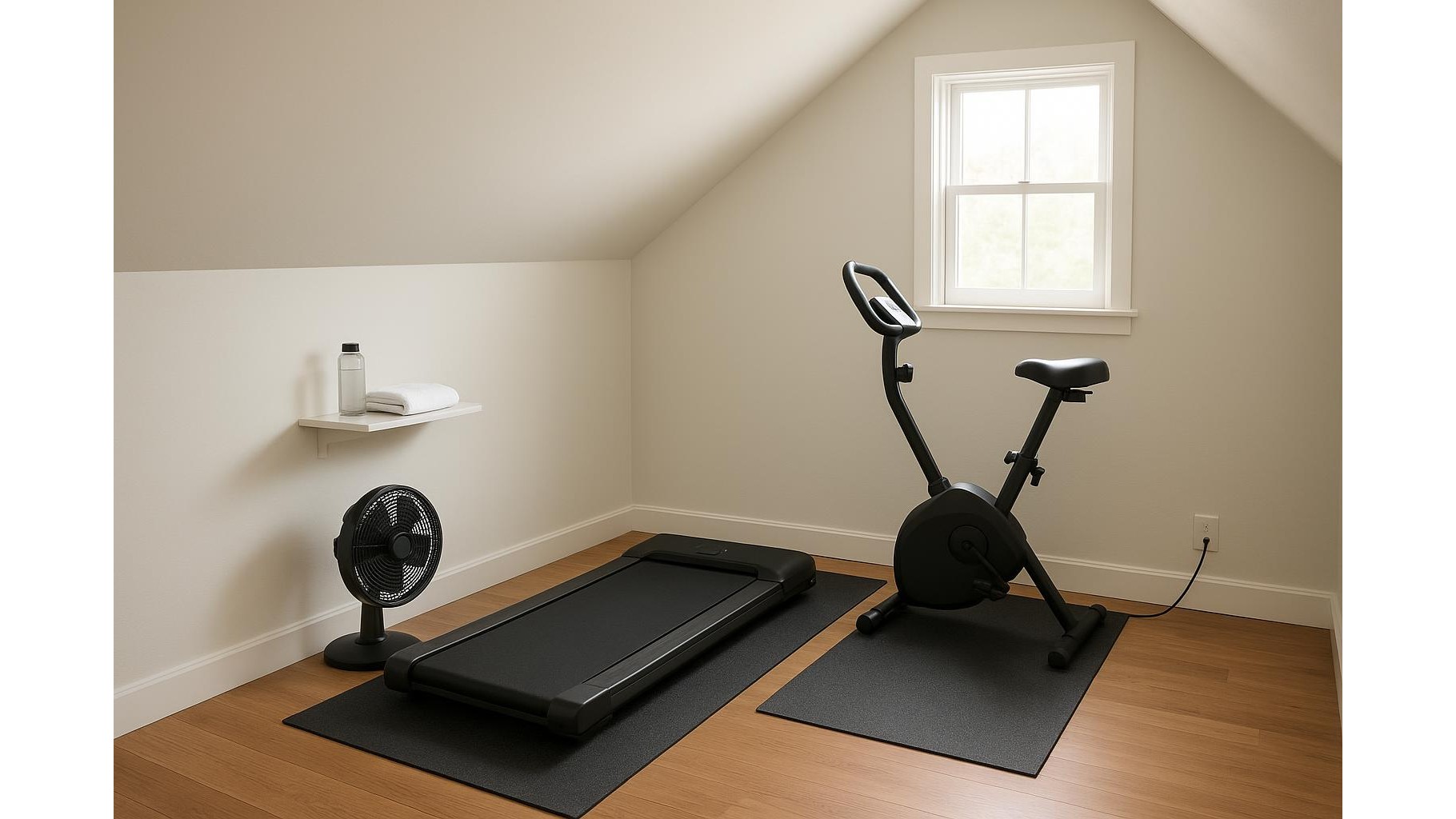
A small, low room can still host an efficient home gym if you plan smartly. Place the machine along the longest wall so you have extra space at the front and back for mounting and dismounting safely. Opt for models that fold or roll away if your room serves multiple purposes, like a guest room or office. Keep essentials within reach: a small shelf or trolley for a water bottle, towel and remote, plus a power strip if you use an electric treadmill. Good ventilation is crucial in low rooms, so open windows or use a fan to keep air moving. Finally, add a mirror at eye level (not too high) to monitor posture; this helps you maintain safe technique without needing to crane your neck toward a distant screen.
With the right choices, a low ceiling doesn’t have to limit your cardio training. Prioritise low-profile machines like walking pads, compact exercise bikes and rowers, measure your clearance carefully and make simple posture and sound-control adjustments. By paying attention to these details, you can create a quiet, effective and comfortable cardio corner that supports your fitness goals without head bumps or noise complaints.