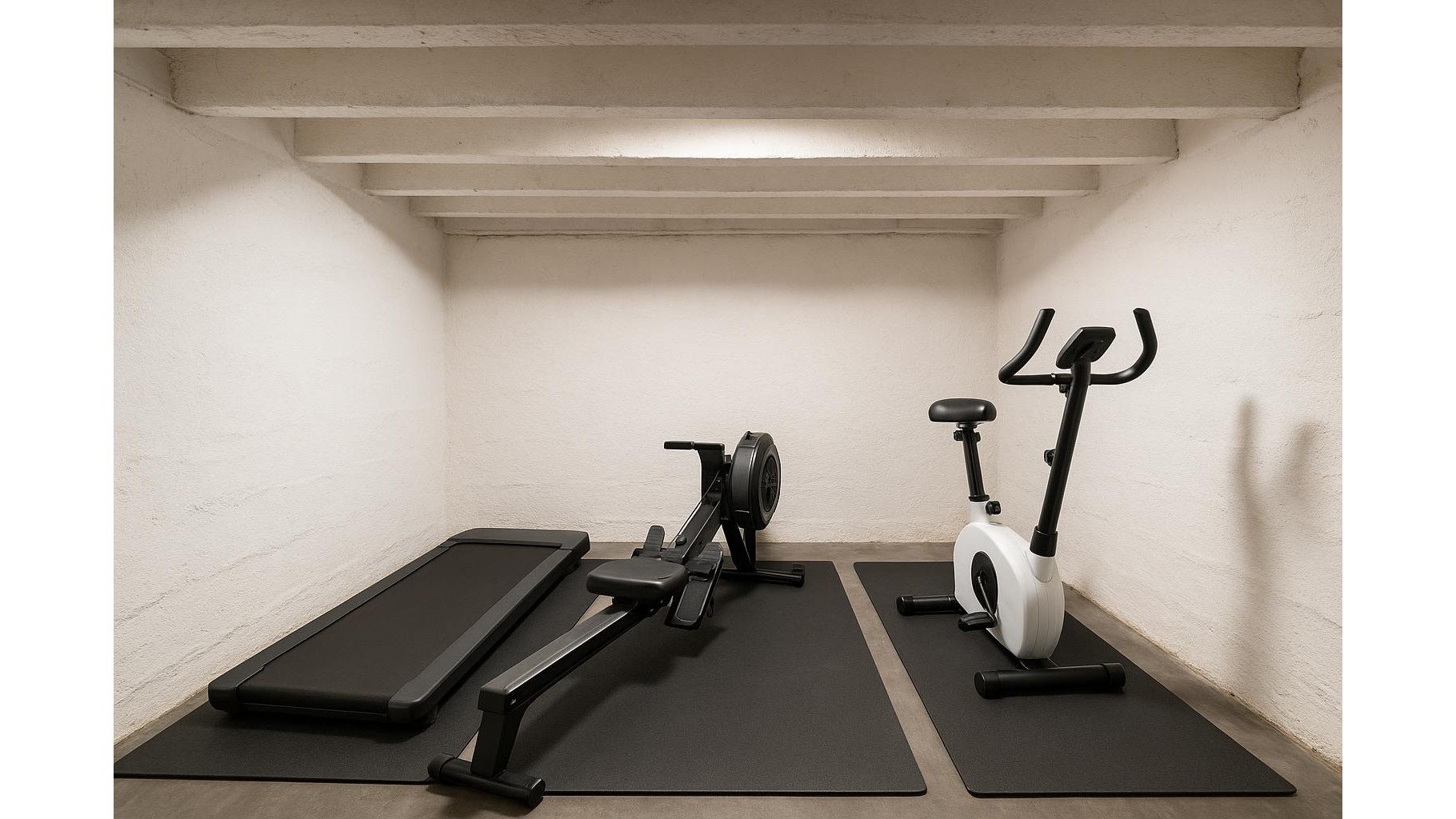
Training hard at home is tricky when you live in a basement flat, loft conversion or any room with a low ceiling. Jumping jacks and burpees are out, overhead work is limited and even some treadmills feel too tall. The solution is to choose low-profile cardio machines and to position them smartly, so you can push intensity without hitting your head, annoying neighbours or sacrificing safety.
Choosing low-profile machines for tight vertical space
In a low room, the total height you need is the sum of your machine deck height + your own height + headroom while moving. That makes flat or low-standing cardio options your best bet. Under‑desk or slim treadmills, compact rowing machines, low‑step exercise bikes and ellipticals with small pedals all keep your body closer to the floor than typical gym machines. Avoid bulky treadmills with thick decks and oversized consoles, and skip any machine that encourages big vertical bouncing. Instead, look for keywords like “under‑desk”, “compact”, “low profile” and check user photos and dimensions to estimate the true standing height once you’re on the machine.
Under‑desk treadmills: flat cardio without the jump
If you love walking or light running but your ceiling is low, an under‑desk treadmill is usually the safest bet. These models have a slim, flat deck and no tall handles, keeping your head far from the ceiling. They shine for steady‑state cardio, brisk walks and long daily step goals while you watch TV or work. Look for features like a shock‑absorbing belt to reduce noise and joint impact, a remote control or simple console, and a top speed that matches your goals (many are perfect for fast walking but not all for running). Place the treadmill so that the belt runs lengthwise in the room, leaving some clearance behind you, and consider a foldable mat underneath to dampen vibration for downstairs neighbours.
Rowing machines: powerful workouts at seated height
A rowing machine is one of the best tools for low‑ceiling cardio because you stay seated and your head barely moves up and down. Even in very low basements, a rower fits comfortably while providing full‑body work that hits legs, back and core. For tight spaces, focus on foldable or upright‑storage rowers that you can stand against a wall when not in use. Magnetic resistance rowers are usually quieter than air rowers, which is a plus for apartments. Position your rower lengthways along the longest wall so you can fully extend your legs, and leave room behind the seat track for the moving carriage. If the machine has a front console, make sure it doesn’t come too close to any sloped ceilings or beams when you lean forward.
Exercise bikes: zero impact and minimal ceiling risk
Stationary exercise bikes are naturally ceiling‑friendly because your body stays in a compact, seated posture. For home gyms with low ceilings, a simple upright bike or a recumbent bike with a low seat is ideal, particularly if you want longer sessions with minimal strain. Choose a bike with an adjustable seat post so you can fine‑tune leg extension even if you’re tall, and look for magnetic resistance for smooth, quiet operation. Avoid studio‑style bikes with tall front posts or high handlebars if clearance is extremely limited. Place the bike so the handlebars are away from any ceiling slopes; this keeps your upper body in a relaxed position and makes it easier to watch a screen or follow a workout app without craning your neck.
Compact ellipticals and stepper options
Traditional gym ellipticals often have high pedals that push your head close to the ceiling, but compact ellipticals and mini‑steppers can still work in low rooms when chosen carefully. Focus on models advertised as low‑step‑up height and check the maximum pedal height from the floor in the specs. Measure your own standing height plus that pedal height against your ceiling to avoid surprises. Many small ellipticals also double as under‑desk trainers when used seated, giving you gentle cardio without any vertical bounce at all. Place these machines perpendicular to walls so your elbows and knees don’t clip furniture, and test a few strides at full effort to ensure you’re not coming too close to light fittings or overhead beams.
Smart positioning, safety and noise control
Even the best low‑profile machine can feel cramped if it’s in the wrong spot. Before buying, map out your floor area and ceiling height with a tape measure. Leave at least 30–50 cm of headroom above your tallest point in motion, and keep at least one side of the machine clear for safe mounting and dismounting. Use rubber mats to reduce vibration and protect floors, and opt for magnetic resistance models when possible to keep noise down. Avoid placing cardio machines directly under light fixtures or ceiling fans, and check that doors and cupboards can still open fully. With thoughtful positioning and the right equipment, you can build a serious home cardio setup that respects both your low ceilings and your training ambitions.
In summary, low ceilings don’t have to limit your cardio. By focusing on low‑profile treadmills, rowing machines, exercise bikes and compact ellipticals, and by positioning them strategically, you can train safely, protect your home and still hit high‑intensity goals.