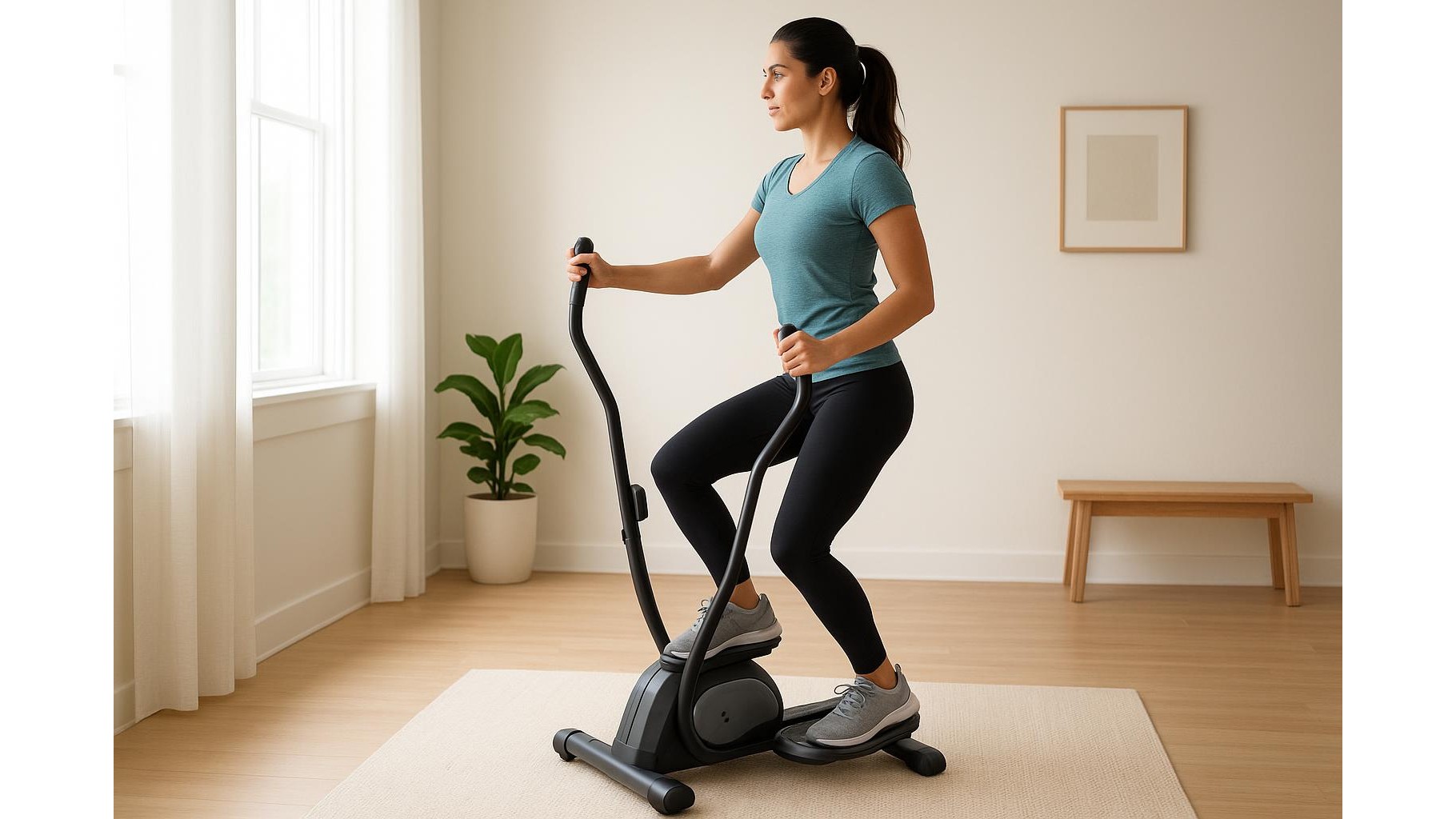
Lateral trainer cardio machines bring side-to-side motion into your home workouts, offering a fresh alternative to treadmills and standard ellipticals. By moving in the frontal plane rather than only forwards and backwards, these machines can spread the workload more evenly across hips, knees and ankles. For home gym users who want low-impact cardio, better joint comfort and extra core activation, a lateral trainer can be a smart addition to a compact training space.
What is a lateral trainer and how does side-to-side motion work?
A lateral trainer is a cardio machine that drives your legs in a sideways or diagonal path instead of, or in addition to, the traditional front-to-back stride. This side-to-side motion recruits hip abductors and adductors, glutes and deep stabilising muscles that often stay underused on bikes or linear ellipticals. Because your feet remain planted on the pedals, impact is kept low, which can be helpful if you are managing knee or hip sensitivity. The continuous lateral movement also encourages better control of the pelvis and trunk, supporting long-term joint health when paired with sensible intensity and good posture.
Why lateral motion can be kinder to hips and knees
Many home exercisers experience discomfort when repeating the same linear movement pattern day after day, especially if they are running or walking on hard surfaces. Lateral trainers change the stress distribution: instead of loading the knees mainly in a straight line, you bring in more hip musculature to share the work. This can reduce the feeling of pressure around the kneecap and ease tightness through the hip flexors. The closed-chain, low-impact nature of the pedals means less jarring than jogging, while the multi-directional motion can build joint stability. For people with mild joint irritation (and medical clearance to exercise), lateral cardio can offer a smoother way to maintain cardiovascular fitness.
Who can benefit most from a home lateral trainer?
Home lateral trainer cardio machines can suit a wide range of users. If you are a runner or cyclist, lateral work adds variety and strengthens supporting muscles that keep hips and knees tracking well, potentially lowering overuse risk. Desk workers who feel stiff in the hips can benefit from the gentle opening and closing of the lateral stride. Beginners or older adults who want joint-friendly cardio may find the supported, low-impact stance more accessible than high-impact workouts. Even fitness enthusiasts with limited space can appreciate that many lateral trainers have a relatively small footprint yet offer a highly functional movement pattern that complements strength and mobility training.
Key features to look for in a home lateral trainer
When choosing a lateral trainer for your home gym, prioritise adjustable resistance so you can progress from easy rehab-style sessions to more intense conditioning. Multiple lateral stride settings or adjustable angles allow you to fine-tune how far side-to-side you move, which can be important for comfort. Look for a stable base, non-slip pedals and clear console feedback on time, distance and estimated calories to help track progress. Quiet magnetic resistance is ideal for apartments or shared spaces. Built-in workout programs that alternate resistance and cadence can keep your low-impact cardio workouts engaging. Finally, check maximum user weight and overall dimensions to ensure the machine fits both your body and your room.
How to build low-impact workouts around lateral trainers
To structure effective low-impact lateral workouts, start with 5 minutes of gentle pedalling to warm up hips and knees. For steady-state sessions, work at a pace where you can still speak in short sentences for 20–30 minutes, focusing on smooth, controlled side-to-side movement. To boost conditioning, try intervals: 1–2 minutes at a higher resistance or faster cadence, followed by 1–2 minutes easy, repeated 6–8 times. You can also combine the lateral trainer with bodyweight strength moves in a circuit, alternating 5–8 minutes of cardio with squats, glute bridges and core exercises. Aim for 2–4 sessions per week, paying attention to how your joints feel and adjusting stride length and resistance accordingly.
Used thoughtfully, lateral trainer cardio machines for home offer a valuable way to challenge your body in a different plane of motion while remaining kind to your hips and knees. By spreading load across more musculature, keeping impact low and encouraging better hip and core stability, side-to-side motion can complement traditional cardio and strength work. With the right features and a structured, progressive plan, a home lateral trainer can become a joint-friendly anchor of your weekly fitness routine.