When a home cardio machine is the wrong size for your body, you feel it: niggling joint pain, numb hands, a sore lower back and workouts that just feel harder than they should. Learning a few simple fit and posture checks for your treadmill, exercise bike or elliptical can transform comfort, performance and safety, without buying new equipment.
How to check if your treadmill actually fits your stride
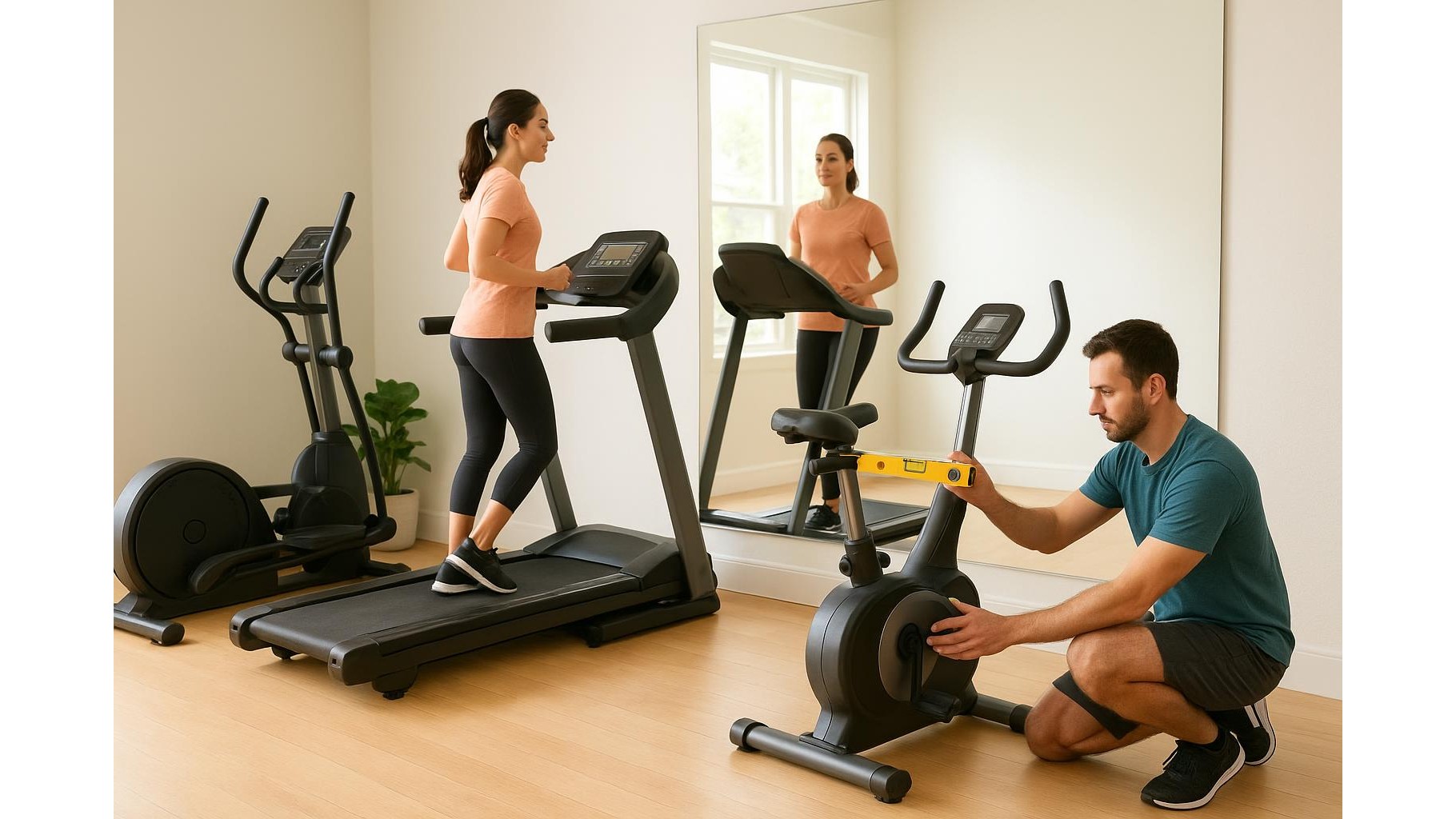
The first step with a home treadmill is to assess belt length and your natural stride. Walk at a comfortable pace and gradually build to an easy jog. If you feel forced to shorten your steps, or your feet land very close to the front or back edge, the deck is probably too short for your height. Ideally, you should be able to land mid‑belt with a small safety margin behind you. Check posture: look ahead, not down, keep shoulders relaxed and avoid gripping the side rails. Your elbows should have a gentle bend when your hands lightly touch the front bar; if you are reaching forward or hunching, the console may be too high or you are standing too close to the front. Subtle changes in foot position and moving half a shoe length back on the belt often improve comfort.
Seat height and reach: making your exercise bike fit you
On an indoor exercise bike, seat height is the most critical adjustment. Sit on the saddle with your heel on the pedal at its lowest point. Your knee should be almost straight; when you clip in or move the ball of your foot onto the pedal, this gives a slight knee bend of about 25–35 degrees. If your hips rock side to side, the saddle is too high; if your knees feel jammed or you get front‑of‑knee pain, it is too low. Next, adjust the fore‑aft saddle position so that, with the pedals horizontal, your forward knee sits roughly above the pedal axle. Finally, check the handlebar height: you should be able to reach the bars with relaxed shoulders and a soft bend in the elbows, not locked out arms. If your lower back or neck aches, raise the bars or bring the saddle slightly closer.
Elliptical fit: stride length, handle height and joint angles
With an elliptical cross trainer, the key questions are whether the stride length and handle height match your body. When you pedal, your movement should feel natural and smooth, not choppy or over‑stretched. If you are tall and the stride is very short, you will feel as though you are taking tiny steps; if you are shorter and the stride is too long, you may feel pulled into an exaggerated lunge. Your knees should stay softly bent at the lowest pedal point, not locked straight. Hold the moving handles and check that your shoulders are not shrugging up towards your ears. Elbows should maintain a gentle bend throughout the motion. If your model has adjustable incline or stride, experiment to find the setting where your hips feel stable and your heels stay mostly in contact with the pedals.
Simple at‑home adjustments for better posture and comfort
Even without professional fitting, you can dramatically improve home cardio posture using a few household tricks. For a treadmill, mark the centre of the belt with tape and occasionally glance down to confirm you are not drifting forward or backward. On a bike, use a spirit level or wall reference to keep the saddle roughly horizontal, then fine‑tune angle by a few degrees if you feel pressure on hands or soft tissue. Check joint angles in a mirror or by filming yourself side‑on: look for neutral spine, relaxed shoulders and soft knees on all machines. If you consistently feel discomfort in one spot—knees on the bike, lower back on the treadmill, or hips on the elliptical—adjust only one parameter at a time (height, then reach, then angle) and retest for a few minutes so you can isolate what truly helps.
Safety signs your cardio machine might be the wrong size
Beyond mild muscle fatigue, your cardio equipment should not cause pain. Red flags that your machine size or setup is wrong include recurring knee or hip pain, numb hands or feet, lower‑back ache, or feeling off‑balance at normal training speeds. If your treadmill’s deck is so short you worry about stepping off the back, or you must lean heavily on the rails to feel secure, it may not be suitable for running. On a bike, knees flaring wide around the top‑tube area or hitting the handlebars suggest poor frame fit or extreme adjustments. If your elliptical forces your feet into an unnatural width or you feel your knees collapsing inward, limit sessions and consider alternative equipment. When in doubt, reduce speed and resistance, shorten sessions and focus on quality movement rather than chasing numbers.
Getting the fit of your home cardio machine right is as important as choosing the machine itself. By checking stride length, handlebar height, joint angles and posture on your treadmill, bike or elliptical, you can protect your joints, improve comfort and get more from every workout. If, after careful tweaks, you still cannot achieve a stable, relaxed position, the machine may simply be the wrong size for your body—and knowing that is the first step towards a safer, more effective home gym.