
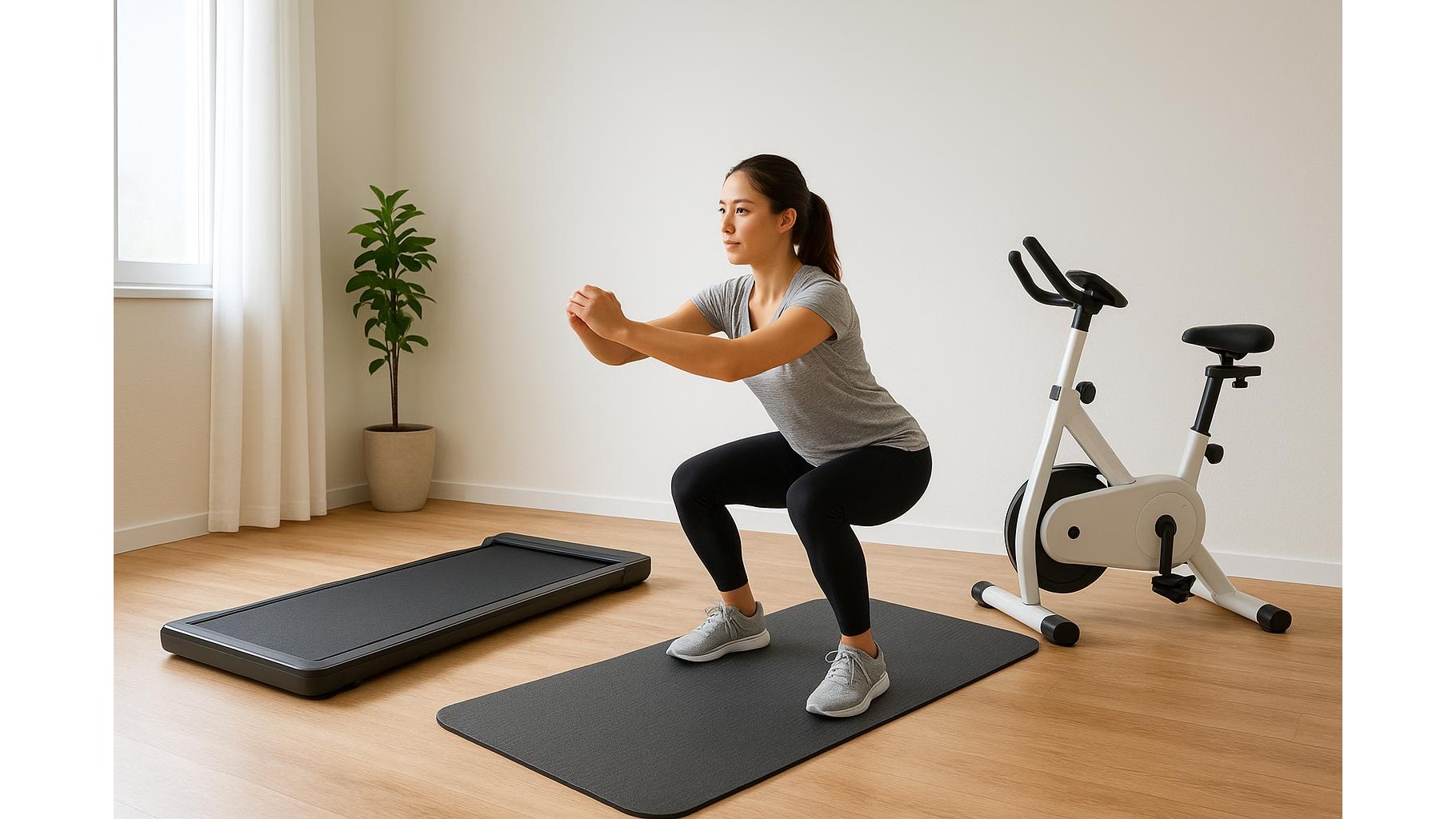
Building better cardio endurance at home does not have to mean hour-long boring sessions on a single machine. By combining short intervals on an exercise bike, brisk walking on a walking pad and simple bodyweight exercises, you can create engaging hybrid circuits that fit in a small home gym, boost calorie burn and keep your joints happy.
Why hybrid cardio circuits beat steady-state sessions
Traditional steady-state cardio has its place, but hybrid cardio circuits mix modalities to challenge your heart, lungs and muscles in a smarter way. Alternating between a stationary bike, a compact walking pad and low-impact bodyweight moves prevents the monotony that often kills motivation. Because each modality stresses your body slightly differently, you can maintain a higher overall intensity without feeling destroyed by any single exercise. This approach is ideal for a small home gym, where one or two compact machines plus your own bodyweight are enough to build serious aerobic capacity and burn more calories in less time.
Choosing the right exercise bike and walking pad for your space
To make hybrid circuits efficient, look for an upright or folding exercise bike that is stable, allows quick resistance changes and has a small footprint so it can stay in the corner of your living room or office. A simple, magnetic-resistance model with a clear console is usually enough. Pair it with a walking pad (a slim, motorised under-desk style treadmill) that folds away under a sofa or bed but still offers a smooth belt and at least basic speed controls. This combination lets you switch seamlessly between cycling intervals and brisk walking without wasting time setting up equipment. When you add in bodyweight moves you need only a mat, so the entire hybrid setup remains compact, quiet and apartment-friendly.
Structuring an effective hybrid cardio circuit
An effective home cardio circuit should balance work and recovery while staying simple enough to follow without thinking. One sample structure is: 3 minutes of moderate pedalling on the bike, 2 minutes of brisk walking on the walking pad, then 1 minute of bodyweight exercises such as squats, wall push-ups or marching in place. Repeat this 3-part block 4–6 times for a 30–40 minute session. Keep intensities low-impact but purposeful: you should be able to talk in short sentences, not sing. Adjust bike resistance and walking speed so your heart rate rises but your technique stays smooth. Over time, progress by extending total duration, adding one extra circuit block, or very slightly increasing resistance and pace while maintaining good form.
Best low-impact bodyweight moves to pair with cardio machines
The key to maintaining endurance without beating up your joints is choosing low-impact bodyweight exercises that complement your machine work. After time on the bike, add movements that open the hips and engage the posterior chain, such as bodyweight squats, glute bridges and reverse lunges (or supported lunges holding a wall or chair). After walking pad intervals, use upper-body moves like wall push-ups, incline push-ups on a sturdy surface, shoulder taps or light plank variations. You can also include simple core exercises like dead bugs or bird dogs. Keep reps moderate (e.g. 10–15 per exercise) and focus on fluid breathing. This combination builds muscular endurance around your knees, hips and spine, which in turn supports longer, more comfortable cardio sessions.
Simple progressions and safety tips for home endurance training
To steadily improve your cardio endurance at home, increase only one variable at a time: either session length, intensity or complexity. Start with two or three hybrid circuits per week, leaving at least a day in between. As weeks pass, extend one session by 5–10 minutes, or add one extra round of the circuit. Keep intensity mostly in a sustainable, conversational zone and use a short warm-up on the bike or walking pad before your first circuit. Always prioritise posture: relaxed shoulders, light grip on handles and a neutral spine. If you feel joint pain, reduce speed, resistance or range of motion and swap in simpler bodyweight options. With consistency and sensible progress, hybrid circuits will help you build resilient, long-lasting endurance while keeping home workouts flexible, engaging and space-efficient.
In summary, combining an exercise bike, a walking pad and low-impact bodyweight training creates a versatile hybrid cardio routine that fits almost any home. By alternating modalities, you keep your mind engaged, distribute stress across different muscle groups and make it easier to stick to a regular schedule. Start with short, manageable circuits, refine your equipment choices to suit your space and steadily build up time and intensity. Over the long term, this simple, structured approach can transform your small home gym into a powerful tool for better endurance, higher daily energy and sustainable cardiovascular health.









