If you want to get faster, leaner and fitter without leaving your house, adding sprint intervals on a home treadmill is a powerful strategy. The challenge is doing it in a way that does not wreck your knees, hips or lower back. With the right warm-up, smart progressions and joint-friendly form, you can safely push your speed in a compact home space and still protect your body for the long term.
Choose a joint-friendly home treadmill
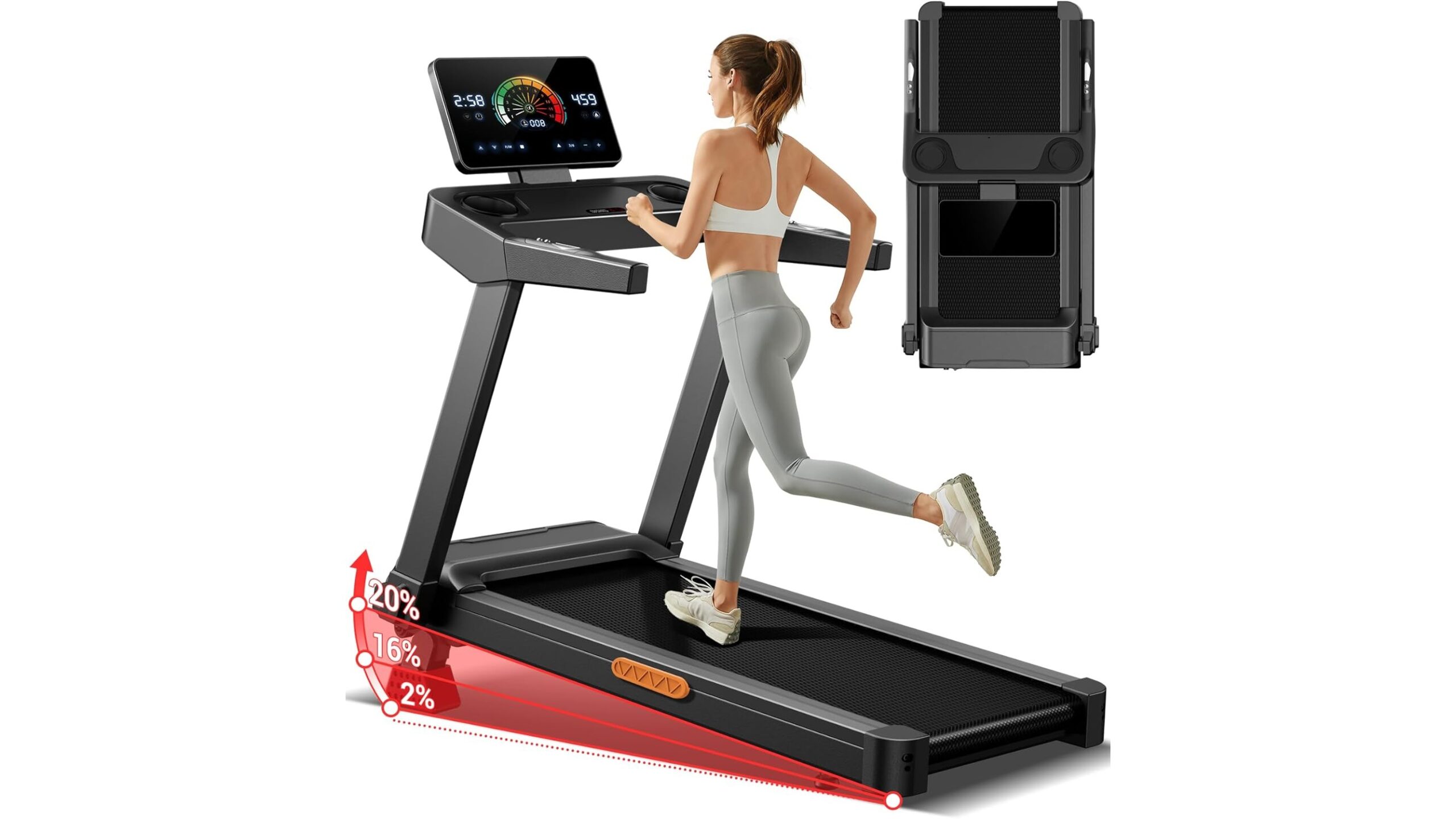
Before you start sprinting, make sure your equipment helps rather than hurts your joints. A model with solid cushioning and a wide, stable belt will absorb impact and give you room to find your stride. The CURSOR FITNESS Treadmill for Home Foldable with 20% Incline, 14KM/H offers a cushioned deck with built-in shock absorbers, a generous 107 × 40 cm running surface and speeds up to 14 km/h, ideal for entry-level sprint work. If you are more focused on low-impact, incline-based intervals and walking sprints, the Superun Walking Pad 6% Incline Under Desk Treadmill provides a compact, shock-absorbing belt and quiet 2.5 HP motor, perfect for joint-friendly incline efforts where you chase intensity with slope rather than pure speed.
[pseudo-placeholder]
Warm-up protocol to protect knees and lower back
A proper treadmill warm-up is non-negotiable if you want to protect your knees and lower back from sprint stress. Start with 5 minutes of easy walking at 3–4 km/h, gradually increasing to a light jog if you are pain-free. Then add 3–4 short drills: 30 seconds of high-knee marching, 30 seconds of butt kicks, and 30 seconds of sideways walking (each side) on a very low speed while holding the handrails for balance. Finish with two 20–30 second “strides”: accelerate from walk to a comfortably fast run, staying at that pace for only 5–10 seconds, then step off to the side rails to rest. This routine increases blood flow, wakes up your stabilising muscles and rehearses the joint-friendly running form you need before the real intervals begin.
Beginner-friendly sprint interval templates
If you are new to treadmill interval training, start conservative. For true beginners, use a brisk walk or gentle run instead of an all-out sprint. One safe structure is 30 seconds “on”, 60–90 seconds “off” for 10–15 minutes total. For example, on the CURSOR FITNESS treadmill you might work at 7–9 km/h for 30 seconds, then walk at 4–5 km/h until your breathing normalises. Keep the incline at 0–2% to reduce stress on the calves and Achilles. Low-impact users can apply the same idea on the Superun Walking Pad: increase the incline up to 6% and walk powerfully at 4–5 km/h during the work phase, then back down to 2–3 km/h for recovery. The goal is to finish your session feeling worked, but not limping or bracing your lower back.
Progressions for intermediate and advanced trainees
Once you tolerate beginner intervals twice per week for 3–4 weeks without joint pain, you can progress. Intermediate runners can move to 40–60 seconds of work with equal rest (a 1:1 work–rest ratio), gradually raising speed toward 10–12 km/h on the CURSOR FITNESS treadmill, while keeping total hard time under 12–15 minutes. Advanced home athletes might try classic HIIT treadmill sprints such as 20 seconds on / 40 seconds off at 12–14 km/h, or 60 seconds strong uphill power walks at 5–6 km/h and 6% incline on the Superun Walking Pad. Increase either speed, incline or the number of intervals—but only one variable at a time, and by small steps each week to avoid overloading your joints.
Joint-friendly form cues for knees and lower back
Good treadmill running form is your best insurance against burnout. Keep your posture tall, with your ribcage stacked over your hips and eyes looking forward, not down at the console. Land with your foot roughly under your hips instead of reaching far ahead, which causes braking forces and knee stress. Aim for a quick, light cadence—short, fast steps rather than long, pounding strides. Gently engage your core as if zipping up tight jeans to stabilise your lower back. Avoid gripping the handrails during intervals; this twists your spine and shifts impact into the joints. If you must hold on briefly to adjust speed on the touchscreen, do so between intervals at walking pace, not while sprinting.
Recovery, frequency and when to back off
To keep your joints happy, treat home treadmill sprints like strength training: powerful but infrequent. Most people do best with 1–3 interval sessions per week, separated by at least one full rest or easy cardio day. On non-sprint days, use low-intensity walking on the Superun Walking Pad or gentle incline walks on the CURSOR treadmill to build aerobic capacity without extra pounding. Pay attention to warning signs: lingering knee pain, sharp lower-back discomfort or heavy, lead-like legs mean you should cut your volume in half or take several days off. Building speed is a long game; backing off early is far better than pushing through and losing weeks to an avoidable overuse injury.
Structured treadmill interval training at home can deliver big fitness gains while still protecting your knees and lower back—if you respect progression, form and recovery. Choose a cushioned, stable machine, warm up thoroughly, start with conservative work–rest ratios, and only increase one variable at a time. Combine these habits with consistent low-impact movement on days between your sprints and you will build speed, stamina and confidence on your home treadmill without burning out your joints.