Choosing the right under-desk treadmill with removable handrails can make a huge difference if you are recovering from an injury, need a safe way to walk at home, or simply want gentle, low-impact cardio in a small space. The ideal model should combine a compact walking pad design with stable, ergonomic handrails you can attach for rehab sessions and remove when you want to slide the treadmill under a desk or bed. This guide offers a practical checklist so you can compare models and pick the safest, most comfortable option for your home rehab routine.
Check safety features for rehab-friendly walking
For home rehab walking, safety should always come first. Look for an under-desk treadmill with a low starting speed (around 0.5–1 km/h) and precise speed increments, so you can progress gradually without overloading joints. A clear, easy-to-reach emergency stop button or safety key is essential, especially if balance is an issue. The belt should have a non-slip surface and slightly raised side rails so you can feel the edge with your feet and avoid missteps. A quiet but reliable motor is also important, as it keeps noise low for apartment living while providing smooth, jerk-free acceleration, which is crucial when you are regaining confidence after an injury.
Prioritise removable handrails that are stable and ergonomic
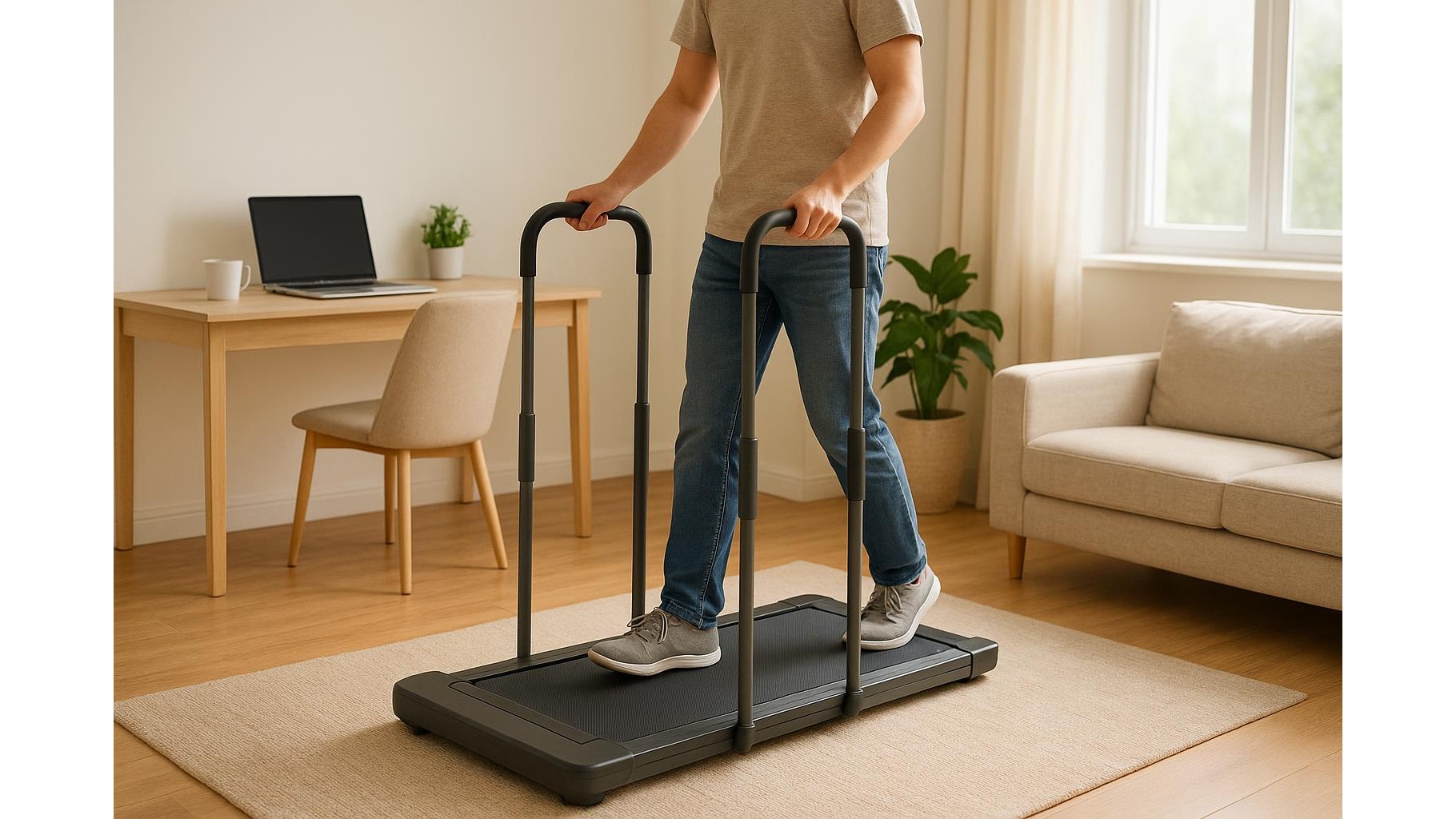
The most important detail for rehab is the design of the removable handrails. Many basic walking pads skip handrails altogether; for safe home rehab, you need solid, wobble-free support. Prefer models where the handrails bolt or firmly lock into the frame, instead of flimsy clip-on bars. Handles should be wide enough for a natural arm position and covered with anti-slip foam or rubber to reduce wrist fatigue. Adjustable height is a plus, especially if different family members will use the treadmill. When you remove the handrails for under-desk use, check that there are no protruding brackets that could catch clothing, and that folding or detaching the rails takes only a few minutes without tools.
Choose a speed and deck size suited to gentle walking
Unlike running treadmills, a walking pad for rehab does not need high top speeds. Instead, focus on a comfortable range for slow, controlled walking, usually up to 6 km/h. This lets you perform light cardio and daily step goals without feeling rushed. The deck length should be long enough to accommodate your natural stride—taller users will benefit from a slightly longer belt to avoid stepping near the edges. A moderately cushioned deck helps absorb impact on knees, hips and lower back, but it should not feel too soft or bouncy, as that can challenge balance during the early phases of recovery. If you are post-injury, consider starting with shorter, frequent sessions and verify that the treadmill maintains a steady pace without surging.
Evaluate compact design, storage and noise for small homes
One of the key advantages of an under-desk treadmill is that it fits into tight spaces. Look for a slim profile that can slide under a sofa or bed once you have removed or folded the handrails. Integrated transport wheels make it easier to move the unit between a work desk and a rehab corner without lifting. Check the total weight and maximum user weight limit, especially if you need a sturdier frame for stability. Noise is another deciding factor: a quiet motor and smooth belt are kinder to neighbours and allow you to walk while taking calls or watching TV. Low noise also reduces stress during rehab sessions, helping you stay relaxed and focused on your gait.
Monitor progress with clear controls and simple metrics
Even for gentle rehab walking, basic feedback helps track progress and keeps you motivated. A good under-desk treadmill should offer a clear display showing speed, time, distance and estimated calories. Simple remote control operation is often more convenient than bending down to use onboard buttons, particularly if you have mobility limitations. Some models also support app connectivity, but this is optional; the priority is that controls are intuitive and responsive, so you can quickly reduce speed if you feel tired or unstable. By combining stable handrails, sensible speed settings and easy monitoring, you create a home setup that supports long-term recovery rather than short, frustrating experiments.
In summary, the best under-desk treadmill with removable handrails for safe home rehab walking is one that balances security, comfort and compactness. Focus on rehab-friendly safety features, robust and ergonomic handrails, a gentle walking speed range, and a deck size that matches your stride. Add in quiet operation, easy storage and clear controls, and you will have a practical tool for post-injury walking, low-intensity cardio and daily movement, all without leaving your living room.