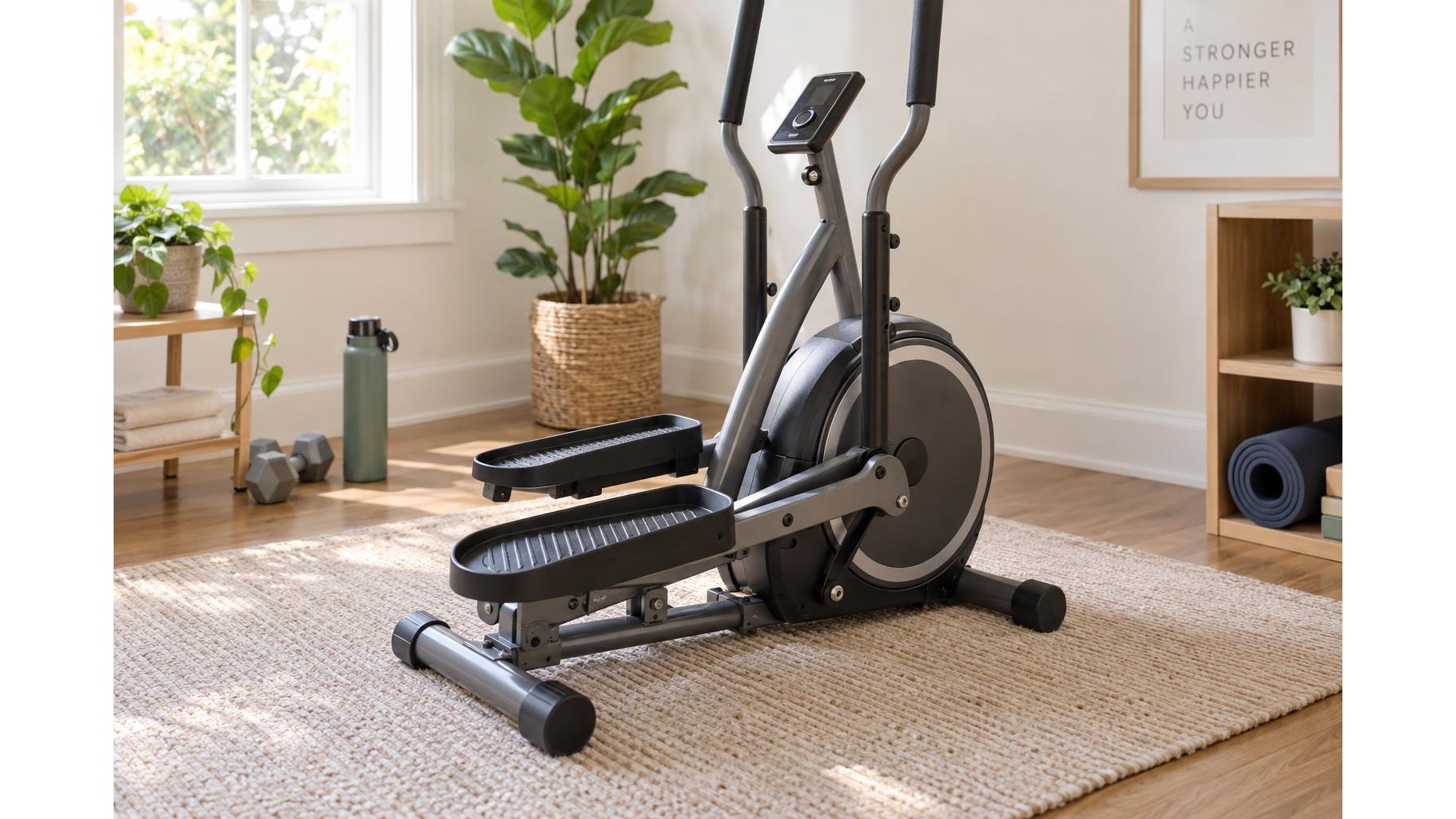
A compact elliptical can make regular cardio easier to fit into a busy home, but a small footprint alone does not guarantee a comfortable or quiet workout. Look beyond marketing terms: resistance design, stride geometry, frame stability and upkeep all affect how the machine feels day to day. Use the checks below to compare models before buying.
Understand fan-free resistance systems
Magnetic resistance uses magnets positioned near a flywheel to change the effort required to pedal. Because the magnets do not need to touch the flywheel, the system generally runs smoothly and requires little routine adjustment. Manual models use a dial; motorised versions change resistance electronically and may offer programmed workouts. Other fan-free designs include friction resistance, where a pad presses against a moving part, and fluid or belt-based mechanisms. Friction systems can wear and may need adjustment, while belts and fluid systems have different service needs. Ask how resistance is created, whether levels are adjustable, and whether replacement parts are readily available. Magnetic does not mean silent: bearings, pedals and a loose frame can still make noise.
Check stride comfort and fit
Compact ellipticals often shorten the stride to save space. That can feel natural for gentle movement but cramped during longer sessions, especially for taller users. If possible, try the machine in person, or check the stated stride length and the manufacturer’s user-height guidance. Notice whether your knees track comfortably, your heels stay supported and your feet avoid striking the frame. A smooth elliptical path should not force you into a choppy, steep stepping motion. Also check pedal width and spacing: a narrow stance may feel comfortable to some users, while others prefer a wider, more natural position. Look for a clear return policy if you are buying online.
Assess stability and usable size
Compare the machine’s assembled dimensions with the space where you will exercise, including room to step on and off safely. A foldable design may help with storage, but check its folded footprint and whether moving it is practical. Stability depends on more than weight: a rigid frame, broad contact points and adjustable levellers can reduce rocking on uneven floors. Check the maximum user-weight rating and whether the pedals remain steady when you increase effort. Reviews can reveal wobble, but treat isolated reports cautiously. If the unit has transport wheels, confirm that they do not compromise its secure position during use.
Listen for noise and plan maintenance
Fan-free machines avoid the whoosh of an air-resistance fan, making them attractive for flats and shared rooms. Still, listen for clicking, rubbing or squeaking at different resistance levels; these sounds may come from pedals, joints, bearings or a poorly aligned belt. Ask about the warranty and service access, then check the manual for cleaning, lubrication and bolt-tightening instructions. Magnetic systems usually need little resistance-system maintenance, but all machines benefit from keeping dust off moving parts and checking fasteners periodically. Avoid applying lubricant unless the manufacturer specifies where and what type to use.
Use a simple model-comparison checklist
Before choosing, compare models against the same practical criteria rather than relying on feature counts:
- Resistance: magnetic, friction, belt or fluid; number of usable levels and adjustment method.
- Fit: stride length, pedal spacing, foot support and suitability for your height.
- Stability: frame rigidity, levellers, user-weight limit and pedal security.
- Noise: reports of squeaks or knocks, plus how quiet it is at your intended effort.
- Practicalities: assembled and stored dimensions, portability, warranty and spare-parts access.
- Ownership: cleaning and maintenance schedule, return terms and total delivered cost.
A good compact elliptical is one that fits your body, your room and your routine—not simply the smallest or cheapest model. Prioritise a comfortable stride and steady pedals, then choose a resistance system with clear maintenance guidance and a noise level suited to your home. Comparing these details before buying can help you find a machine you will actually want to use regularly.