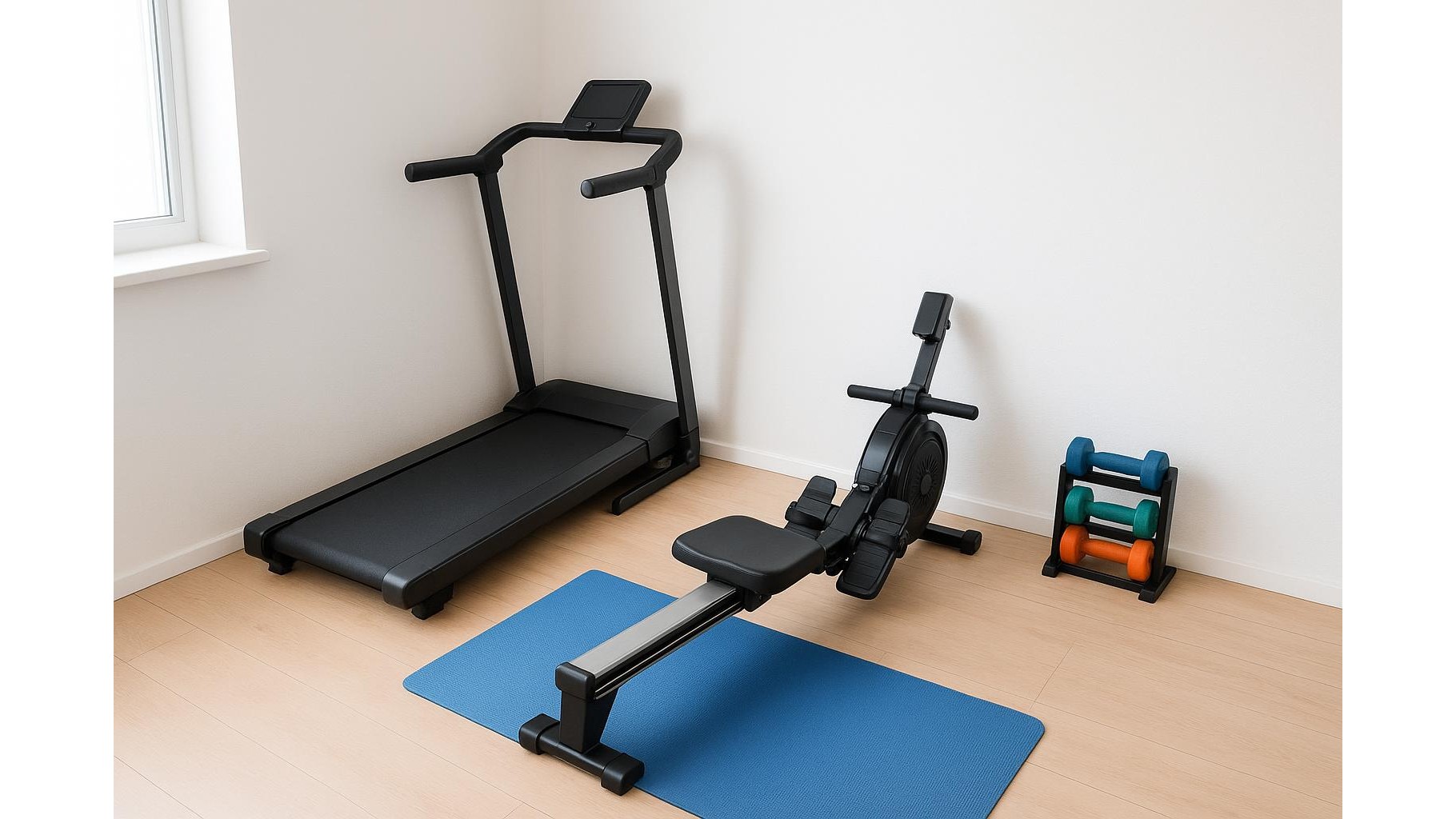
Designing a tiny home gym is all about maximising results from minimal space. Instead of cramming in three or four bulky pieces, a smarter approach is to build a two-machine cardio setup where each machine covers what the other lacks. By pairing different types of cardio equipment, you can balance impact, intensity and variety, without wasting budget on redundant features.
Define your cardio goals before choosing machines
Before you buy anything, get clear on what you want your home cardio to do. Do you need low-impact training to protect your joints, or do you crave high-intensity intervals that torch calories in short sessions? Are you training for overall fitness, weight loss, or to support a specific sport? Once you know your goals, you can choose two machines that complement each other instead of overlapping. For example, pairing a steady-state friendly option (like a treadmill or elliptical) with an intensity-focused machine (like a rower or air bike) gives you both endurance and power in a tiny footprint.
Balance impact: one joint-friendly, one harder-hitting
A smart two-machine setup usually includes one low-impact and one higher-impact or more intense option. Low-impact machines such as ellipticals, rowing machines or upright bikes are ideal for longer sessions, active recovery days and anyone with knee, hip or back issues. Higher-impact or higher-load tools like treadmills for running or air bikes are perfect for HIIT workouts and building cardiovascular capacity. By alternating between them across the week, you reduce repetitive stress on the same joints while keeping your training stimulus high.
Mix movement patterns for full-body benefits
Another key to avoiding redundancy is choosing machines that use different movement patterns. For instance, pairing a treadmill (sagittal, predominantly lower-body) with a rower (full-body pulling, strong posterior-chain engagement) creates a more complete stimulus than owning two different stationary bikes. Even in a tiny space, you can get full-body conditioning by mixing upper-body involvement (rower, air bike, ski trainer) with lower-body dominant options (treadmill, stepper, spin bike). This approach improves muscle balance, posture and overall athleticism while keeping your sessions mentally engaging.
Program your week around your two machines
With a complementary pair of machines, programming becomes simple and effective. Use your low-impact machine for moderate-intensity steady-state sessions of 30–45 minutes to build your aerobic base. Reserve the more intense machine for intervals two or three times per week, such as 10–15 minutes of short sprints with full recovery. In a tiny home gym, this allows you to get complete cardio coverage without extra gear: endurance, power, fat loss and recovery are all handled by just two pieces of equipment. Rotate focus days (e.g. endurance Monday, HIIT Wednesday, mixed session Friday) so you stay consistent without burning out.
Make the most of limited space and budget
Finally, consider folding designs, compact footprints and transport wheels so your two-machine setup works in the smallest rooms. Place one machine as a semi-permanent fixture and keep the other easily movable or foldable so you can reconfigure the space for strength training or mobility work. Look for models with simple, durable construction and the features you will actually use, rather than paying for oversized consoles or entertainment systems. With a clear plan—one low-impact, one higher-intensity, two different movement patterns—you can create a high-performing cardio corner that fits your training goals, your home and your wallet.
In summary, the best tiny home gym is not the one with the most machines, but the one with the right combination. By deliberately pairing two complementary cardio tools, you avoid redundancy, reduce joint stress, increase variety and get more out of every minute you train. Focus on your goals, balance impact and movement patterns, and choose compact, practical designs. Your two-machine cardio setup will feel like a full studio—just without the wasted space.