Building a home cardio corner with a treadmill, exercise bike or rower is great for fitness, but it also introduces moving belts, cables and heavy frames into living spaces shared with kids, pets and tight furniture. A safe setup is not just about where you place the machine, but also how you manage emergency stops, power cables and physical barriers. This guide walks through practical steps to create clear safe zones and reliable emergency stop systems around your home cardio equipment.
Plan your safe zones and fall‑out space
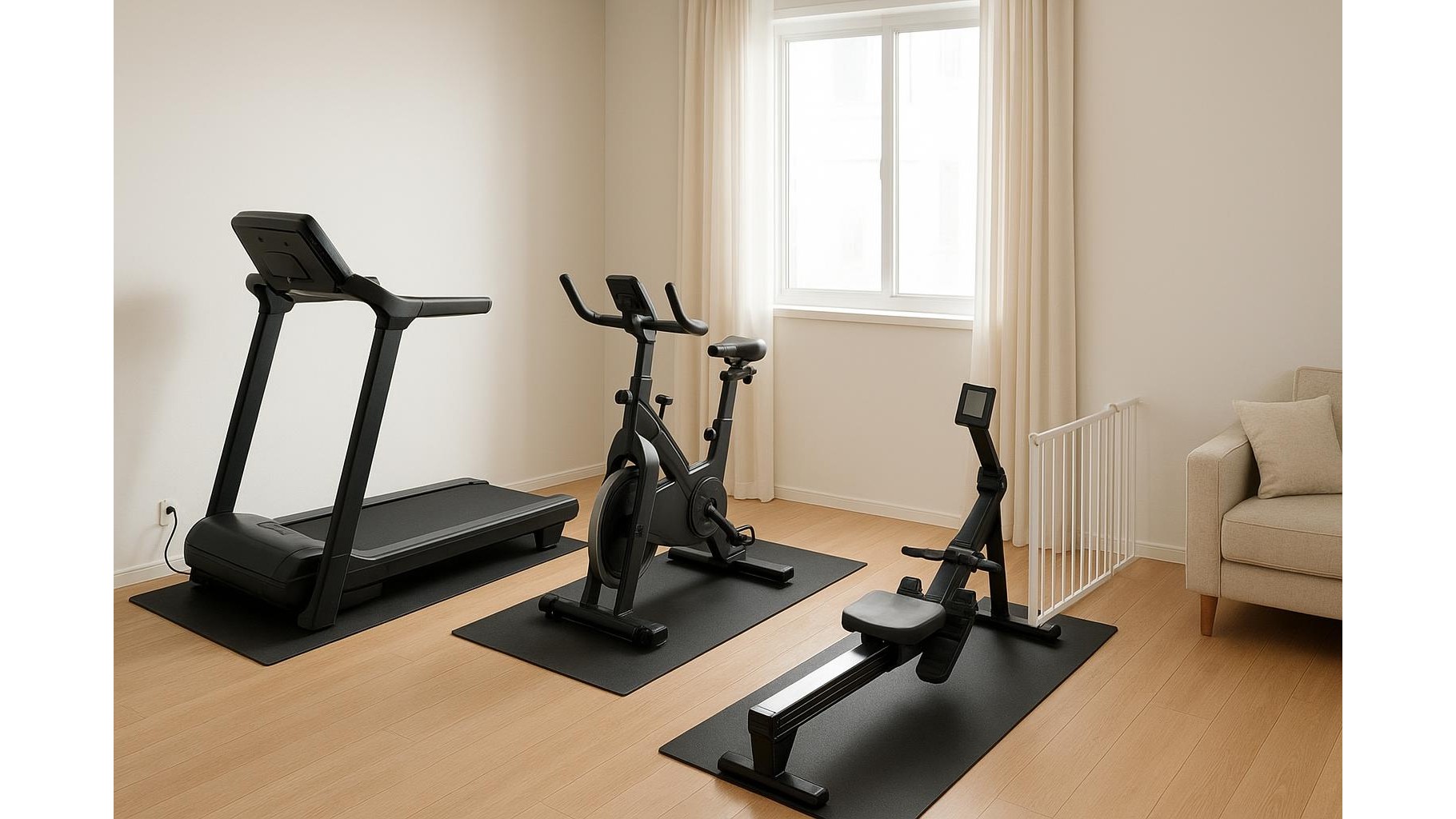
Start by defining a clear safe zone around each cardio machine. For treadmills, leave at least 50–60 cm on each side and a minimum of 1–1.5 m of free space directly behind the belt so you have room if you slip. Exercise bikes and rowers need less rear space but still require enough clearance for full pedal or stroke range plus easy mounting and dismounting. Keep this area free from furniture corners, storage boxes and loose objects that could cause trips. In homes with kids and pets, clearly mark the workout zone visually, for example by using a contrasting floor mat, and set simple household rules that only the person training is allowed inside the zone when the machine is in use.
Set up emergency stops and safety keys
Most motorised treadmills rely on a magnetic safety key that clips to your clothing and stops the belt if you move too far from the console. Always attach this key before starting and test it regularly by pulling it out at low speed to confirm the belt stops instantly. Store the key out of reach of children when not training so they cannot start the machine. If your treadmill did not ship with a working key or you have lost it, look for a compatible magnetic safety key designed for your brand and check that the cord is long enough to allow natural arm swing without snagging. For rowers and bikes without electronic consoles, treat the resistance dial and pedals as your emergency stop: practice stepping off to the side on a treadmill, releasing the handle on a rower or braking the pedals with the built‑in resistance so your reactions become automatic.
Use floor mats to stabilise and define boundaries
A quality equipment mat under your treadmill, bike or rower does more than protect floors. It also improves stability and defines the footprint of your safe zone. Choose a dense, non‑slip PVC or rubber mat that matches or slightly exceeds the base dimensions of your machine so no edges curl up into trip hazards. Mats also help to dampen vibration and noise, which is especially useful in apartments and upstairs rooms. Place the mat on a clean, dry surface and ensure the corners lie flat before positioning the machine. For households with pets, the mat creates a clear visual boundary and a surface many animals will naturally avoid, helping to keep them away from moving belts and cranks while you train.
Manage power cables and trip hazards
Poor cable management is one of the most overlooked home cardio safety risks. Power leads draped across walkways can catch on feet, toys or vacuum cleaners, potentially pulling a treadmill or bike off balance or unplugging it mid‑workout. Route the power cable directly from the wall socket to the machine along the shortest, safest path and avoid using long, trailing extension leads whenever possible. Use cable clips, floor‑level cable sleeves or low‑profile covers to secure leads against skirting boards or along the wall so they do not cross natural walking routes. Keep plugs out of reach of young children and avoid running cables under rugs, which can overheat and also create uneven surfaces that lead to trips.
Create physical barriers for kids and pets
In busy family homes, physical barriers can make the difference between a near‑miss and a serious accident. Consider using lightweight room dividers, playpens or freestanding safety gates to section off your cardio corner from the rest of the room when you are training. Position the treadmill so the rear of the belt faces a wall or barrier rather than open space, and avoid placing machines near staircases or doorways where someone could walk directly into the moving parts. After each workout, stop the machine fully, remove or switch off the safety key, and, if possible, unplug motorised equipment. Store shoes, resistance bands and accessories in a closed box so they do not tempt curious hands or paws into the workout area.
Routine checks and safe user habits
Even the best layout needs regular checks to stay safe. Once a month, inspect your treadmill, bike and rower for loose bolts, damaged cables, worn belts and unstable feet. Verify that the emergency stop and safety key system still work instantly. Wipe sweat from consoles and handrails to maintain grip, and keep the floor around the machines dry. Build safe habits: mount and dismount only when the machine is fully stopped, start sessions at low speed or resistance, and never multitask with phones or tablets while moving. Combine good equipment maintenance with clear safe zones, reliable emergency stops and smart cable management, and your home cardio setup will support effective training without compromising the safety of kids, pets or guests.