Choosing between a foldable rowing machine and a non-foldable rowing machine is one of the biggest decisions when building a home gym. Both options can deliver excellent cardio and full-body conditioning, but they differ in space requirements, stability, noise and overall training feel. Understanding these trade-offs will help you pick the right rower for your room layout, routine and fitness goals.
Table of contents
Space and footprint in real homes
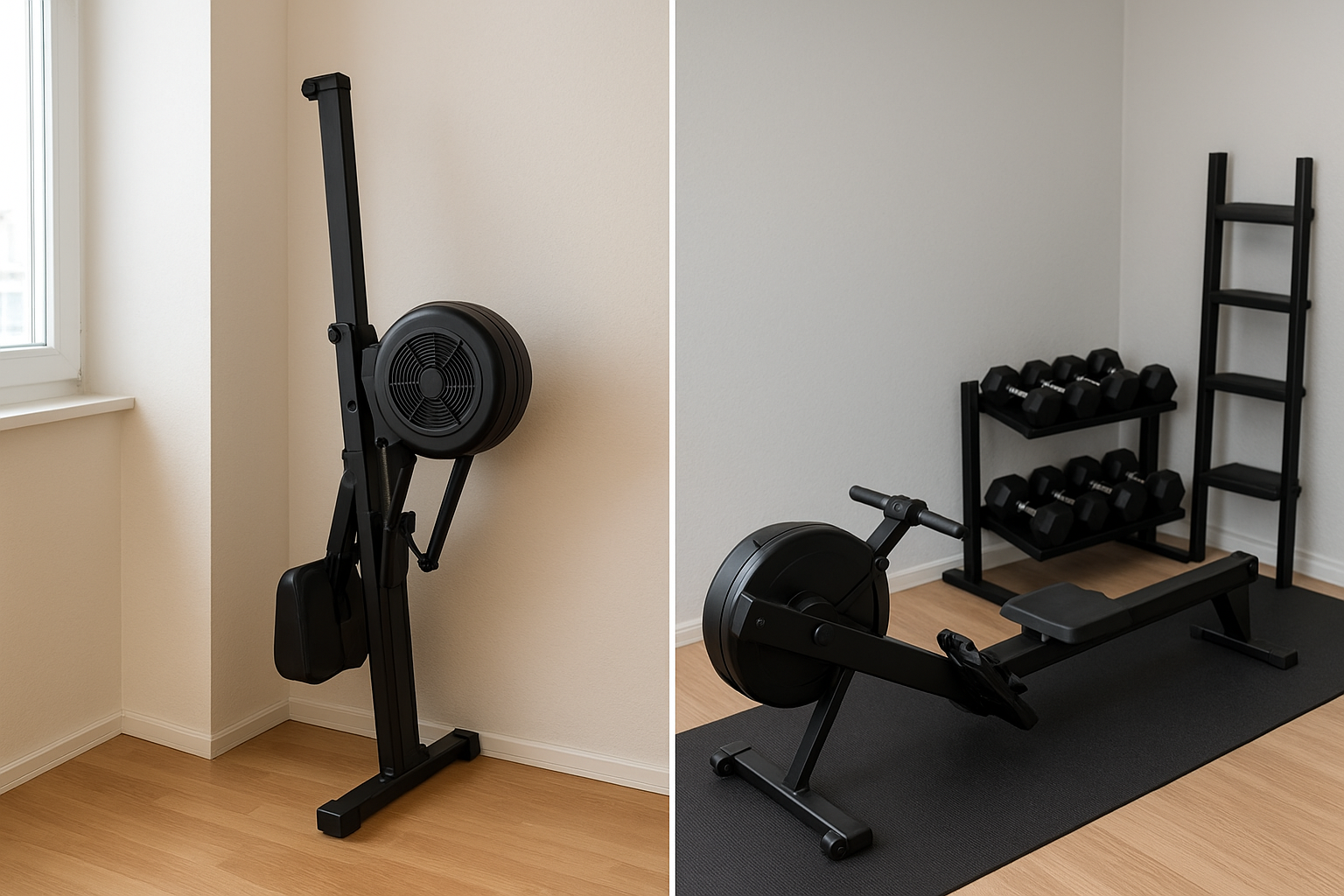
The main reason people choose a folding rower is simple: space saving. Foldable rowing machines are designed to stand upright or collapse so they can be stored against a wall or in a corner after your workout, freeing up floor area in a living room, bedroom or small studio. Non-foldable rowers usually have a longer fixed rail and stay at full length all the time, which can be an issue in narrow spaces or shared rooms. If your training area doubles as a home office or lounge, a compact, stowable machine will make it easier to keep the room usable and uncluttered between sessions.
Stability, build quality and safety
Non-foldable rowing machines tend to feel more solid and planted because the frame does not have hinges or folding joints. This can translate into less wobble at high stroke rates and a more secure feel for heavier users or powerful rowers. Foldable designs have improved, but some budget models may flex slightly under intense effort. If you are a beginner doing moderate cardio, modern foldable units are usually stable enough. However, if you plan to train hard with sprint intervals, heavy resistance or frequent long sessions, a fixed-frame rower may deliver better durability and long-term confidence, especially if several family members will use it.
Noise, resistance type and training feel
The training feel is influenced more by resistance type than by whether the rower folds. Magnetic rowing machines are usually the quietest, ideal for apartments and late-night workouts, and are available in both foldable and non-foldable layouts. Air rowers deliver a very responsive, progressive resistance that many athletes love, but they are louder and more likely to disturb neighbours. Water rowers offer a smooth, realistic stroke with a gentle whooshing sound, yet the tanks and rails often make them non-foldable. Consider your noise tolerance, household schedule and training style: if you need near-silent operation, a magnetic foldable machine is often the most practical choice for home cardio.
User experience: console, comfort and usability
Regardless of frame design, pay close attention to comfort and usability. Look for an ergonomically shaped seat, a smooth-rolling rail, an adjustable footplate with secure straps and a handle that does not strain your wrists or shoulders. The console should clearly display distance, time, strokes per minute and calories, with simple controls that are easy to reach mid-row. Some non-foldable machines offer more advanced performance tracking and better integration with training apps, while many foldable options prioritise compact size over high-end electronics. Think about how you like to train: if you follow structured programs or virtual classes, prioritise a machine with solid connectivity and readable metrics.
Which type suits your goals and space?
If your top priority is saving space, or you must keep a small room multi-purpose, a foldable rowing machine is usually the most flexible solution, letting you store it vertically or in a cupboard between workouts. If you have a dedicated gym corner or spare room, a non-foldable rowing machine can provide a more rugged feel and is often the better long-term investment for serious, frequent training. In both cases, match the resistance type and console features to your goals: quiet magnetic resistance for general fitness and apartments, responsive air or water resistance for athletes wanting a more performance-oriented rowing experience.
In summary, the real choice is not simply foldable vs non-foldable, but how each option fits your home layout, your training intensity and your noise constraints. Foldable rowers shine in small spaces and casual-to-regular use, while fixed-frame machines typically win on stability and heavy-duty durability. Define where you will place the machine, when you will train and how hard you plan to row; then select the design that best supports consistent, enjoyable home cardio sessions over the long term.