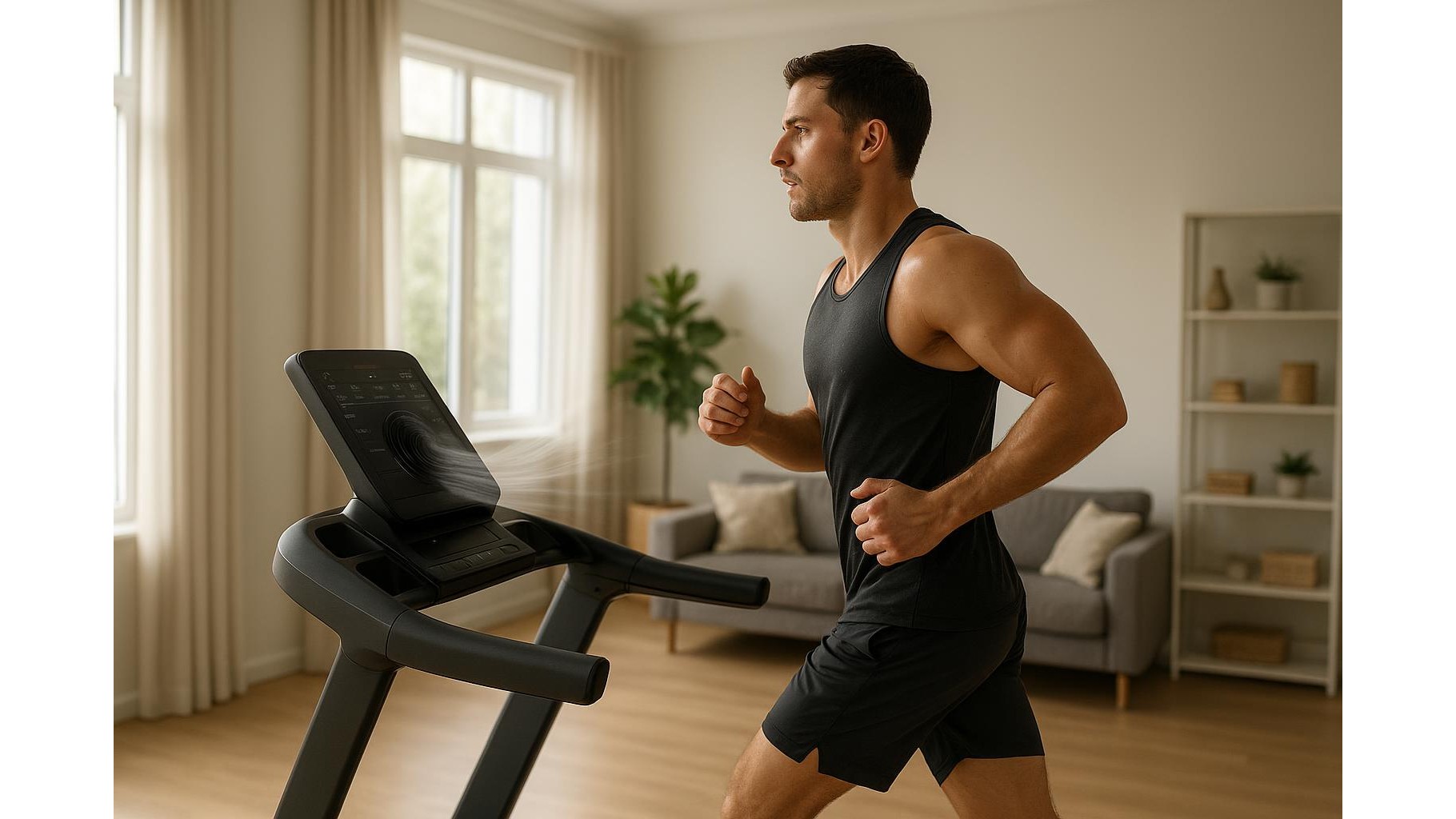
Fan-assisted treadmills for home are an increasingly popular choice for runners who want the comfort of indoor training without sacrificing the refreshing feel of outdoor airflow. By integrating one or more built-in fans into the console, these cardio machines help manage heat, sweat and perceived effort, making longer sessions in your living room or garage far more enjoyable. Understanding how airflow works, what to look for in the specs and who will benefit most can help you pick the right model for your home gym.
What is a fan-assisted treadmill and why does it matter?
A fan-assisted treadmill is a standard home treadmill with one key upgrade: an integrated cooling fan mounted on or below the console that directs airflow toward your face and upper body. While it might sound like a minor detail, this airflow can significantly reduce thermal stress during indoor runs, lowering perceived exertion and helping you maintain pace for longer. In a closed environment like a spare room or garage, where air can quickly become warm and stagnant, a fan makes the difference between cutting a workout short and comfortably finishing your planned interval or tempo session.
How airflow improves comfort and performance indoors
During a run, your body generates heat and sweat to regulate temperature. Outdoors, natural wind and forward motion help evaporate sweat efficiently, but on a treadmill you stay in place, so hot air lingers around you. A built-in treadmill fan recreates some of that outdoor cooling effect by increasing air movement over your skin. This improves evaporative cooling, which not only feels more comfortable but can slow the rise of your heart rate at a given pace. Many home runners report that with airflow they can maintain the same speed with less perceived effort, or extend their sessions by 10–20 minutes without feeling “overcooked” by the end.
Key fan and treadmill specs to compare before you buy
When shopping for home treadmills with fans, do not focus only on belt size and motor power. Check the fan specifications too. Look for multiple speed settings so you can adjust the airflow between easy walks and intense intervals. An adjustable fan angle is extremely useful, especially if users of different heights will share the machine. Pay attention to console layout: the fan should blow towards your torso or face, not your knees. Beyond airflow, compare core treadmill features such as continuous horsepower (CHP) of the motor, maximum speed, incline range and cushioning system. A well-designed running deck with shock absorption paired with targeted airflow creates a more forgiving and sustainable indoor running experience.
Practical benefits in a living room, spare room or garage
In real homes, a fan-assisted treadmill solves several everyday problems. In a living room or small apartment, opening windows may not be an option in cold or hot weather, and external fans take up space or create clutter. A built-in fan helps keep sweat in check, which can reduce the amount of moisture on the floor and surrounding area. In a garage gym, where air can become stuffy or humid, airflow helps prevent that suffocating feeling during long runs. For those who share their space with others, a quieter, integrated fan can be less intrusive than a large, noisy floor fan. The result is a more comfortable environment that encourages you to hop on the treadmill more often and stay consistent with your training.
Who benefits most from fan-assisted treadmills?
While any home runner can appreciate built-in airflow, some users benefit more than others. If you perform high-intensity interval training (HIIT) or long-distance sessions indoors, the additional cooling can help keep your heart rate from drifting too high and reduce fatigue across intervals. Runners living in warmer climates or in homes without strong air conditioning will find fan assistance especially valuable. People sensitive to heat, including beginners who tend to overheat quickly, often find they can progress with less discomfort. Finally, home gym owners who want a compact, integrated setup will enjoy not having to position separate fans around the treadmill or manage extra cables and devices.
In summary, a fan-assisted treadmill for home takes the familiar benefits of indoor running and adds a crucial layer of comfort through controlled airflow. By improving cooling, comfort and perceived effort, built-in fans can make your living room, spare room or garage feel closer to an outdoor run, even when the weather is uncooperative. If you are planning to invest in a home cardio machine, evaluating both the treadmill’s core specs and its airflow features will help you choose a model that keeps you cooler, more motivated and more consistent with your training over the long term.