
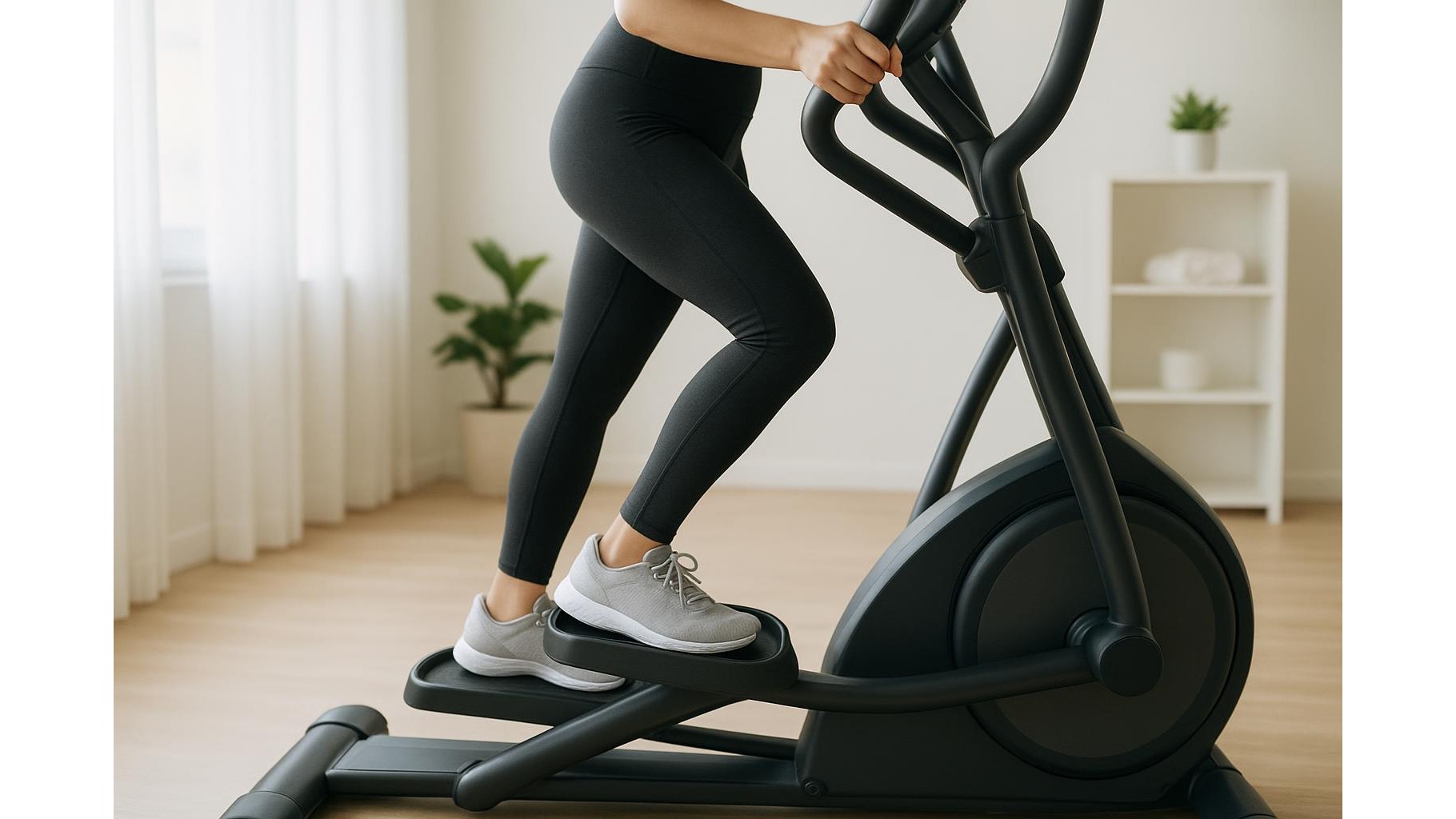
If you live with nagging hip, knee or shoulder pain but still want a serious cardio workout at home, a well‑chosen elliptical trainer can be a joint‑friendly game changer. Unlike running on a treadmill, the elliptical’s guided motion keeps impact low, but not every machine feels the same. Details like stride length, pedal angle and handle design can decide whether you finish feeling loose and energised or sore and frustrated. This guide walks you through what to look for when you’re buying an elliptical for sensitive joints, plus how to use it so your hips and shoulders stay as happy as your heart and lungs.
Understanding low‑impact elliptical motion for sore joints
An elliptical is considered a low‑impact machine because your feet never leave the pedals, avoiding the repeated impact of running. For painful knees and hips, this can dramatically cut joint stress, especially if you choose a model with a smooth, natural‑feeling stride. Look for language such as “low impact”, “joint friendly” or “rehabilitation use” in the product description and reviews, and prefer machines that mention precision bearings or fluid drive systems, which usually translate into less jarring at the end of each stride. If you struggle with balance or stiffness, choose an elliptical with fixed, stable side rails in addition to moving handles, so you can build confidence while keeping impact to a minimum.
Choosing stride length and geometry when hips or knees hurt
For sensitive hips, the way the stride feels is critical. Too short, and you end up shuffling with a choppy motion that can tighten hip flexors and irritate knees; too long, and it may pull your hip into an uncomfortable extension. As a rough guide, users up to about 5’7” often do well around a 16–18 inch stride, while taller users usually benefit from 18–20 inches or more. When reading product pages, prioritise models that clearly state stride length and highlight a natural, walking‑like path. If you have limited hip mobility, consider compact ellipticals or under‑desk style machines with a more circular motion, which keeps the leg movement smaller and often easier on sore joints. Whatever you pick, aim for a stride that lets you move smoothly without reaching or locking your knees at the bottom of the stroke.
Pedal design, Q‑factor and foot comfort for sensitive joints
Pedal setup can quietly make or break comfort for your knees, hips and ankles. Wide, cushioned pedals help distribute pressure and reduce hotspots under the forefoot, especially during longer sessions. Look for descriptions that mention oversized non‑slip pedals or cushioned footplates. Equally important is the spacing between the pedals, known as the Q‑factor. If the pedals sit very wide, your knees may be pushed outward, stressing hips and inner knees; if they’re extremely narrow, some users feel pinched. Though this measurement is rarely listed, reviewers often comment when a machine feels “too wide” or “natural like walking”. Slightly inward‑sloped pedals can also help align your knees over your toes, which is useful if you’re prone to knee pain or have flat feet.
Handles, posture and shoulder‑friendly upper‑body training
Shoulder issues need just as much thought as lower‑body joints. On many ellipticals, the moving handles dictate your arm path, and if those handles sit too high or too wide, you may end up shrugging or rotating the shoulders into a painful position. When comparing models, check that the handlebars offer multiple grip positions or at least a neutral, palms‑in grip, which tends to be kinder on the shoulders. Fixed side grips are useful for days when any pushing and pulling aggravates pain, allowing you to train primarily with your legs. Keep the console at a height that lets you stand tall without craning your neck forward. During workouts, focus on a relaxed grip and gentle arm motion rather than yanking the handles; let the legs drive the stride while the arms simply follow, especially if you are recovering from a shoulder flare‑up.
Low‑impact workout programming to stay pain‑free
Even on a well‑designed home elliptical, programming matters if you want to protect sensitive joints. Start with short, low‑resistance sessions—5 to 10 minutes—while you learn how your hips and shoulders respond. Build up gradually, keeping most of your training at an easy, conversational pace. Many ellipticals offer pre‑set programs; favour steady‑state or gentle hill profiles instead of aggressive interval modes that spike resistance suddenly. To reduce joint load, keep your cadence smooth rather than forcing very high step rates, and avoid cranking the incline so high that you lean forward excessively. If your hips are the main issue, shorter, more frequent sessions often beat one long workout. Finish with a few minutes of light pedalling to cool down, then simple mobility work for hips, hamstrings and the upper back to help your joints recover.
By paying attention to stride geometry, pedal comfort and handle ergonomics, you can turn an elliptical into a powerful ally for joint‑friendly fitness at home. A smooth, appropriately sized stride protects your hips and knees, supportive pedals and sensible spacing keep your lower body aligned, and shoulder‑friendly handlebars allow you to involve the upper body without aggravating old injuries. Combine thoughtful equipment choices with low‑impact programming and gradual progression, and your home elliptical can help you build cardiovascular fitness and leg strength while keeping sensitive joints calm and comfortable.









