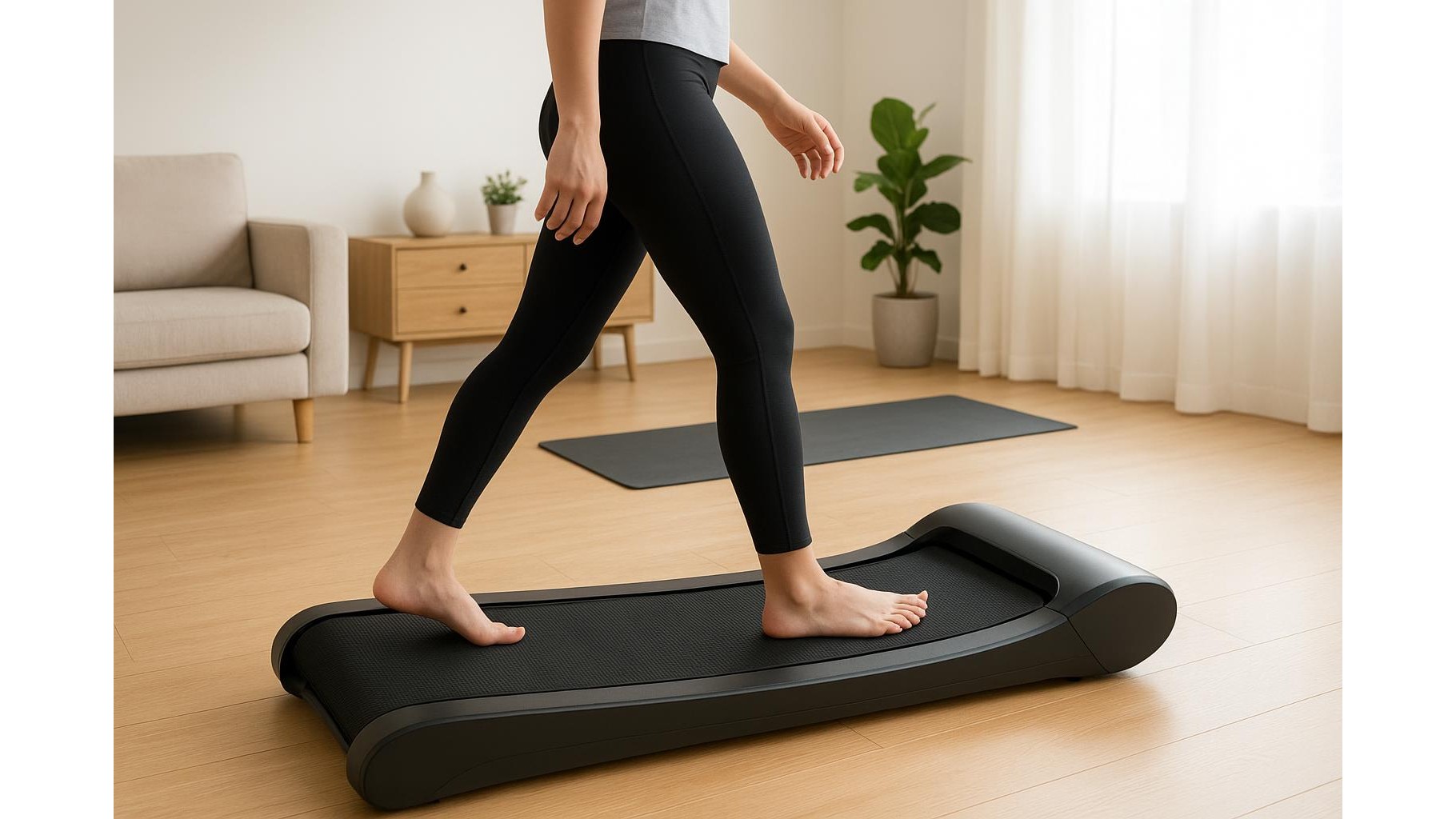
Curved, motor‑free walking pads are a clever way to bring low‑impact barefoot cardio into a small home gym. Instead of a motor pulling the belt, your own stride drives the movement, which can feel more natural for those who prefer minimalist shoes or training barefoot. Choosing the right manual curved walking pad means paying close attention to belt texture, noise levels, frame stability and safety features that keep you confident during longer walks or light jogs.
Table of contents
Why choose a motor‑free curved walking pad
A motor‑free curved treadmill offers a self‑paced feel that suits barefoot or minimalist training. Because you power the belt yourself, acceleration and deceleration are smooth and intuitive, encouraging a mid‑foot strike and reducing harsh impact compared to flat, motorised decks. These compact pads also eliminate the hum of a motor, which is ideal for apartments or late‑night sessions. With fewer electronic parts, there is generally less maintenance and a smaller footprint, making them attractive for a minimalist home gym focused on walking, light running and zone‑2 cardio.
Key features for barefoot and minimalist‑shoe use
For barefoot walking, belt texture and grip are crucial. Look for a deck with a slightly textured, non‑slip surface that feels secure underfoot without being abrasive during longer sessions. The curvature should be gentle enough to promote a natural stride while still helping the belt roll smoothly. A sturdy frame and clear side platforms give you a safe place to step off if you need a break. Adjustable resistance or friction is helpful if you want to fine‑tune how heavy the belt feels, particularly if multiple people in your household will share the pad. Finally, check the specified user weight limit and deck length to ensure it suits your height and stride.
Noise levels and floor protection at home
Even without a motor, a curved walking pad can generate noise through foot strikes and belt movement. To keep your home cardio quiet, choose a model with good internal bearings and a belt system designed to reduce friction squeaks. Pair the pad with a quality equipment mat to absorb vibration, especially if you live in a flat with neighbours below. Barefoot or minimalist‑shoe walking is usually quieter than training in heavy trainers, but you will still want a model with solid construction and minimal rattling. Regular light maintenance, like vacuuming dust from around the belt and checking bolts, helps the pad run smoothly and quietly over time.
Safety rails, balance and learning curve
Training on a curved manual walking pad feels different from using a flat motorised treadmill. At first, the belt may speed up quickly when you move toward the front of the curve, then slow as you drift back. Sturdy safety rails or a grab bar can make the learning phase much more comfortable, particularly for older users or anyone with balance concerns. If you prefer a very open design with minimal rails, make sure the deck is wide enough and that there are stable side platforms to step onto. Start with shorter sessions, walking at a deliberate pace until your body adapts to the self‑powered motion.
Integrating a curved pad into a home barefoot routine
Once you are comfortable, a curved pad becomes a versatile hub for barefoot training at home. Use it for warm‑ups before strength sessions, longer low‑intensity walks while watching TV, or short interval bursts with a faster cadence. If you are new to barefoot or minimalist‑shoe training, introduce it gradually, allowing your feet and calves time to adapt. Combine walking with simple mobility and strengthening work for the arches and lower legs to support healthy mechanics. Over time, a compact curved walking pad can replace many outdoor sessions, giving you weather‑proof, joint‑friendly cardio in a very small space.
Motor‑free curved walking pads offer a natural, self‑paced and compact solution for barefoot and minimalist‑shoe cardio at home. By focusing on belt texture, frame stability, noise control and appropriate safety rails, you can choose a model that feels secure, quiet and enjoyable to use. Integrated thoughtfully into your weekly routine, it can help you build consistent low‑impact movement without leaving your living room.