Building a home gym often starts with choosing the right cardio machine. Among the most popular options are curved treadmills and motorized treadmills, which deliver very different running experiences, energy demands and noise levels. Understanding these differences is essential before investing in a bulky, expensive machine that will dominate your training space. This guide compares how each type feels to run on, the impact on your joints and energy cost, and which profiles of home users will benefit most from each solution.
Table of contents
How curved treadmills and motorized treadmills work
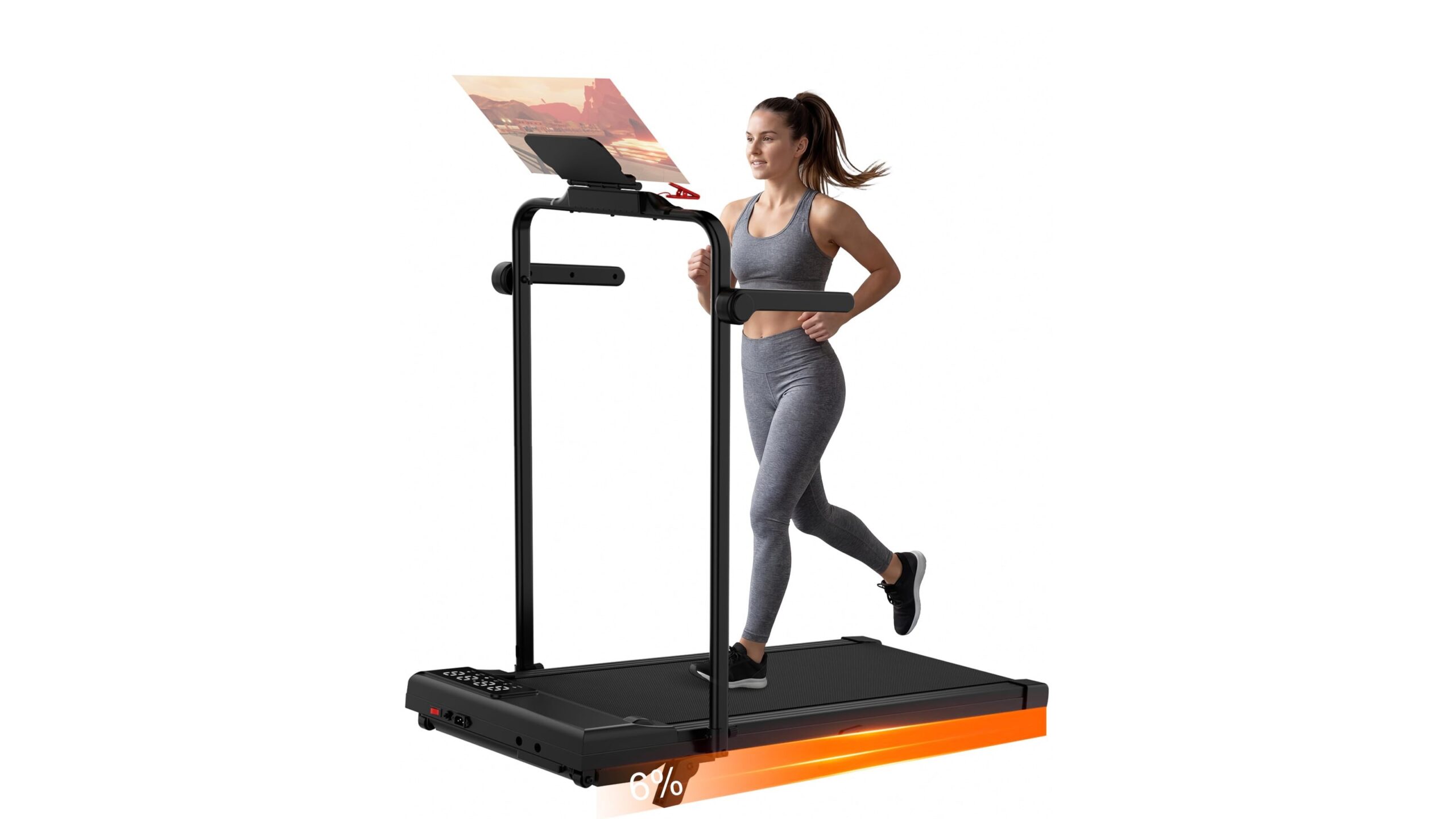
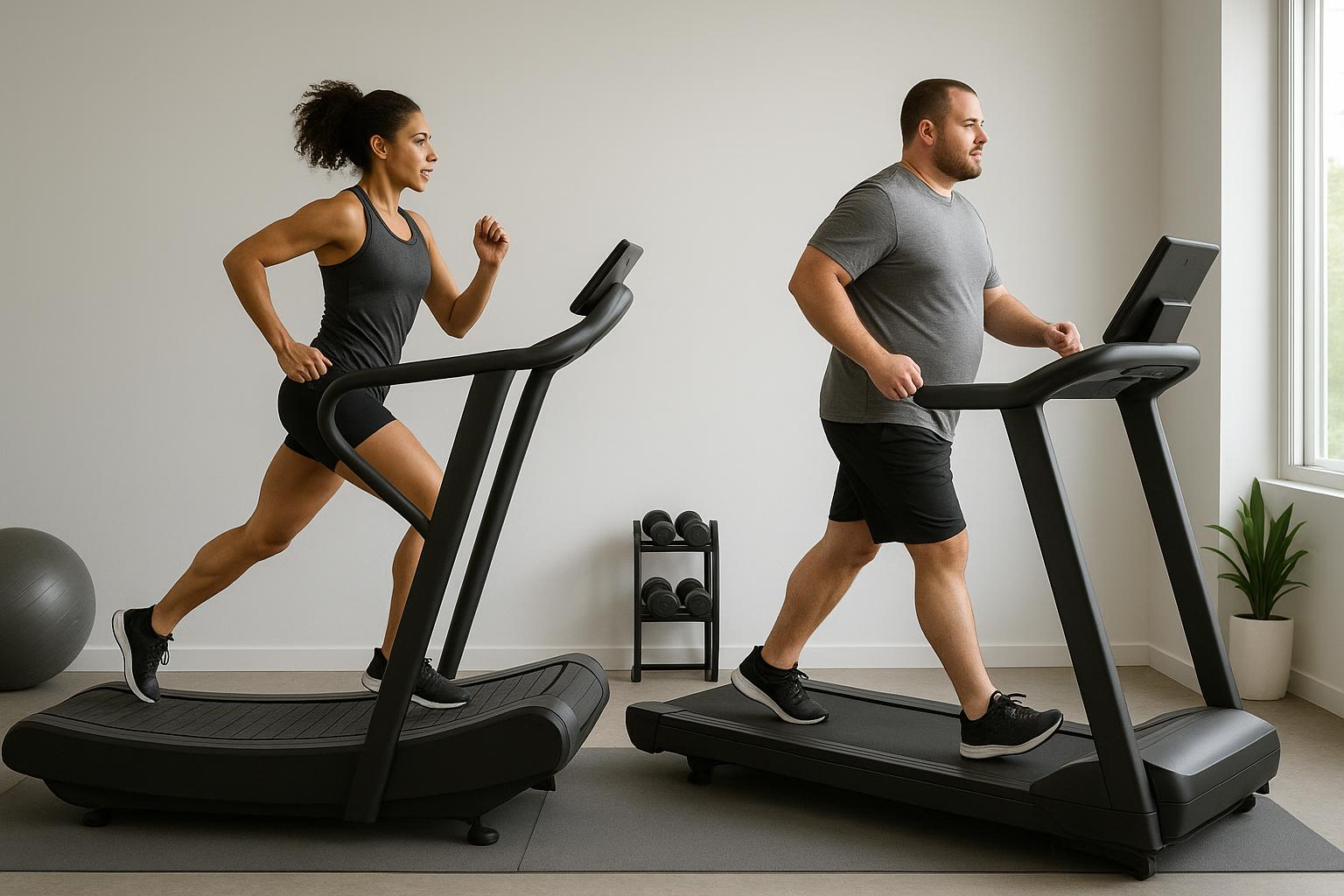
A curved treadmill uses a non-motorized, concave running deck mounted on rollers. Your foot strike pulls the belt backwards, so you control the speed purely with your own effort. This creates a very natural, outdoor-like running feel and removes the need for a power-hungry motor. In contrast, a motorized treadmill has a flat running deck powered by an electric motor; you set the pace and incline via the console, and the belt moves at a constant speed. For home gyms, this means curved models are simpler mechanically and more compact in terms of electronics, while motorized models offer more programmable features, such as built-in workouts, speed increments and incline changes.
Running feel, intensity and joint impact
On a curved treadmill, you typically run with a slightly more forward-leaning posture and a higher cadence, which encourages a midfoot or forefoot strike. This can feel smoother on the joints for experienced runners and makes it easier to perform high-intensity intervals and sprint drills. However, it is also more demanding: many users report a higher perceived effort and heart rate at the same speed compared to a motorized belt. A motorized treadmill offers a more forgiving, consistent platform, especially at lower speeds. Walkers, beginners and those in rehabilitation often appreciate the predictable pace and the ability to fine-tune speed in small steps, reducing the risk of overexertion and allowing longer, low-impact sessions.
Energy cost, noise and home environment
Because a curved treadmill has no motor, it requires no electricity for running, which can significantly lower long-term operating costs in a home setting. It also avoids bulky cables and can be positioned more flexibly in a room. Noise-wise, curved decks typically produce only the sound of your footsteps and belt movement, which many users find quieter than the combination of motor hum and foot strike on a standard machine. Motorized treadmills draw continuous power whenever in use, and their noise level depends heavily on motor quality and maximum speed. For apartment living or late-night workouts, this can influence your choice: curved models are often a better fit in shared spaces where vibration and noise could disturb neighbours.
Maintenance, durability and space management
With fewer electronic components, curved treadmills generally need less complex maintenance. There is no motor or electronic speed controller to fail, leaving mainly the running belt, bearings and frame to check periodically. This simplicity can translate into greater long-term durability in a busy home gym, especially if multiple family members train regularly. Standard motorized treadmills require more ongoing care: periodic belt lubrication, motor and deck inspections, and paying attention to error codes on the console. On the positive side, many home motorized models are designed to fold, saving floor space when not in use—an advantage over many curved designs, which tend to be more solid and non-folding, demanding a permanent footprint in your training area.
Who should choose curved vs motorized for a home gym
A curved treadmill is best suited to runners focused on performance, HIIT, sprint work and a more outdoor-like feel, and to those who value low power consumption and robust construction over gadgets. It rewards good running technique and self-pacing but can feel punishing for beginners or casual walkers. A motorized treadmill is usually the better choice for mixed-use households, people prioritising walking or steady-state cardio, rehab, or those who like guided workouts, apps and entertainment options. Ultimately, the right machine for your home gym depends on your training goals, available space, budget and noise constraints. Testing both types, if possible, is ideal before committing to a machine that will become the centrepiece of your personal cardio zone.
In summary, curved treadmills deliver a self-powered, intense and technically engaging running experience that shines in performance-focused home gyms, while motorized treadmills offer versatility, accessibility and programmable convenience for a wider range of users. By weighing running feel, energy cost, noise, maintenance and household needs, you can select the cardio machine that fits your home gym not only physically, but also in terms of long-term motivation and training progress.