
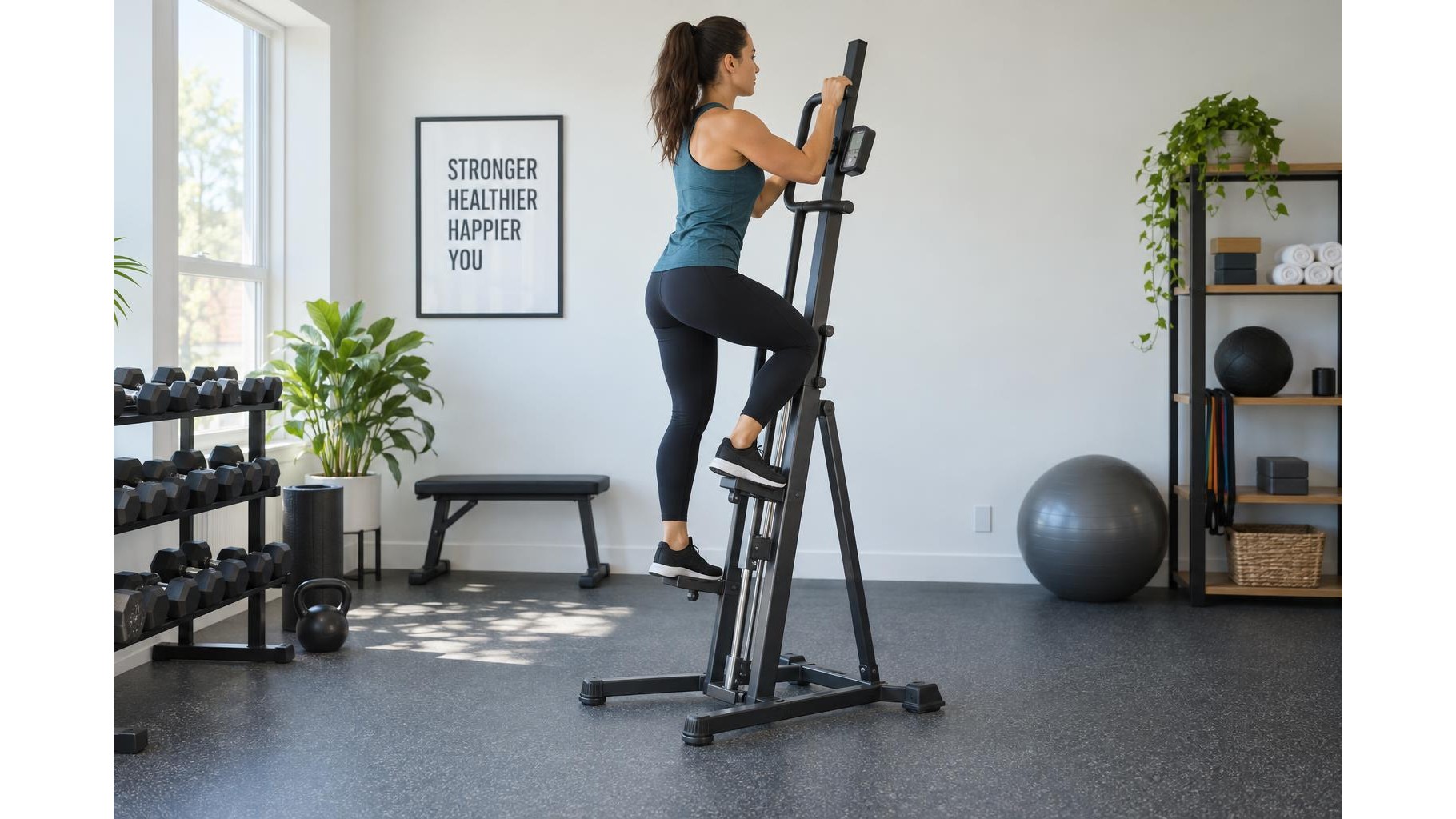
Compact vertical climbers bring an upright, full-body cardio movement into a home workout area without the footprint of many treadmills or ellipticals. Their linked hand and foot movements can challenge the legs, glutes, arms and core, but machines that look similar may feel very different in use. Compare the stride, resistance, fit, stability and storage details before choosing, and treat advertised calorie figures as estimates rather than guarantees.
Assess the movement, not just the machine’s height
A climber’s stride determines how naturally you can move. Check the stated range of motion and, where possible, try the machine: a short, cramped step may not suit taller users, while an exaggerated reach can feel awkward for beginners. Notice whether the pedals travel smoothly and whether the handles move in sync with them. Some designs use independent arms or allow a fixed-hand position, giving you more ways to work. A comfortable rhythm and controlled movement matter more than a dramatic-looking step.
Match resistance to your training level
Not every compact climber offers adjustable resistance. Some rely mainly on bodyweight and cadence; others provide resistance settings to make each repetition harder. If you are new to exercise or want steady low-impact sessions, a simple mechanism may be enough. For progressive training, look for clearly described resistance levels and a change that feels smooth rather than abrupt. Check how resistance is adjusted and whether the machine provides useful feedback, such as time, steps or pace. A basic display can help track consistency, but it does not replace a training plan.
Check fit and adjustability for every user
Compare the climber’s user-height guidance, handle positions and pedal dimensions with the people who will use it. Adjustable handles can improve reach and posture; secure, adequately sized foot platforms help keep your stance comfortable. During a test, aim to keep your torso upright, shoulders relaxed and knees tracking comfortably through the movement. If you must overreach or hunch to hold the grips, the machine may not fit. Also check the maximum user weight and follow the manufacturer’s guidance rather than assuming that a compact frame suits every body size.
Look for a stable frame and smooth operation
Frame construction, joints and floor contact affect confidence during repeated stepping. Inspect the maximum load rating, welds or fasteners, pedal connections and any stabilising feet. In use, the frame should stay planted without excessive rocking, squeaking or lateral play. A little movement may depend on the floor, so test the climber on a level surface and use a suitable mat if recommended. Review warranty coverage and availability of replacement parts: these details can say as much about long-term ownership as a heavy-looking frame.
Measure storage needs before buying
“Compact” can describe a small workout footprint, a foldable frame or simply an upright design. Record the machine’s assembled dimensions and compare them with your clear floor area, including space for safe mounting and arm movement. If it folds, check the folded dimensions, locking mechanism and whether one person can move it safely. Also consider ceiling height: standing tall with arms raised may require more clearance than the product’s frame height suggests. A machine that is easy to put away is more likely to fit into a realistic home routine.
In summary, choose a vertical climber by prioritising a natural stride and suitable fit, then compare resistance, frame stability, user limits and storage dimensions. The best option is not necessarily the one with the most features; it is the one that feels controlled, fits your space and supports a level of training you can sustain.









