Turning the often unused space under a staircase into a compact cardio corner is one of the smartest ways to build a home gym when floor area and ceiling height are limited. With the right mix of low‑profile treadmills, mini exercise bikes and compact ellipticals, you can create a functional zone for daily movement without cluttering the rest of your home. The key is to plan around height, noise and circulation so your under‑stairs cardio nook feels intentional rather than cramped.
Assessing your under‑stairs space
Before buying any cardio machine, measure the full footprint and the lowest ceiling point under your stairs. For safety, you want enough headroom to stand comfortably on the highest part of the machine, especially when considering even a slim treadmill. If clearance is tight, focus on seated equipment like mini bikes and under‑desk ellipticals instead of anything that requires upright running. Check where the power sockets are, whether a mat can cover the floor area, and keep at least a small aisle for access so you are not squeezing past equipment every time you use the stairs.
Choosing compact cardio machines that fit
In low‑ceiling spaces, the most practical choices are walking pads, folding treadmills with no tall console, and pedal exercisers that you use while seated. When browsing Amazon, look for phrases like “under‑desk”, “slim”, “folding flat” and “low profile” in the product description. A basic flat walking pad can slide right under the lowest part of the stairs, while a mini exercise bike or under‑desk elliptical can live at the slightly higher end where you can sit on a chair or small bench. Prioritise models that are lightweight enough to move easily so you can reconfigure the layout as your routine evolves.
Layout ideas for an efficient mini zone
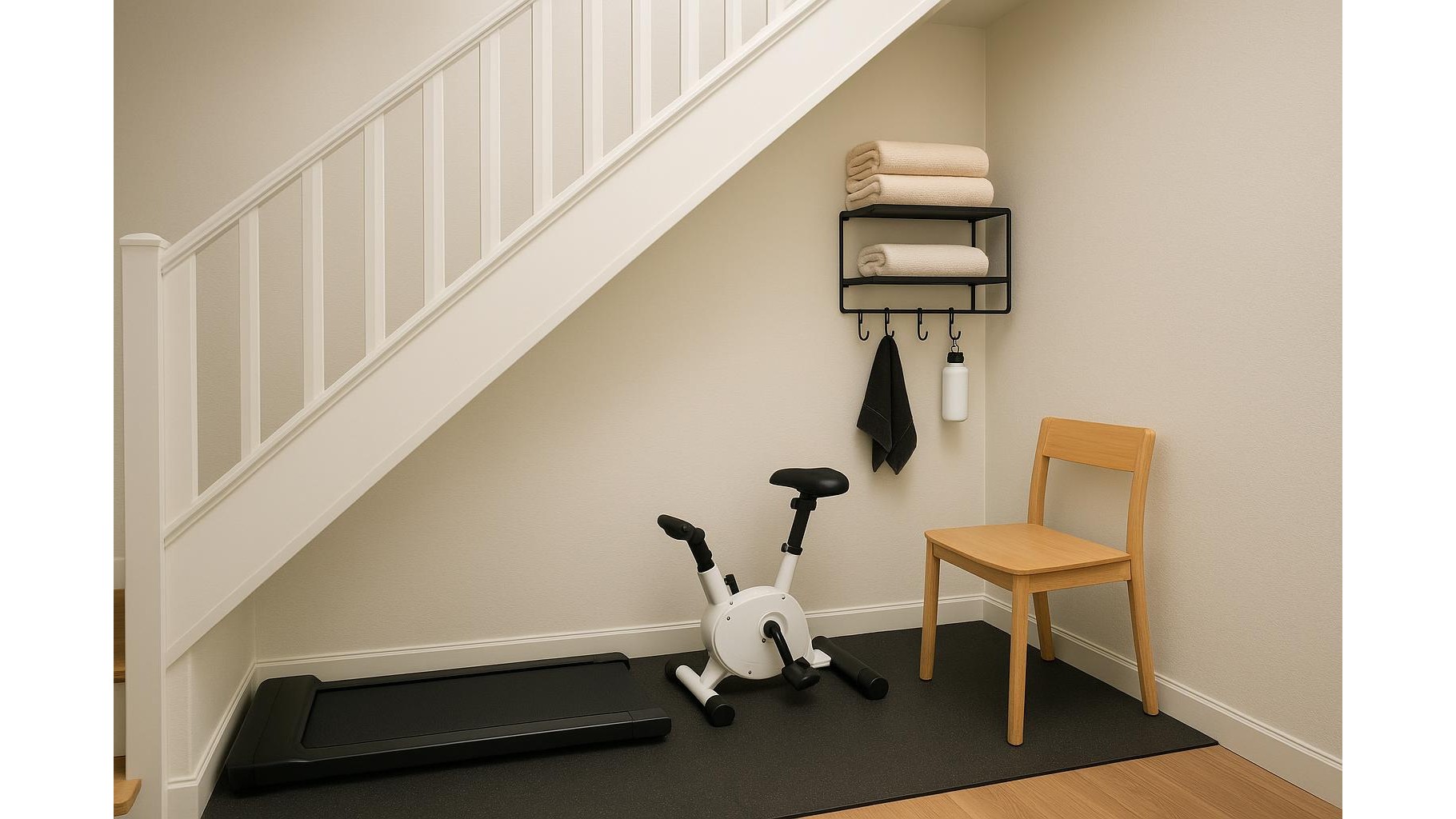
Think of your under‑stairs area as a tiny studio that needs clear zones. Place the flattest item, such as a folding walking treadmill, at the very back where the ceiling is lowest. Closer to the open side of the stairs, add a pedal exerciser or compact elliptical that you can use from a stable chair facing out into the room. Use vertical space on the stair wall for a small rack with towels, resistance bands and a timer, keeping the floor as uncluttered as possible. A simple layout like this lets you alternate between low‑intensity walking and higher‑resistance pedalling without moving big pieces around every session.
Managing noise and protecting floors
Cardio equipment can amplify sound in the hollow space under stairs, so noise control is crucial. Place a thick rubber gym mat or layered foam tiles under each machine to absorb vibration and protect hardwood or tile from scuffs. Look for devices with magnetic resistance instead of friction pads, as they are typically quieter and require less maintenance. If you live in an apartment or have bedrooms nearby, schedule workouts at reasonable hours and use lower speeds or resistance levels in the evening. Keeping the space tidy, with cables managed and machines stable, also reduces rattling and unwanted creaks.
Safety, ventilation and usability
Because staircases are high‑traffic areas, safety should guide every design choice. Ensure there is a clear path on and off the equipment and that nothing protrudes into the main walking line on the stairs. Avoid tall handles that might tempt someone to grab them instead of the stair handrail. Under‑stairs alcoves can also get stuffy, so consider a small, quiet fan to keep air circulating during workouts. Store any adjustable dumbbells or accessories in low, closed baskets rather than loose on the floor. When your under‑stairs cardio corner feels safe, well‑ventilated and uncluttered, you will be far more likely to use it consistently.
With a bit of planning, an awkward under‑stairs nook can become a surprisingly effective home cardio space. By choosing genuinely compact, low‑profile machines, paying attention to layout and noise, and keeping safety at the forefront, you can build a mini zone that supports daily movement without sacrificing the flow of your home. This kind of thoughtful setup turns dead space into an inviting, sustainable part of your fitness routine.