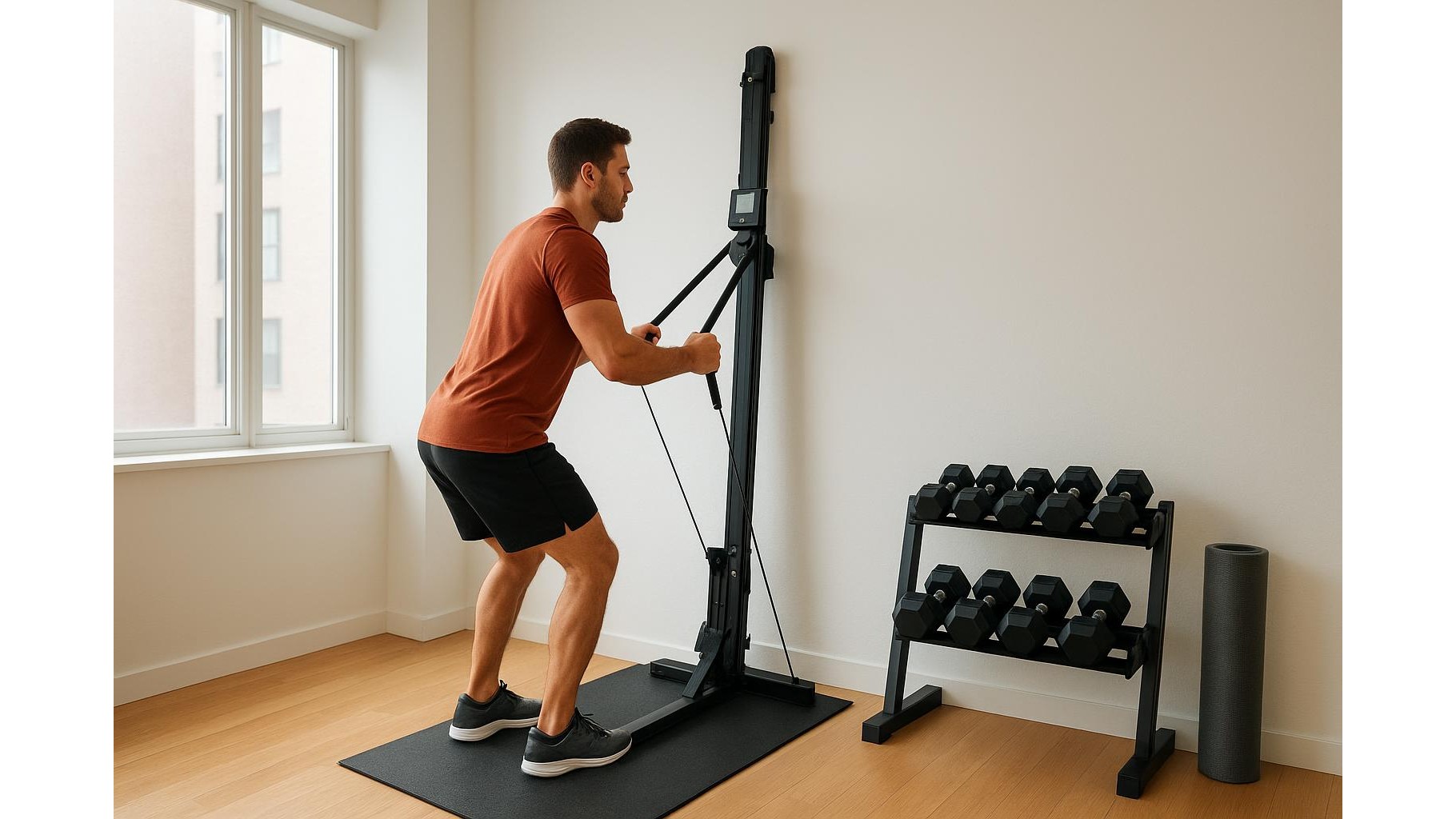
Building a balanced home gym often means finding equipment that delivers real training benefits without overwhelming your space. A compact ski erg machine can be a smart addition to your cardio corner, offering low‑impact, full‑body conditioning that mimics Nordic skiing. Before you buy, it is worth understanding how these machines work, what features matter in a small home, and how to use them for effective, joint‑friendly workouts.
What is a compact ski erg and why use one at home
A ski erg is a vertical pulling machine that uses either air or magnetic resistance to simulate the double‑poling motion of cross‑country skiing. Unlike a rowing machine, you work in a standing or half‑squat position, engaging your core, lats, shoulders, triceps and legs with every stroke. In a home setting, a compact ski erg shines because it occupies very little floor space and offers low‑impact cardio that is friendly on knees, hips and ankles. It is ideal for small apartments, garage gyms or a corner of your living room where a treadmill or cross‑trainer simply will not fit.
Key features to compare in compact ski erg machines
When comparing ski erg machines for home, focus on a few practical details. Resistance type is crucial: air resistance generally feels smoother and automatically responds to how hard you pull, while magnetic resistance is quieter and allows precise, stepped adjustments. Look for a clear performance monitor that tracks pace, watts, stroke rate and time so you can structure proper workouts. Handle design matters too: ergonomic grips and smooth, low‑friction cords or straps reduce fatigue in long sessions. For home use, check the footprint and mounting options: some units can be wall‑mounted to save floor space, while others require a dedicated freestanding base. Finally, consider weight capacity and overall build quality; a stable frame with a broad base will feel safer at higher intensities.
Noise levels, ceiling height and placement in a cardio corner
In small homes, noise and ceiling height are often the deciding factors. Air‑based ski ergs create a whooshing sound from the flywheel, comparable to a rowing machine or fan bike, which may be noticeable in thin‑walled flats. Magnetic systems tend to be quieter and better suited to early‑morning or late‑night training. Check the overall height of the unit plus the height of your reach during overhead strokes; you should have several centimetres of clearance above your hands at full extension to avoid hitting the ceiling or light fixtures. When planning your cardio corner, allow extra space behind and to the sides of the ski erg so you can move freely and maintain safe technique. A simple rubber gym mat under the base helps reduce vibration and protects your floor from sweat.
Pros and cons of adding a ski erg to a home gym
The biggest advantage of a home ski erg is its combination of low‑impact conditioning and small footprint. It can deliver demanding intervals and long steady‑state sessions while sparing your joints, making it suitable for older users and those returning from lower‑body injuries. It is also excellent for upper‑body endurance and trunk stability, complementing rowing or cycling. On the downside, a ski erg has a steep learning curve if you are new to Nordic‑style movement, and some people find the motion repetitive. Quality machines are not cheap, and cheaper options may compromise on smoothness or durability. Unlike a treadmill, it does not involve much walking or running, so if your goal is specifically to prepare for road races, it should be a supplement rather than your only form of cardio.
How to program simple low‑impact cardio sessions
Programming on a ski erg can be straightforward, even for beginners. For steady‑state cardio, start with 10–20 minutes at an easy pace where you can still talk, focusing on smooth strokes and consistent breathing; gradually build up to 30 minutes as your fitness improves. For time‑efficient interval training, try 30 seconds of stronger pulls followed by 60–90 seconds of easy skiing, repeated for 10–15 rounds. To keep joints happy, stay in a soft knee bend with a stable spine rather than collapsing forward. Two to four sessions per week are enough to see progress for most home users. Always include a 3–5 minute warm‑up and cool‑down at very light intensity to prepare your shoulders and back, particularly if you spend long hours at a desk.
In summary, a compact ski erg machine can be a powerful addition to your home cardio corner when space and joint health are priorities. By paying attention to resistance type, noise, ceiling clearance and build quality, you can select a model that fits seamlessly into your home. With simple, low‑impact workouts that mix steady efforts and gentle intervals, you will gain a versatile tool for full‑body conditioning that supports strength, endurance and long‑term consistency.