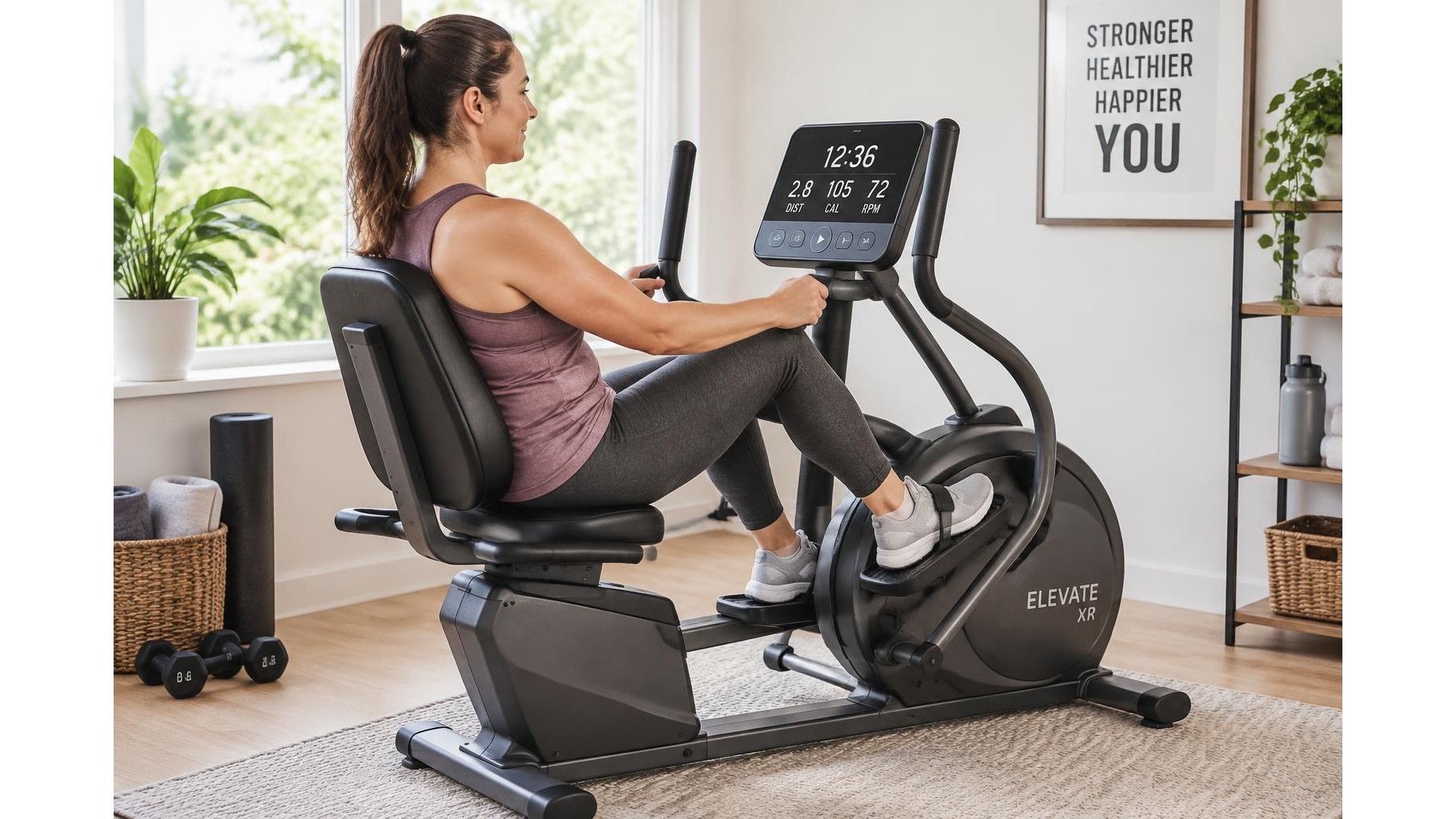
A compact recumbent elliptical can make regular indoor cardio easier to fit into a busy home: you sit while your legs move through a low-impact, elliptical-style cycle. Before choosing one, compare how the pedals feel in motion, whether resistance suits your training, and whether the seat and console work for your body and space. The best option is not necessarily the one with the most programs; it is the one you can use comfortably and consistently.
Start with the pedal motion
Stride feel depends on the length and path of pedal travel, as well as the position of the pedals relative to the seat. A longer, smoother motion may feel more like a conventional elliptical, while a short circular path can feel closer to cycling. Neither is automatically better: comfort is personal, and the machine’s compact design may limit stride length. If possible, try the movement before buying. Check that your knees do not feel cramped at the top of the stroke and that your feet stay supported throughout the cycle. A steady, quiet motion matters more for everyday cardio than a large number of preset workouts.
Choose resistance you can use
Resistance should let you begin easily and progress gradually. Magnetic resistance is commonly valued for smooth, quiet operation, which can be useful in shared homes or during television-friendly workouts. Check how many resistance levels are available and how they are adjusted: a simple dial is straightforward, while console controls can make changes easier without reaching forward. The range matters more than an impressive maximum. For steady indoor cardio, look for manageable low settings and enough progression to make sessions more challenging over time. Advanced interval programs are optional if you mainly plan to pedal at a consistent pace.
Prioritise seat fit and support
A recumbent position should feel stable, with the back supported and the pedals reachable without locking the knees. Look for a seat that moves far enough to accommodate your leg length; adjustable backrest angle or lumbar support can add comfort, but are not essential for everyone. Confirm how the seat is adjusted and whether the mechanism is easy to operate. A well-positioned seat can make a bigger difference to regular use than extra console features. If several people will share the machine, a quick, secure adjustment is especially useful.
Measure the footprint and storage needs
“Compact” does not mean that every machine will fit your intended spot. Compare the assembled dimensions with your available floor space, leaving room to get on and off safely and for the pedals to move. Consider the machine’s weight and whether transport wheels are included if you expect to move it after each session. Also check the stated user-weight capacity and whether the frame feels stable during pedalling. A folding design can help in some homes, but a sturdy, easy-to-position unit may be the more practical choice.
Read the console before you buy
A useful console makes key workout information easy to see from a reclined position. Prioritise clear, high-contrast figures for time, speed, distance and calories, plus resistance controls you can reach comfortably. A large backlit display may help in dim rooms, but a simple, readable screen is sufficient for many steady sessions. Heart-rate sensors, app connectivity, speakers and numerous preset programs are extras rather than necessities. Check whether the display uses batteries or needs a power connection, and whether the console remains readable without leaning forward.
In summary, compare pedal comfort, usable resistance, seat adjustment, real-world dimensions and console readability first. Those features support comfortable, repeatable cardio at home. Treat connectivity and elaborate workout menus as optional, and choose a machine that fits your body, routine and available space.