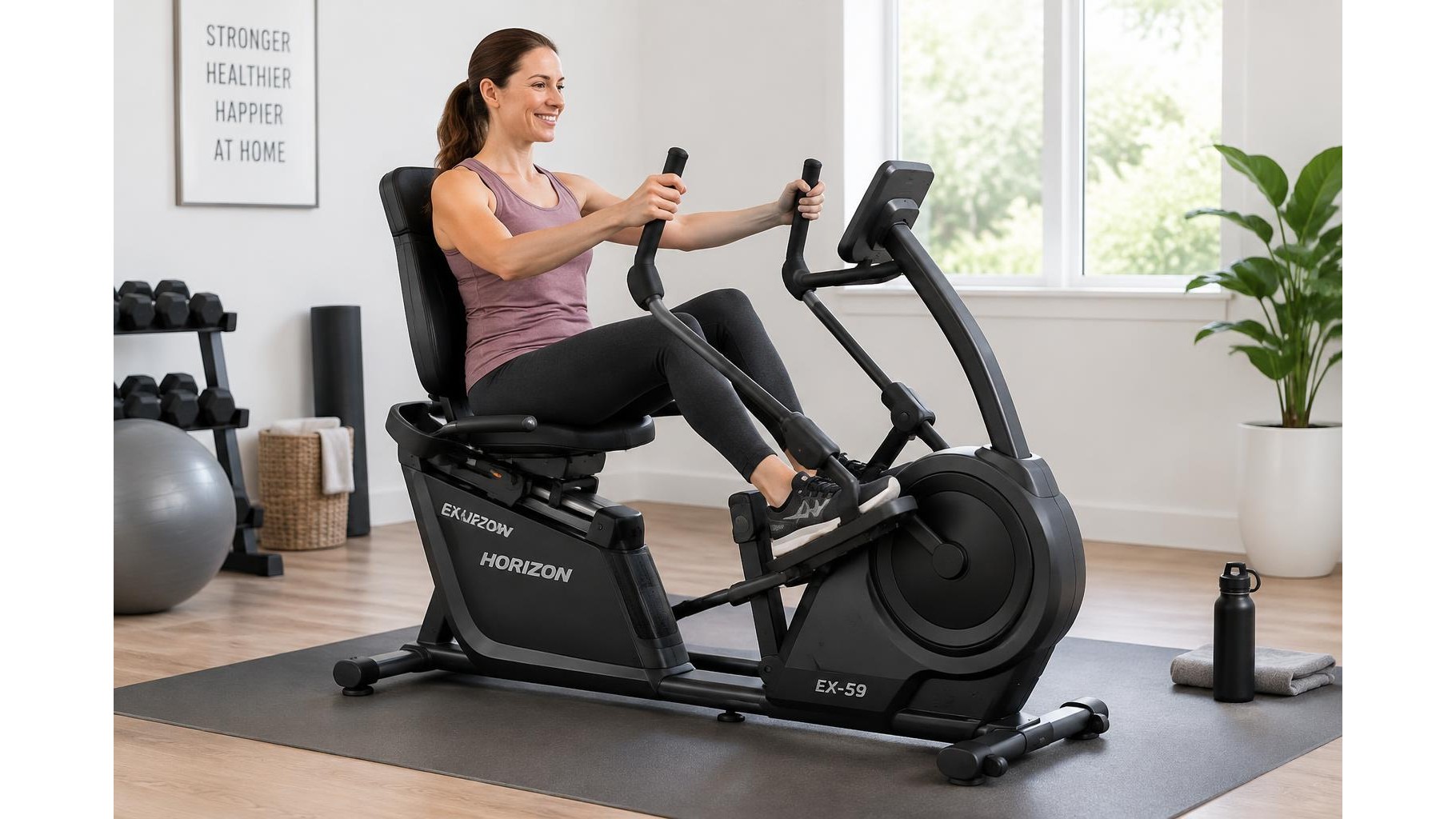
A compact recumbent cross trainer can combine a supported seated position with coordinated upper- and lower-body movement, but machines in this category differ in important ways. Before choosing one, consider how the arm handles adjust, whether the seat fits your body, how the stride feels, and whether resistance and dimensions suit your home and training goals. The best comparison is not simply about the smallest footprint or the highest number of resistance levels: it is about finding a machine whose movement feels comfortable and usable for regular sessions.
Handle adjustment and upper-body movement
Start by checking what “adjustable handles” means on the machine. Some designs let you change handle position or angle; others use moving arms with a fixed range of motion. Look for adjustments that allow a natural reach without forcing your shoulders to lift, twist or stretch forward. If possible, test the motion while seated: your elbows should remain comfortably bent, and the handles should travel smoothly through their full range. Consider whether the arms move independently or together, since this affects how much coordination and control the upper-body action requires. A good fit should let you contribute effort with your arms without relying on them to compensate for an awkward seat or foot position.
Seat positioning and fit
A recumbent seat should support a relaxed, stable posture while allowing effective leg drive. Compare the adjustment range, not just whether the seat moves. When seated, you should be able to reach the pedals with a slight bend in the knee at the farthest point, without locking the joint or sliding your hips forward. Check how easily the seat adjusts and whether it locks securely. Backrest shape, seat width and handle reach also matter, particularly if more than one person will use the trainer. A seat that supports your back but leaves you too far from the handles can undermine the benefit of adjustable arms.
Stride feel and movement quality
Compact machines can have a shorter or more constrained movement than larger cross trainers, so try to assess the motion rather than relying on the product category alone. Notice whether the pedals travel smoothly, whether your knees feel cramped, and whether the arm path complements your leg movement. The ideal stride is comfortable and repeatable, not necessarily the longest available. Pay attention to any rocking, clicking or abrupt changes in resistance during a full cycle. If you cannot test the equipment in person, consult verified user feedback for comments about stride comfort and noise, and check the manufacturer’s stated dimensions and user-fit guidance.
Resistance and training control
Compare the available resistance range and how it is changed. A clear, convenient control makes it easier to vary effort during a session; a wide range can support both gentle movement and more challenging workouts, though level counts alone do not tell you how resistance feels. Check whether the trainer offers preset programmes, a manual mode or basic workout feedback, and decide which features you will actually use. For rehabilitation or low-impact exercise, smooth transitions and easy access to lighter settings may matter more than advanced programmes. For general conditioning, look for enough progression to keep training challenging over time.
Footprint, access and everyday practicality
Measure the available floor space before buying, allowing room to mount the seat, reach the handles and move safely around the trainer. Compare overall length, width and height, as well as the space required during use; a compact frame still needs a clear operating area. Check the machine’s weight, transport wheels and whether it can be moved or stored conveniently. Also consider entry and exit: a low, accessible step-through design may be easier to use than a frame that requires lifting a leg over a high bar. Finally, verify the maximum user weight, warranty and assembly requirements against your needs.
In summary, compare adjustable-handle range, seat fit, stride comfort, resistance control and real-world footprint together. A trainer is a good match when you can sit securely, reach the handles naturally and pedal smoothly without crowding your space. Prioritise a comfortable motion and practical access over headline features, so the equipment supports the kind of regular training you intend to do.