Setting up a home gym in a small space often means choosing just one main piece of seated cardio equipment. Two of the most joint‑friendly options are the compact recumbent cross trainer and the classic recumbent bike. Both keep you seated with good back support, but they feel very different in use and suit different training goals. This guide compares them for home use in tight spaces, looking closely at joint comfort, footprint, training variety and noise level so you can decide which fits your routine and your room.
Seated comfort and joint‑friendliness
Both a recumbent cross trainer and a recumbent exercise bike are designed to reduce pressure on your knees, hips and lower back compared with upright bikes or treadmills. A cross trainer combines a stepping or gliding motion with a reclined seat and moving handles, keeping impact extremely low while spreading the workload across legs and upper body. This makes it a strong option if you have arthritic joints or struggle with balance when standing. A traditional recumbent bike focuses mainly on the pedalling motion, with your legs moving in a smooth circular pattern and your torso supported by a padded backrest. It is especially kind to the lower back and is often recommended for rehab, light cardio and longer, steady sessions. In short: for the softest overall feel, the cross trainer wins; for simple, back‑friendly spinning, the bike is hard to beat.
Footprint and space management in small rooms
When you train in a flat, studio or multipurpose room, the footprint of your machine becomes crucial. Compact recumbent cross trainers typically have a slightly longer and wider base than a basic recumbent bike because they need room for the pedal rails and the extended handles. You also need some clearance around the sides for arm movement. A recumbent bike is usually shorter and narrower, and you can often tuck it closer to a wall or into a corner without affecting your range of motion. Many home recumbent bikes are lighter, making it easier to tilt and roll them after your workout. If you live in a compact flat and will be moving the machine often, the bike generally offers a more practical space‑saving solution.
Training variety and full‑body engagement
The biggest advantage of a recumbent cross trainer is training variety. By combining lower‑body stepping with moving handlebars, it turns a seated workout into a full‑body cardio session. You can push and pull with your arms to work your chest, back and shoulders while your legs drive against resistance. This makes it easier to perform intervals, change which muscles you emphasise and keep your sessions mentally engaging. A recumbent bike is more lower‑body focused, targeting quads, hamstrings and glutes. You can still vary resistance, cadence and workout length, but most sessions feel similar: sit, pedal, maybe follow a built‑in programme. For users who get bored easily or want to maximise calorie burn and muscle recruitment in one compact machine, the cross trainer has a clear edge in versatility.
Noise level and neighbour‑friendly cardio
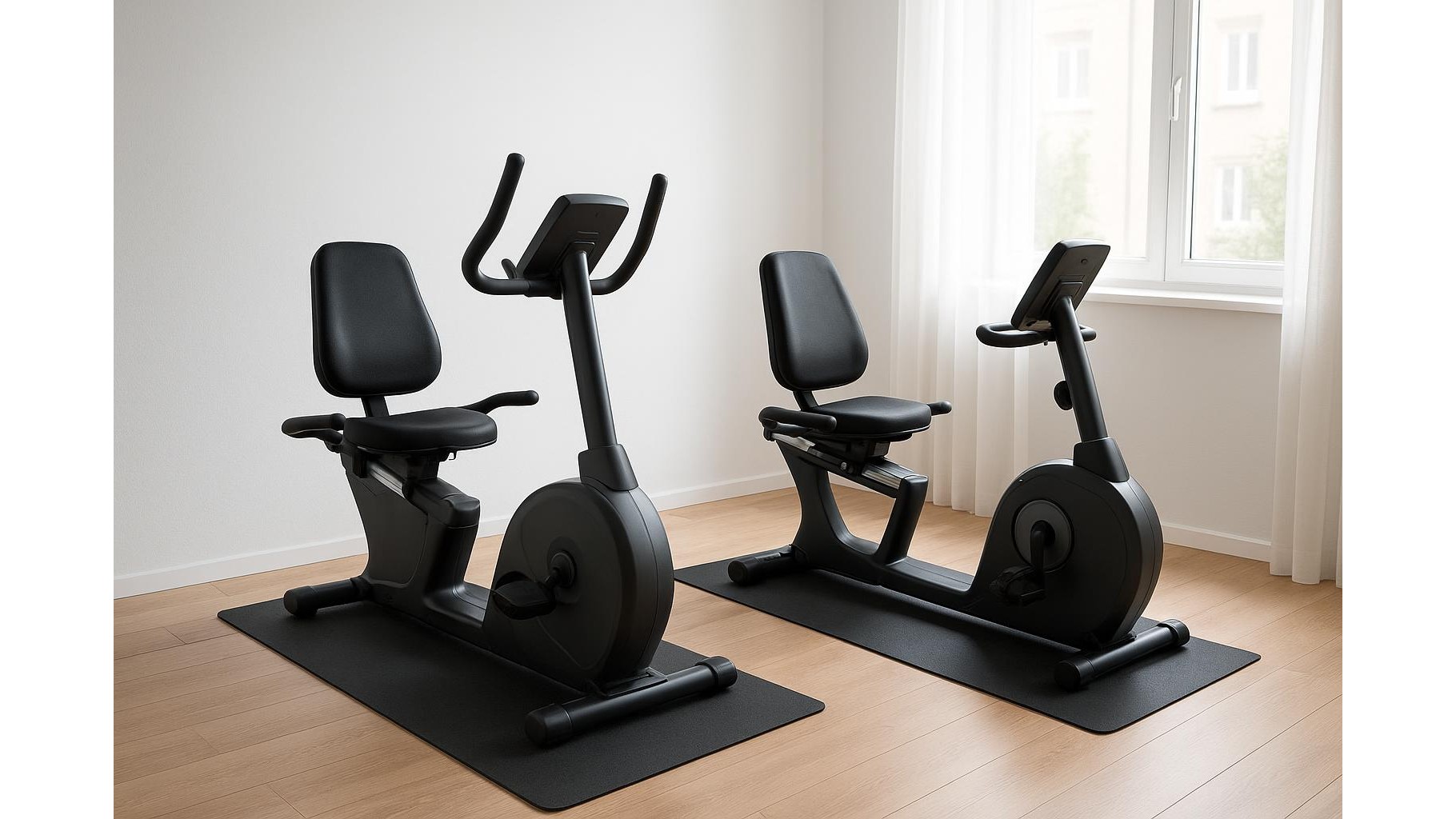
Both compact recumbent cross trainers and recumbent bikes aimed at home use typically rely on magnetic resistance, which is very quiet and nearly friction‑free. However, the simpler mechanics of a recumbent bike usually give it a slight advantage in noise level. With fewer moving parts and no long glide rails, there are fewer points where squeaks or rattles can develop over time. A cross trainer’s longer pedal path and arm levers can produce more mechanical noise, especially if the unit is not perfectly level or needs periodic lubrication. If you train late at night, have thin walls or live above neighbours, a basic recumbent bike is often the most neighbour‑friendly choice. In both cases, placing the machine on a protective mat will help dampen vibration and protect your floor.
Who should choose which seated cardio machine?
Your best option depends on your fitness level, goals and how you plan to use your home cardio. If you want a simple, sit‑and‑pedal machine that is easy to mount, intuitive to use and kind to your lower back, a recumbent bike suits beginners, seniors and anyone returning from injury particularly well. It typically offers a smaller footprint and lighter frame for tighter spaces. If your priority is full‑body engagement and you want to get the most training variety from a single seated machine, a compact recumbent cross trainer is worth the higher complexity and slightly larger size. It allows more dynamic sessions and spreads the workload across upper and lower body, which can be helpful for weight loss and all‑round conditioning, provided you have the extra room.
Choosing between a compact recumbent cross trainer and a recumbent bike ultimately comes down to how you balance comfort, space and versatility in your home. Both provide low‑impact, joint‑friendly cardio that fits well into a small gym corner. Pick the recumbent bike if you value ease of use, smaller footprint and ultra‑quiet operation. Opt for the recumbent cross trainer if you want full‑body seated workouts and more ways to challenge yourself without leaving the chair. Either way, committing to a machine you will actually use regularly matters more than the specific design.