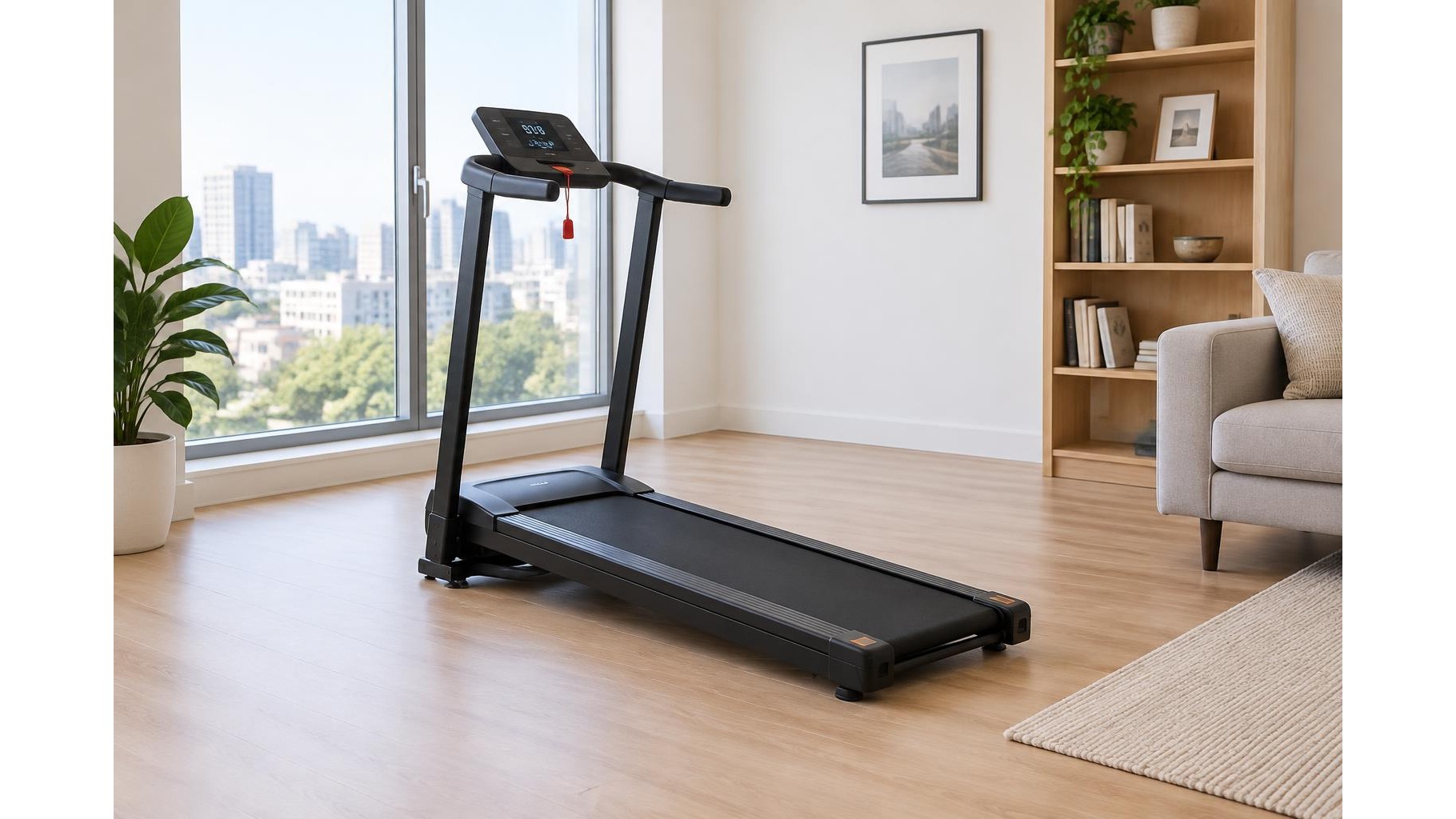
A compact treadmill with a decline setting can add downhill walking or running to a home routine, but this feature is less common than standard incline. Before buying, check what the machine actually offers: the decline range, speed options, deck dimensions, stability and whether it suits your space. A thoughtful comparison matters more than a long list of workout programmes.
Decline is not the same as incline
Incline raises the front of the running surface to simulate an uphill gradient. A decline setting lowers it, creating a downhill angle. Some treadmills provide both directions, while others offer only incline; compact walking pads may have neither. Confirm that the specification explicitly lists a negative gradient, and check the available levels rather than relying on phrases such as “hill training”. The motorised adjustment method, maximum angle and whether it can be changed while moving are also worth verifying.
Who may benefit from downhill training?
Decline walking can add variety to low-speed sessions and help prepare recreational runners for routes with descents. It changes how the body controls each step, so it should be treated as a distinct training stimulus, not simply an easier version of running. People returning from injury, managing joint discomfort or following a rehabilitation plan should seek guidance from a qualified clinician before adding downhill work. A treadmill’s setting does not reproduce every outdoor condition, including uneven ground.
Check speed range and deck feel
Match the speed range to your intended use. A machine designed mainly for walking may not be appropriate for running, even if it has a decline mode. Look for clear maximum-speed and user-weight specifications, then check the usable belt length and width: a short, narrow deck can feel restrictive at faster paces. If possible, try the belt in person. Notice whether it feels firm or cushioned, whether your stride remains natural, and whether the surface feels secure at a gentle decline.
Assess stability, noise and footprint
A compact footprint is useful in a flat, but it should not come at the cost of a stable frame. Check the assembled dimensions, folded dimensions, machine weight and transport wheels, as well as the manufacturer’s clearance recommendations. A treadmill that folds may still need space behind it for safe use. For apartment living, ask about operating noise and vibration, and consider a suitable floor mat; neither guarantees soundproofing. Review the delivery route, storage location and whether the floor can support the equipment and user.
Progress gradually and inspect the practical details
Start with a short, slow session at a shallow decline, holding the handrails only when needed for balance. Increase duration or gradient in small steps, not both at once, and stop if you feel pain, dizziness or unusual instability. Before purchase, check warranty coverage, maintenance requirements, emergency-stop features and the return policy. Also verify that the decline function works at the speeds you plan to use: some models restrict settings or adjustments during a workout.
In summary, choose a compact treadmill for its complete fit, not the decline feature alone. Confirm the negative-gradient range, suitable speed and deck dimensions, then weigh stability, apartment noise, storage and safe progression. If specifications are unclear, ask the seller for exact measurements and operating limits before committing.