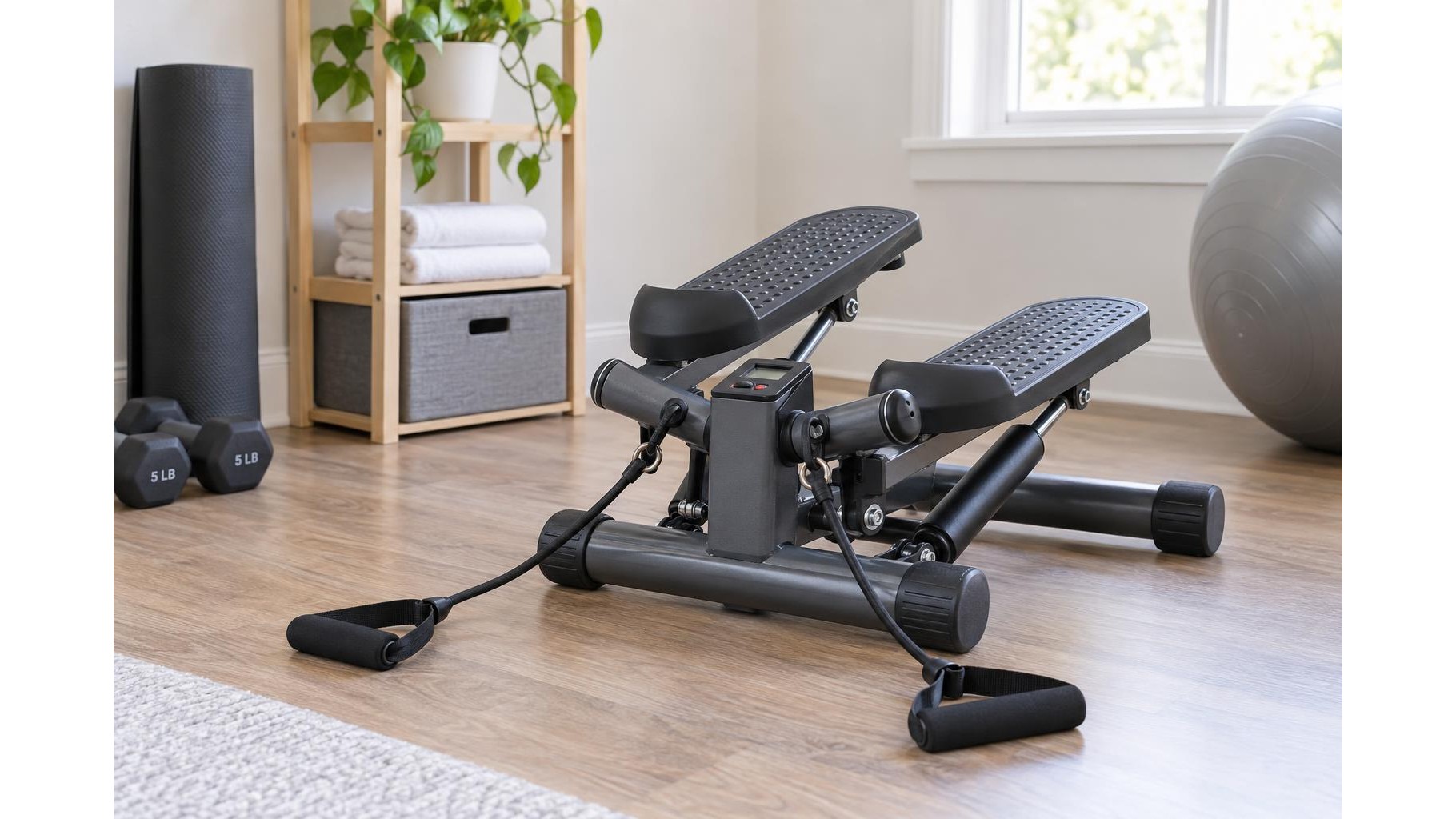
Compact stair steppers can make low-impact cardio possible in a corner of a home, but small dimensions alone do not guarantee a comfortable or safe workout. Compare how the pedals move, whether resistance can be adjusted, how securely the frame stays planted and whether the machine suits your body and available space. Product specifications are a useful starting point; where details are missing, check the manufacturer’s guidance before buying.
Compare the step motion
“Stride” on a compact stepper usually means the pedals’ travel rather than the longer gait of a full-size elliptical. Look for specifications describing step height, pedal travel or motion, and consider how these affect your intended workout. A short, shallow movement may suit gentle sessions, while a deeper step can feel more demanding and require more knee and hip movement. If possible, try the motion in person. Check that both pedals travel smoothly and evenly, without catching or an abrupt change in resistance. A steady rhythm is easier to maintain than a mechanism that feels jerky, especially during low-impact cardio.
Check resistance and workout control
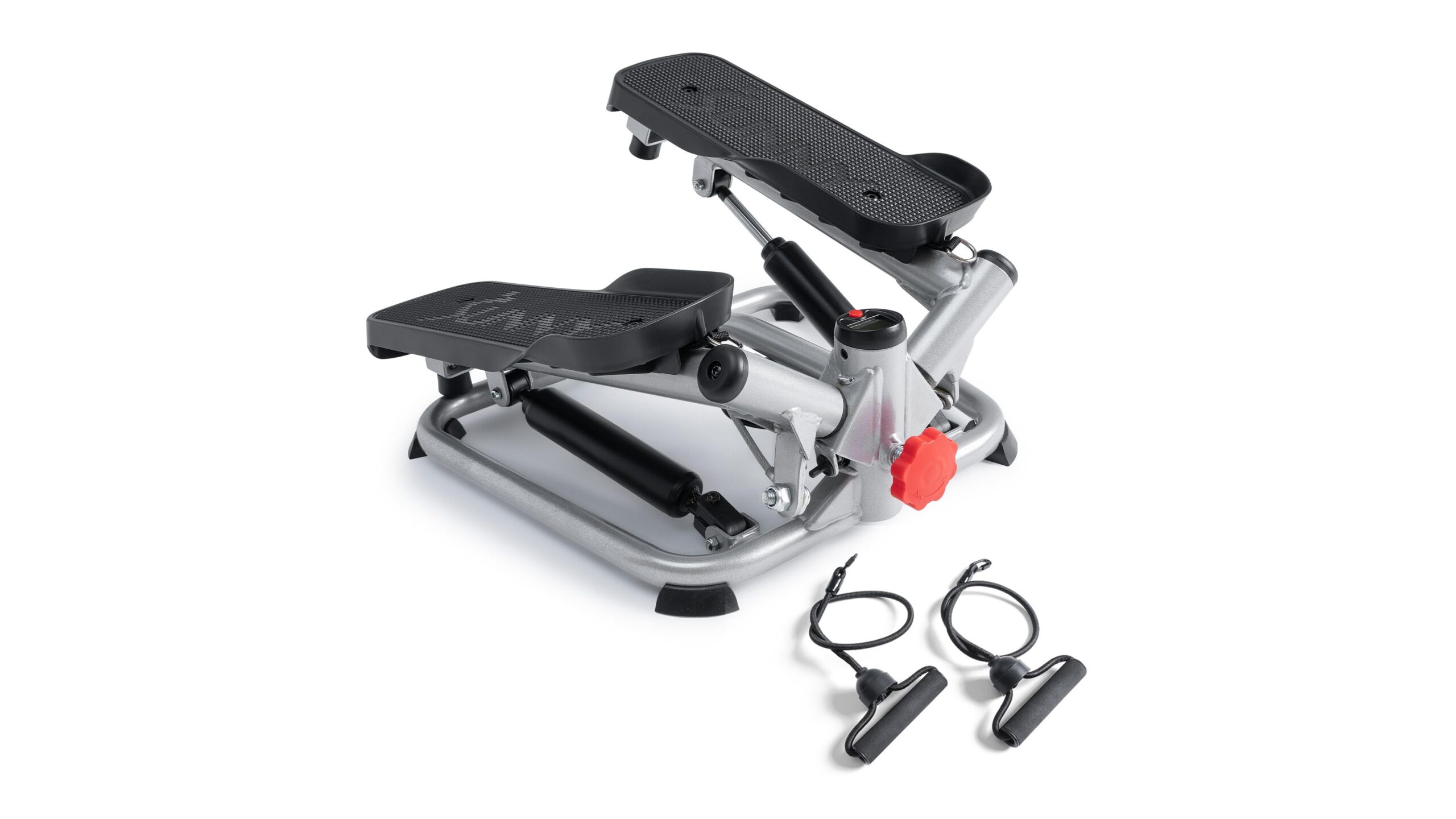
Some compact steppers use hydraulic cylinders, while others use different resistance mechanisms. Check whether the resistance is adjustable, how it is changed and whether the maker explains the available settings. A simple adjustment can help you begin gently and progress as your fitness improves, but a resistance dial does not necessarily provide precise, measured levels. Look for clear instructions and avoid assuming that a higher setting automatically means a better workout. If the product lists a maximum session duration or advises breaks to let components cool, follow that guidance. For a low-impact routine, smooth control and a repeatable pace may matter more than maximum intensity.
Assess frame stability and construction
Stability depends on the base, frame, pedals and floor surface working together. Check the listed dimensions, base shape and whether the feet are designed to grip or level the machine. A wider footprint can help, but it still needs to sit securely on a firm, level floor. Read the assembly instructions and confirm that bolts and moving parts can be checked and maintained as directed. Reviews can reveal reports of wobble or noise, although user experience varies and should not replace safety information. During use, keep the stepper on a non-slip surface and stop if it shifts, rocks or makes an unexpected mechanical sound.
Match user limits to your needs
Before purchasing, verify the stated maximum user weight and any height, age or usage guidance from the manufacturer. Do not treat the weight limit as a performance target: choosing equipment with an appropriate margin can support confidence and durability. Consider whether the pedal size accommodates your feet securely and whether the stepping action feels natural for your proportions. If you have balance concerns, check whether the product is intended to be used with a support or only as a standalone machine. A compact stepper is not automatically suitable for every user; seek professional advice if you have an injury, relevant medical condition or uncertainty about starting exercise.
Plan storage and room layout
Compare the machine’s assembled dimensions with the exact space where it will be used, leaving room around it for mounting, dismounting and safe movement. Check the product weight and whether it is designed to be moved or stored upright; do not assume a foldable appearance means it folds. Note whether the display, handles or other parts add to the storage footprint. A small room may favour a straightforward design that can be moved easily, but safe access matters more than squeezing the machine into the tightest possible gap. Store it according to the manufacturer’s instructions and keep it away from damp areas that could affect its components.
Choose for consistent, comfortable use
For a compact home stepper, compare movement, resistance adjustment, stability, user limits and storage as a complete package. Give priority to a smooth pedal action, clear safety specifications and a frame that remains secure on your floor. Then match the machine’s dimensions and workout feel to your room and low-impact cardio goals. A well-chosen stepper is one you can use comfortably and consistently, rather than simply the smallest or most feature-heavy option.