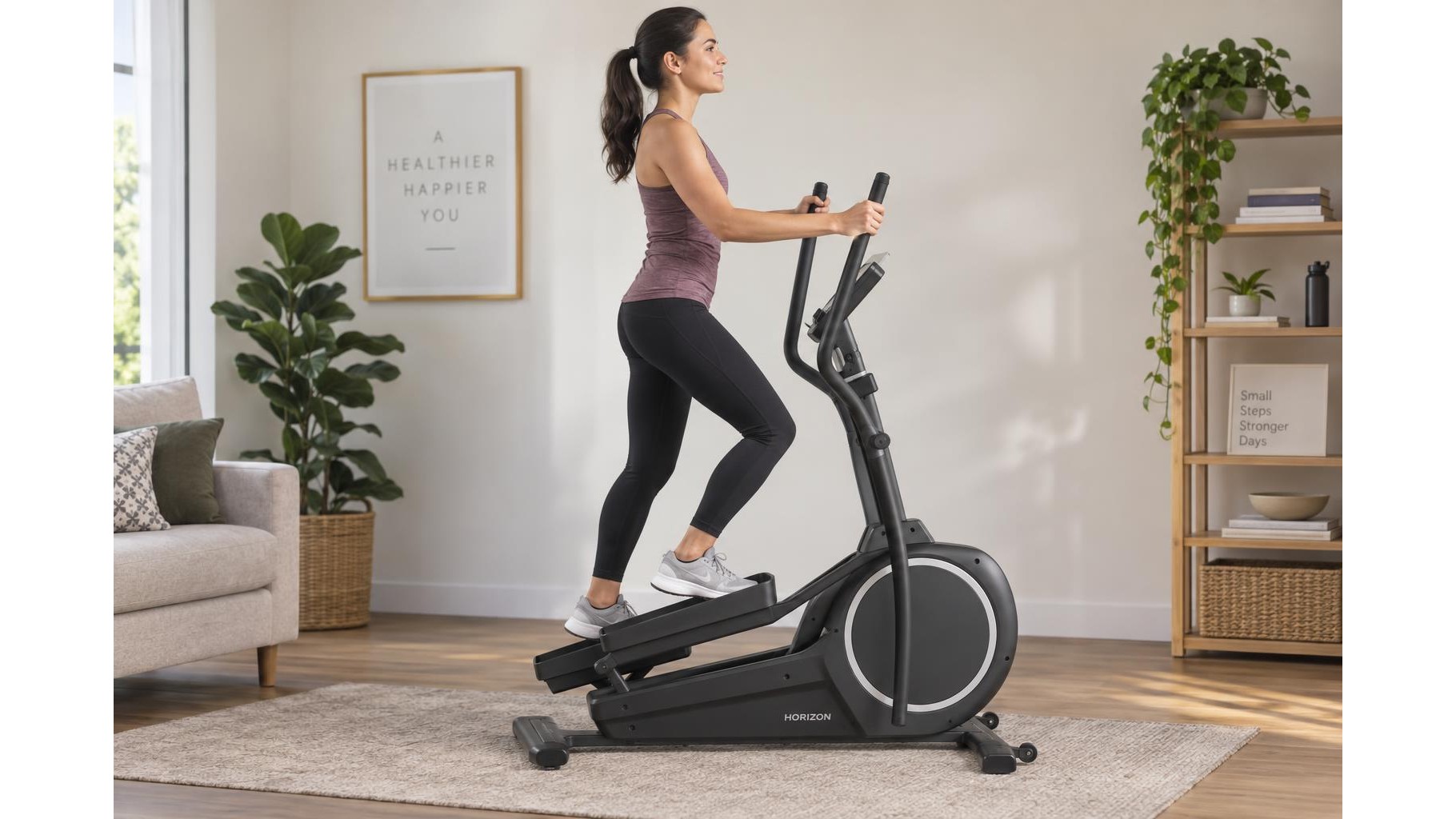
A compact elliptical can look like a straightforward space-saving cardio machine, but an adjustable incline changes how its motion feels and which muscles do more work. The feature may alter the path of the pedals, the effective stride and the challenge of each session. It is not automatically better than a fixed ramp: the useful choice depends on fit, comfort and how easily you can make adjustments. Understanding what to compare can help you judge whether a moving incline adds meaningful workout variety in your home gym.
What a moving incline does
On an elliptical with an adjustable ramp, changing the incline shifts the angle of the pedal track. Depending on the machine’s design, this can make the motion feel flatter and more gliding at a low setting, or steeper and more climbing-focused at a higher one. Incline is separate from resistance: resistance makes the pedals harder to push, while ramp angle changes the geometry of the movement. The two controls can be combined, but they do not create the same training effect. Check whether adjustments are motorised or manual, how many settings are available and whether the console clearly displays the selected level.
How incline can affect stride
A steeper ramp may make each pedal cycle feel more like stepping uphill, while a shallower track can feel closer to a flatter, longer glide. The actual stride length is determined by the machine’s mechanics, so an incline setting does not necessarily mean the pedals travel farther. On compact equipment, stride can already be limited by the frame. If possible, test the full range: notice whether your feet stay securely on the pedals, your knees track comfortably and your hips remain steady. A setting that looks impressive on paper is not useful if it makes your movement feel cramped or awkward.
Effort, muscles and workout variety
Raising the ramp can increase the sensation of climbing and may shift more of the effort towards the legs and glutes, although the exact result varies by user and machine. Pairing a higher incline with moderate resistance can provide a different challenge from using a flatter setting with heavier resistance. For variety, try controlled intervals: alternate a comfortable low incline with a higher setting, keeping a pace that lets you maintain smooth form. Do not assume a particular incline guarantees a specific calorie burn or muscle-building result; fitness, duration, pace and resistance all matter.
Specifications worth comparing
Look beyond the maximum incline. Compare the stride length, resistance range, user-weight limit, machine footprint and assembled dimensions, including the space needed around the pedals. Check whether incline changes can be made while exercising, how many levels are offered and whether the motor or adjustment mechanism has a stated warranty. A clear display and easy-to-reach controls make it simpler to change settings without breaking rhythm. Also consider noise, stability and transport features if the machine will be used in a shared room or stored between workouts.
What to test for comfort
Try several incline levels at an easy pace before increasing intensity. Look for fluid pedal motion, stable footing and a posture that does not force you to lean heavily on the handles. Your knees should feel comfortable through the cycle, and the machine should not rock or shift. Test the controls, too: adjustments should be understandable and accessible. If shopping online, check the return policy, assembly requirements and user feedback for recurring comments about wobble, noise or a short-feeling stride. These practical details can matter more than a long list of preset programmes.
A moving incline is most valuable when it offers comfortable, repeatable changes in pedal angle and fits your natural stride. Compare the adjustment range alongside resistance, dimensions and stability, then test the machine across settings where possible. Choose the model that lets you move smoothly and vary effort without compromising posture; a well-fitting fixed-incline elliptical may still be the better option if the adjustable mechanism adds cost or complexity without improving comfort.