
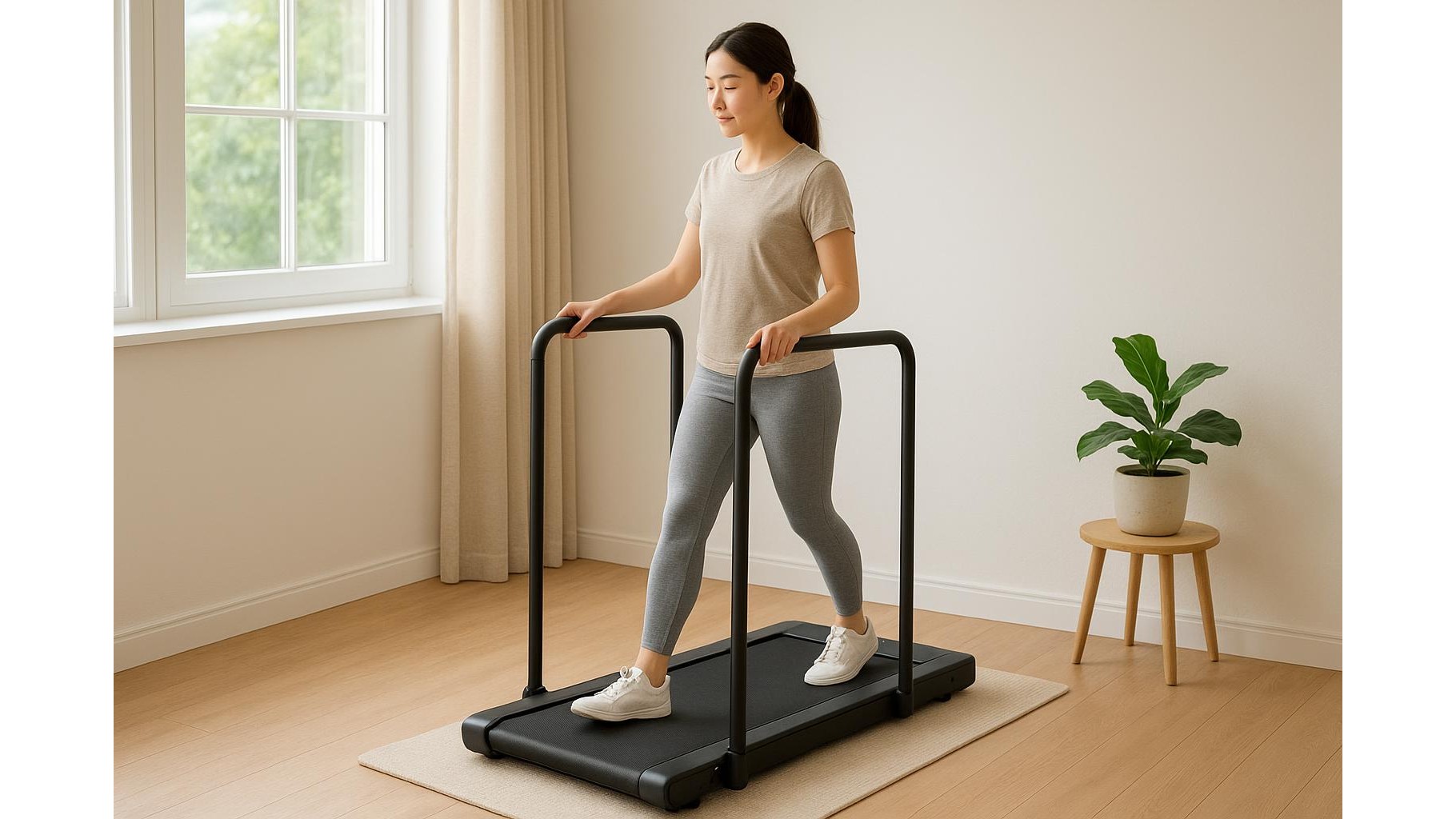
Creating a safe, low-impact home cardio routine doesn’t have to mean buying a big motorised treadmill. A manual walking pad with handrails can be a compact, budget-friendly option that lets you walk at your own pace while still feeling secure. Understanding belt feel, stability and safety features is essential before you buy, as these machines behave quite differently from electric treadmills.
Why choose a manual walking pad with handrails
A non-motorised walking pad moves only when you do, which makes it naturally self-paced and generally quieter than motorised machines. The addition of full-length handrails is crucial if you want extra security for rehab, balance issues or simply to feel safer when walking at home. Because there is no motor, these pads are usually slimmer, lighter and cheaper, fitting easily in a spare room or living area. They are ideal if you mainly want steady walking for low-impact cardio rather than intense running workouts.
Key features to check before you buy
When you compare models, start with the belt size: a longer and slightly wider deck gives you more margin for natural strides and small missteps. Look at the maximum user weight and frame material to judge overall sturdiness. Full-length handrails should be solid, not wobbly, and ideally padded for grip. Check whether the walking pad has adjustable incline (often a simple manual tilt) and a basic LCD console to track time, steps and estimated calories. Since there is no motor, resistance comes from belt friction and incline, so these details strongly affect how easy or challenging your walk feels.
Understanding belt feel and stability
The “feel” of a manual treadmill belt is different from a powered deck. You create all the motion, so if friction is high the belt can feel heavy and may tire your legs quickly; if it is too loose, it can feel jerky. Look for descriptions mentioning a smooth, consistent belt and multiple rollers, which usually improve movement. Stability is equally important: a wider base and non-slip feet reduce side-to-side wobble, especially when you lean on the handrails. For home use, a stable, slightly heavier frame is often preferable to an ultra-light but shaky design, even if it is less portable.
Safety features that really matter
Safety should be your priority when choosing a walking pad with handrails. Full-length rails allow you to grip comfortably at different positions, from near the console to further back on the deck, which is useful if you have reduced mobility or are returning from injury. Look for a clearly marked, textured non-slip belt and side rails where you can safely place your feet to pause. A simple emergency stop or easy step-off design is helpful, even on manual units. If you plan to keep the pad in a shared space, folding and locking mechanisms can prevent accidental use by children.
Who a manual walking pad is (and isn’t) best for
A manual walking treadmill with handrails is best for people who prioritise gentle, steady walking over high-speed training. It suits beginners, older users, those doing light rehab, or anyone wanting extra balance support. If your main goal is intense running, sprint intervals or advanced training metrics, a manual pad will feel too limited and may be frustrating. It also demands more effort at very low speeds, so if you struggle to initiate movement, a small motorised treadmill might be more comfortable. Matching the machine to your realistic fitness level and goals will ensure you actually use it regularly.
How to fit a manual walking pad into your home routine
To get the most from a budget walking pad, treat it as a daily habit tool rather than a once-a-week workout machine. Position it where you are likely to use it: near the TV, in a home office corner, or in a hallway where you can take short walking breaks. Start with 10–15 minute sessions, keeping one or both hands on the rails until you feel confident, then gradually loosen your grip as your balance improves. Combine walking with light mobility work or simple bodyweight exercises on rest days. Over time, this approach turns your manual walking pad into a reliable foundation for low-impact home cardio without stretching your budget.
In summary, a manual walking pad with full-length handrails can be a smart, affordable way to build a safe home cardio routine, especially if you value stability and low impact over speed. By focusing on belt feel, frame stability and practical safety features, you can choose a machine that matches your fitness level and space. Used consistently, it offers a simple, sustainable way to walk more at home and support your overall health without investing in a large, expensive treadmill.









