
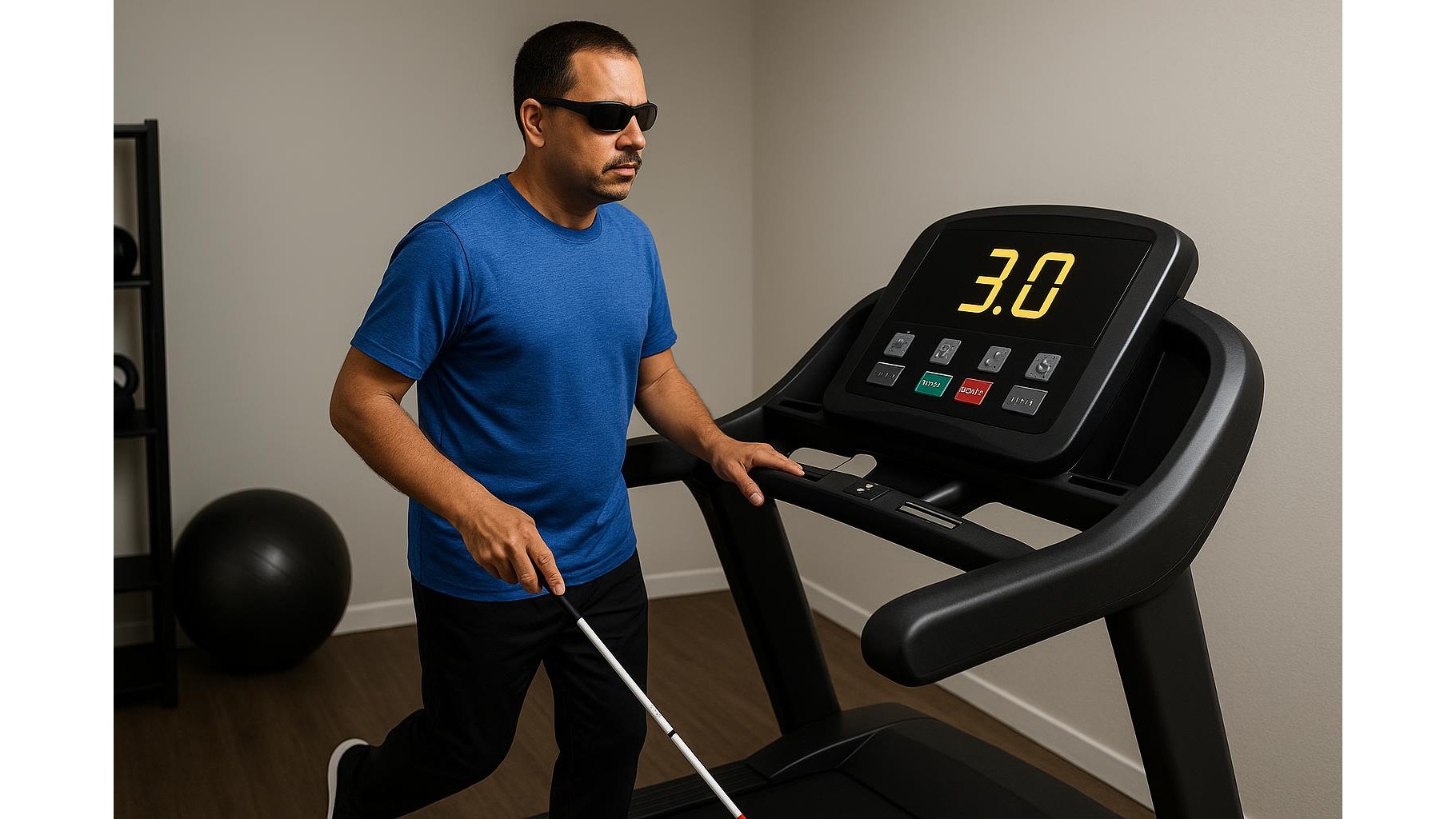
Building an effective home gym is challenging when you live with low vision. Cardio machines are often designed around glossy touchscreens, tiny icons and complex menus. Yet treadmills, bikes and ellipticals can be made far more usable with the right accessibility features. By focusing on clear displays, intuitive controls, tactile markers, audio feedback and practical safety elements, you can create a setup that supports regular, independent training at home.
Key display features for low-vision cardio training
For low-vision athletes, the console display can make or break a machine. Look for high-contrast screens, such as bright white or orange digits against a dark background, and avoid grey-on-grey designs. Large, bold font sizes are essential so speed, time and distance can be checked with a quick glance from different positions on the belt or pedals. A simple, uncluttered layout with only a few core metrics visible at once helps reduce visual noise. Backlighting that is strong but not glaring is useful in home gyms with mixed lighting. If possible, test whether the display remains readable at your usual working distance and under the light conditions of your training room.
Buttons, layout and tactile markers on consoles
When evaluating treadmills, exercise bikes and ellipticals, pay close attention to the button layout. Physical buttons are generally easier to use than flat touch panels. Choose consoles with large, raised buttons that are clearly separated, so you can identify them by feel while moving. Distinct shapes or sizes for key controls like Start, Stop, Speed up/down and Incline up/down are particularly useful. Machines that include molded icons or ridges on emergency and stop buttons give an extra layer of security. You can enhance accessibility further with DIY tactile markers such as bump dots or stick‑on labels to mark frequently used controls and safe hand positions.
Audio feedback, beeps and connectivity options
Audio cues are a powerful ally for low-vision athletes. Prefer machines that emit clear, distinct beeps when a button is pressed, when a program changes or when a countdown ends. Volume should be adjustable so sounds remain audible over fans or music. Some higher-end consoles provide voice prompts or spoken summaries of workout data; if not, check whether the machine can connect via Bluetooth to a smartphone. Paired with a screen reader or fitness app, this allows you to hear speed, distance and heart-rate information. Even simple audio confirmations – such as a tone that signals the belt has started or stopped – can significantly increase confidence and reduce the need to lean in and read displays during intense intervals.
Safety considerations for home cardio with low vision
Safety should be built into every aspect of your home cardio setup. On treadmills, prioritise models with an easily reachable emergency stop key attached to a clip on your clothing. The clip ensures the belt stops automatically if you drift too far back. Sturdy, continuous handrails with a grippy surface help you orient yourself and regain balance quickly. For bikes and ellipticals, wide, stable bases and non-slip pedals are crucial. In your training space, keep walkways clear and use high-contrast tape on the edges of decks, step areas and walls to mark boundaries. Establish a consistent routine for mounting and dismounting each machine so movement patterns become familiar and predictable.
Customising your environment and routine
Beyond the machine itself, you can greatly improve accessibility by adapting your environment and habits. Position cardio equipment where overhead lighting does not create glare on the console. Experiment with warm or cool bulbs to find the most comfortable contrast for your vision. Use labels, tactile stickers or raised lettering on power switches, adjustment levers and seat posts so you can quickly locate them. Keep frequently used accessories – water bottle, towel, remote or phone – in the same accessible place for every workout. Finally, develop a repeatable warm-up and cool-down routine using simple speed and resistance settings; the more automatic these steps become, the less you need to rely on reading the screen mid‑session.
Choosing cardio machines for low-vision athletes is less about chasing the latest tech and more about prioritising clarity, feedback and safety. By focusing on high-contrast displays, large fonts, physical buttons with tactile markers, audible cues and secure, well-marked surroundings, you can turn a standard treadmill, bike or elliptical into an accessible training partner. With these features in place, home workouts become more independent, consistent and enjoyable, supporting both fitness progress and long-term confidence.









